




Description
Product description
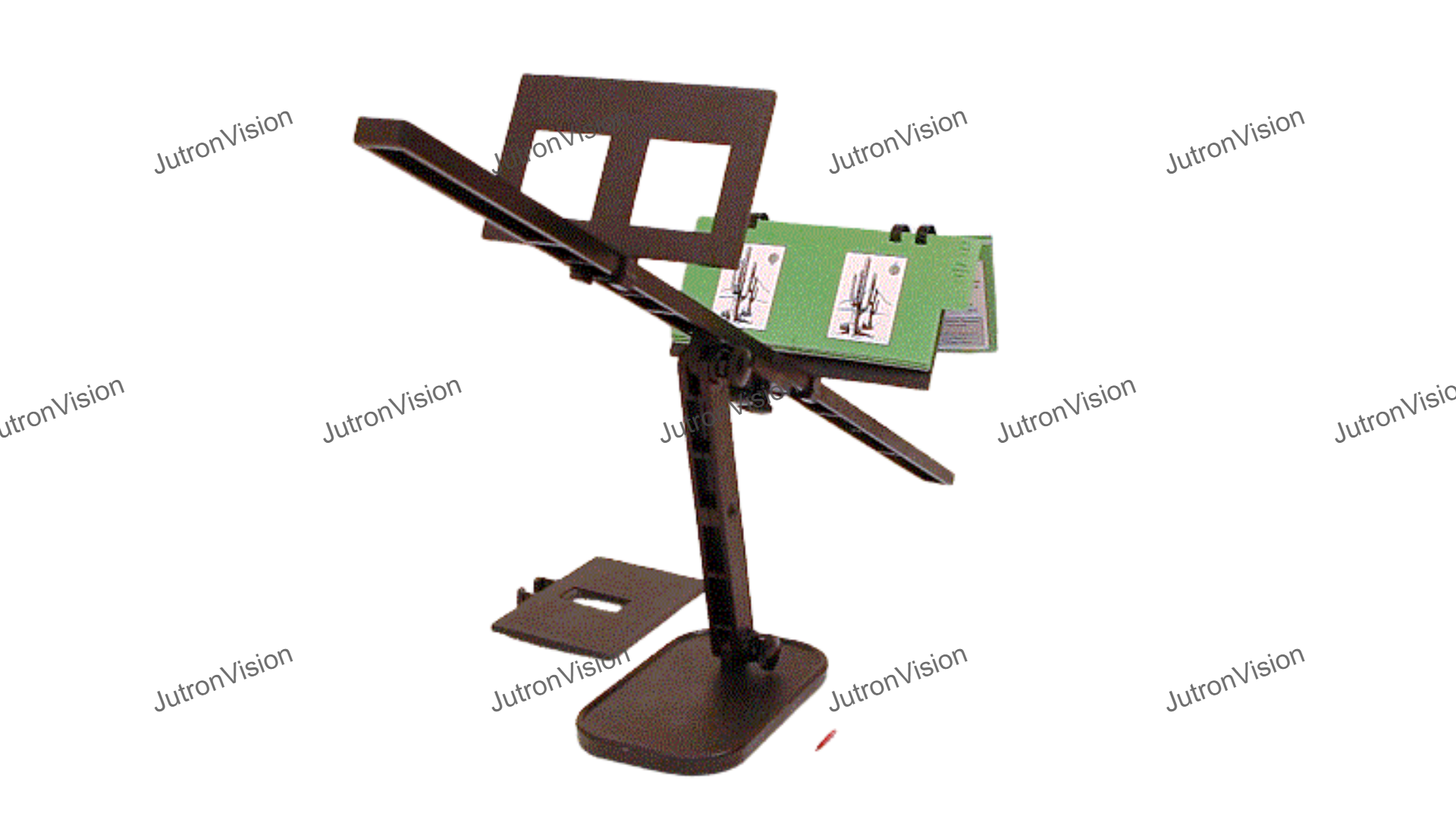
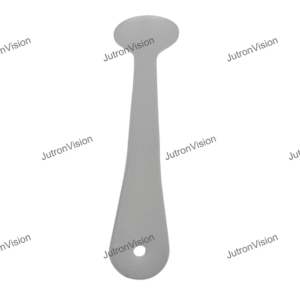
- The Aperture Rule Trainer Kit – Black is a structured vision-therapy tool used to strengthen accommodation (focusing) and improve how quickly and accurately a patient can keep a target clear. By viewing the target through different aperture sizes, the patient is challenged to control focus precisely—progressing from easier conditions to more demanding ones. The black, low-glare format reduces distractions and stray reflections, making sessions cleaner, more consistent, and easier to score in clinic or supervised home programs.
- Primary goal: Improve accommodative accuracy, stability, and facility (clear-to-clear focusing)
- How it works: Uses variable apertures to control the viewing condition and create graded focusing demands
- Black low-glare design: Minimizes reflections and background clutter for better fixation and cleaner results
- Typical use cases: Accommodative insufficiency, accommodative infacility, near blur/strain, therapy progression blocks
- Training progression: Start with larger/easier apertures → move to smaller/more demanding → add timing (reps/min) or combine with near charts
- Clinically useful: Easy to standardize sessions, track performance, and document improvement across visits
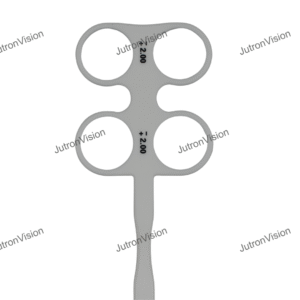
- Pairs well with: Hart chart near, accommodative rock charts, ± flippers (1.50/2.00) for layered training
- Care: Keep the rule/apertures clean and scratch-free; wipe gently with a soft cloth; store flat in a protective pouch/case
| Topic | Details |
| Purpose | • This kit is designed for use in vision therapy (VT) programmes, specifically to improve fusional and accommodative reserves, assist with poor stereopsis, fixation disparity, suppression, and tight accommodation-to-vergence (conversion) relationships. |
| Target Users | • Target users: Individuals (children or adults) experiencing asthenopia (eye strain), visually related learning problems, binocular vision issues, convergence/divergence stress. • It is not meant as a standard visual acuity screening chart, but as a therapeutic/training device for binocular/vergence/accommodation skills. |
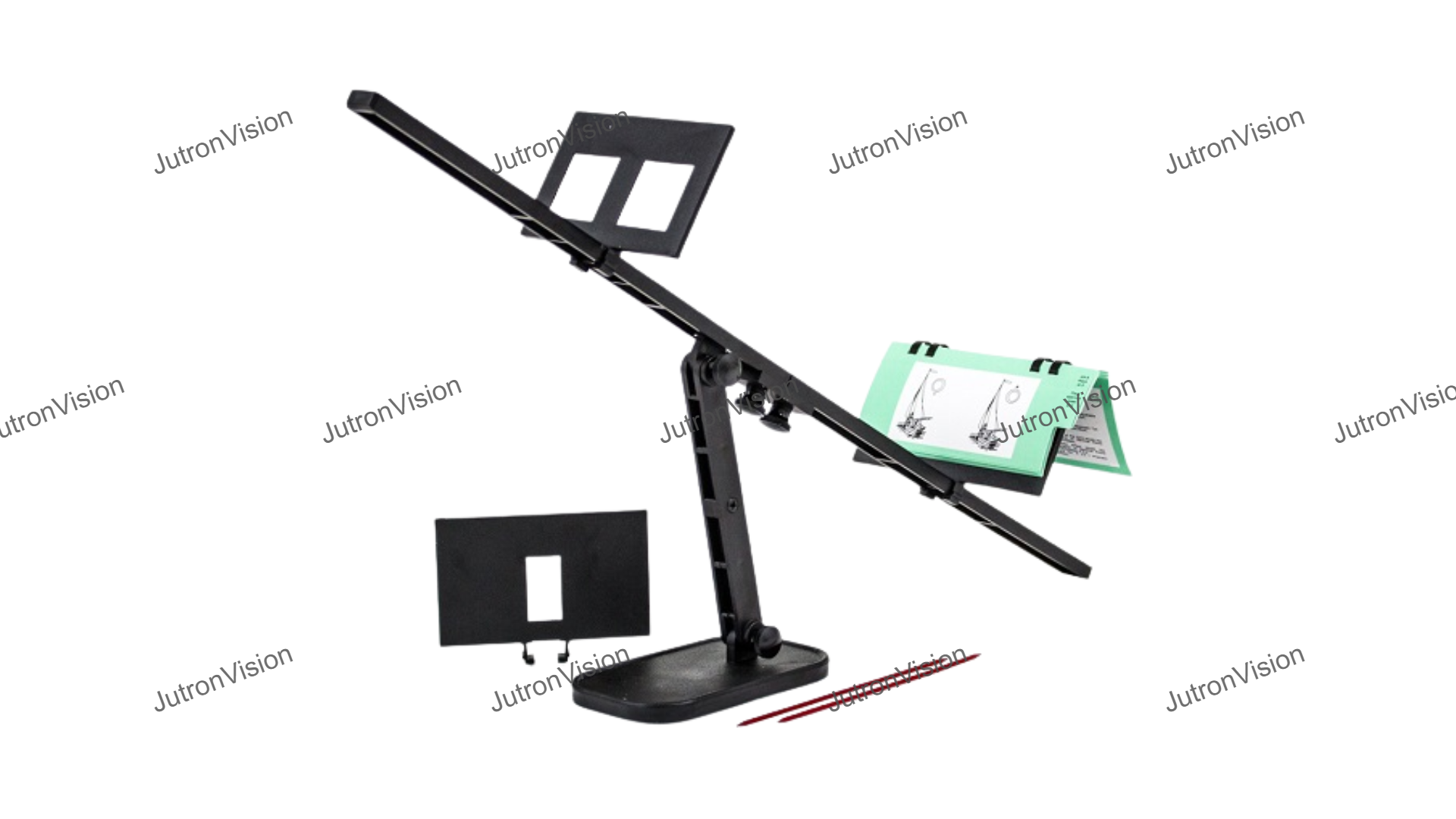
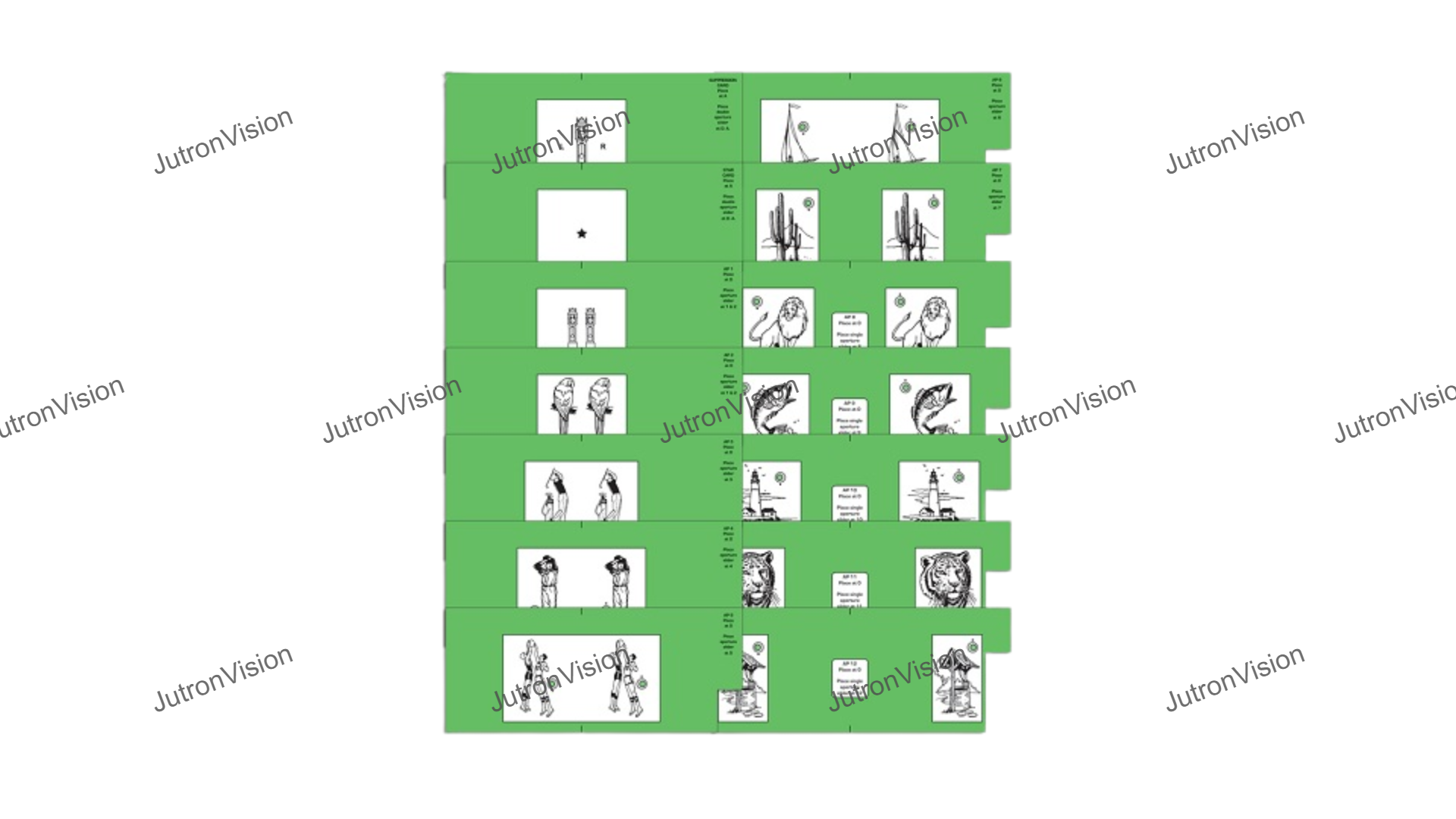
| Optotypes / Symbols | • The tool uses a “card set” (sports/action cards) and aperture sliders (single & double) along with red pointers. • Instead of traditional letters or symbols for acuity, the “targets” are action/sports scenes, and the therapeutic tasks involve manipulating sliders/apertures to impose vergence/acuity demands. • So the “symbol” concept is less relevant here — the strategy is training binocular mechanism rather than reading letters. |
| Scaling / Spacing | • The tool uses a “card set” (sports/action cards) and aperture sliders (single & double) along with red pointers. • Instead of traditional letters or symbols for acuity, the “targets” are action/sports scenes, and the therapeutic tasks involve manipulating sliders/apertures to impose vergence/acuity demands. • So the “symbol” concept is less relevant here — the strategy is training binocular mechanism rather than reading letters.• Public documentation does not specify optotype sizes, inter-letter spacing or standard chart scaling — because the kit is not built as a size-based acuity test. • The training device offers progressive fixed demand (vergence base-out to base-in) rather than varying symbol size. • Thus, this specification (spacing/optotype size) is not applicable in the same way as for acuity charts. |
| Range of Acuity / Line Sizes | • Not applicable. This kit is not designed to measure or train visual acuity (sharpness) via line size variation, but to train binocular/vergence/accommodation function. |
| Testing Distance | • The standard documentation does not specify a fixed testing distance (e.g., 3 m or 40 cm) for all tasks — it will depend on the clinician’s setup/time and therapy goal. • Given its use in vision therapy (often near tasks), clinicians typically use a near working distance within reach of the aperture sliders/cards. • Important: ensure consistent distance, lighting and patient posture for reliable training. |
| Dimensions | Dimensions • One source (VISUS site) lists a size: 67 cm × 30 cm × 13 cm for a comparable Aperture Rule Trainer Kit version. • Material: black plastic body (per the same VISUS listing). • The Bernell official site gives the features but does not list full dimensions. • We can accept ~67×30×13 cm as approximate footprint/packing size for the kit; actual working dimension (slider travel) may differ slightly. |
| Mounting / Display Features | • The kit is a portable/training unit: it is not permanently mounted to a wall. It may be placed on a table or therapy station for the patient to use. • No electronic display or built-in illumination is noted; the kit uses apertures, sliders and target cards. • The documentation emphasises that the kit “does not require polarized or coloured lenses”. • A protective corrugated storage box is provided for convenience. |
| Accessories | According to the product listing: • A set of sports/action cards. • Single and double aperture sliders. • Red pointers (for guiding/training). • A user manual. • Protective storage box. • Optional extra card sets (e.g., pediatric “Bears” or adult “Sports/Action”) are available separately. |
| Durability / Material Qualities | • The VISUS listing indicates the material is “black plastic” and weight ~0.3 kg for the version they list. • The Bernell catalogue lists the kit as standard instrument for VT programmes (implying clinical-grade materials). • No detailed specs of plastic grade, scratch resistance, etc are given publicly, but the intended use in clinic suggests reasonable durability. • The slider/aperture mechanism should be built to withstand repeated use in therapy sessions. |
| Usability | • Designed for in-office or home therapy use (“Great for in-office or home therapy!”) per the Bernell catalogue. • The progressive fixed demand (30 PD Base-Out to 17.5 PD Base-In) offers a clear range of vergence/accommodation challenge. • Because colored/polarized lenses are not required, setup is simplified. • Cards with sports/action visuals likely aid patient engagement (especially children/adolescents). • Clinicians should ensure correct use (distance, patient posture, instructions) for effective training. • Ease of portability and storage (box) enhances usability in smaller practices. |
| Marker of Quality | • Bernell is a recognized manufacturer of vision therapy instrumentation, with this model listed in multiple catalogs. • The mention in starter kits (e.g., VT Starter Systems) as a foundational item underscores its acceptance as a standard tool in VT programmes. • The specification of range (30 PD Base-Out to 17.5 PD Base-In) and design that avoids need for colored/polarized lenses reflect thoughtful design rather than simplistic toy. • The availability of replacement parts and optional card sets (Bernstein Bears, Sports/Action) implies longevity and support. |
Reviews
There are no reviews yet.