



Description
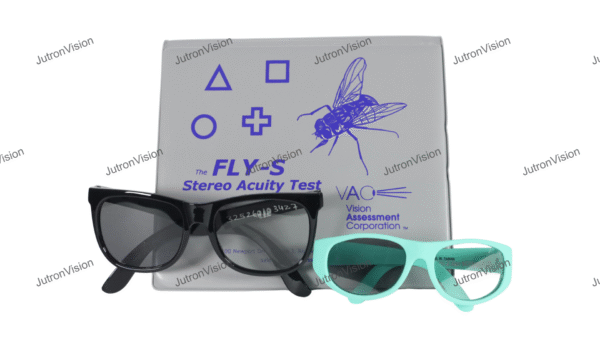
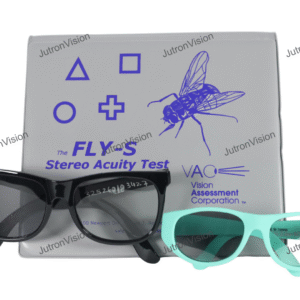
The Original Stereo Fly
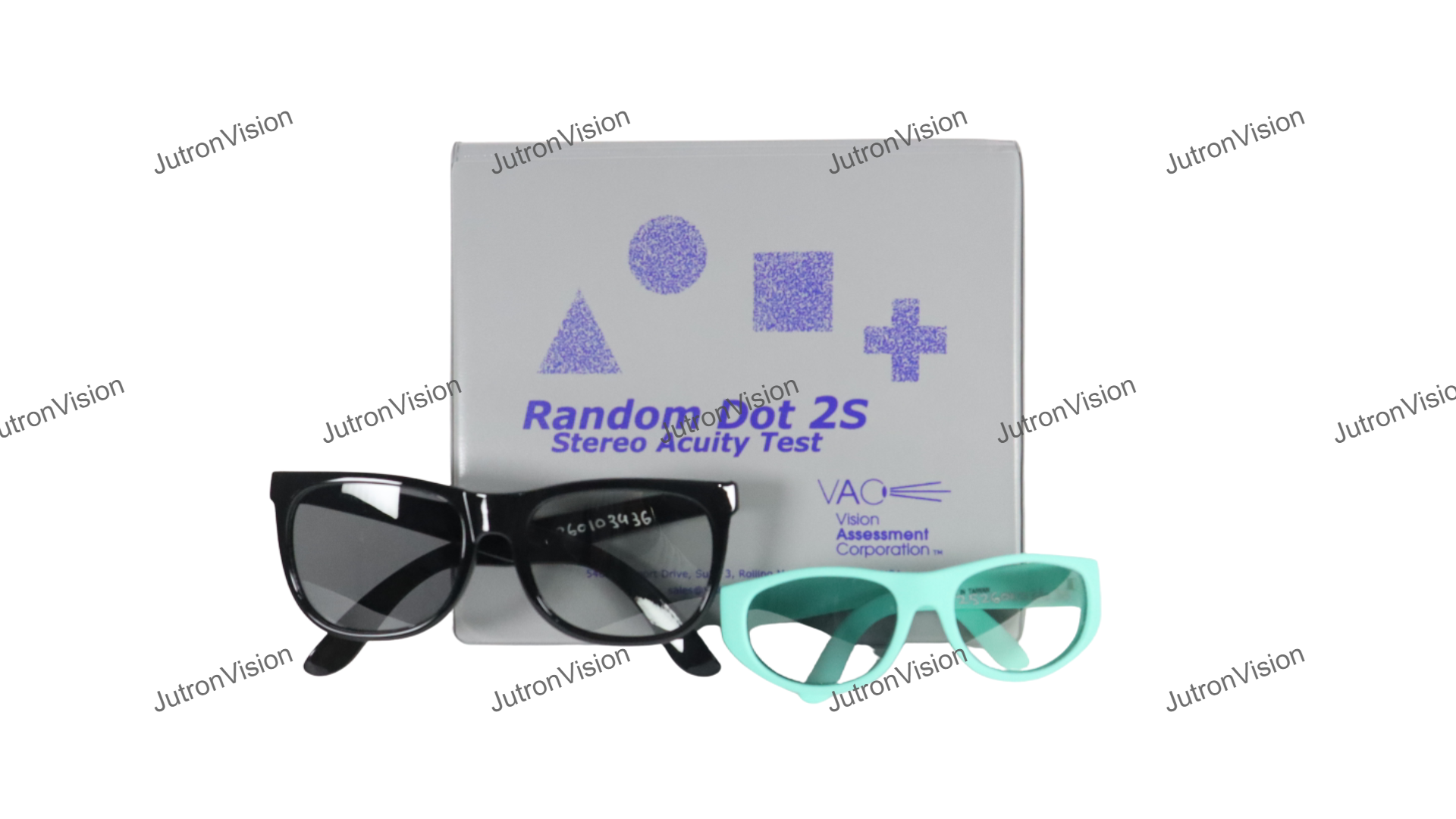
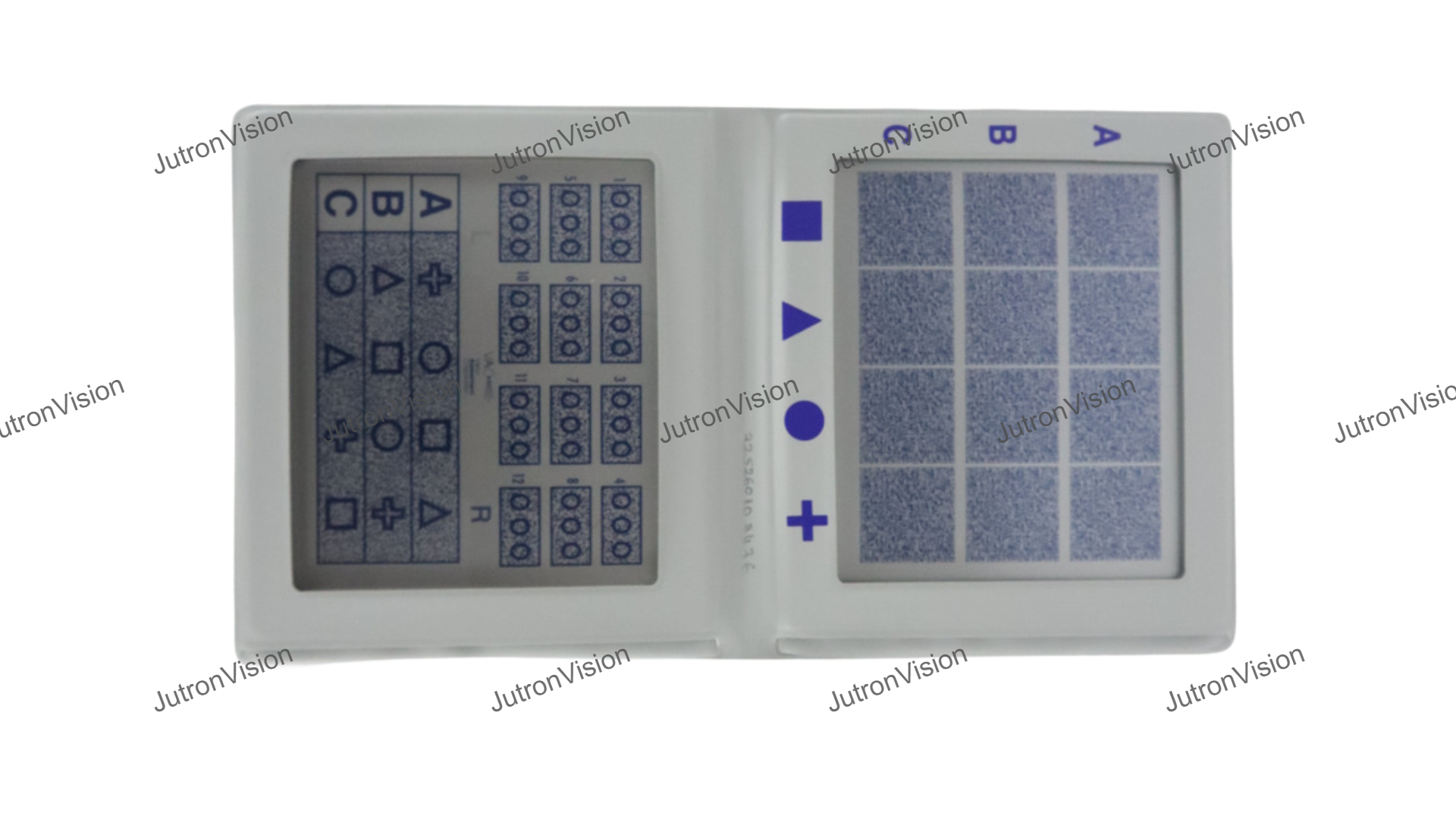
- The Random Dot 2 Stereopsis Test – Standard is a near stereo-acuity test designed to measure true binocular depth perception using random-dot images that eliminate monocular cues. Because the shapes are only visible when both eyes work together through polarized viewing, the test is highly reliable for detecting and monitoring stereopsis, as well as screening for amblyopia and strabismus in both children and adults. Its simple, picture-based format makes it easy to administer in clinics, pediatric practices, and screening programs.
- What it measures: True stereopsis (depth perception) without monocular clues
- How it works: Random-dot targets viewed with polarized glasses—images appear only with proper binocular fusion
- Clinical value: Effective for screening and monitoring amblyopia, strabismus, and binocular vision anomalies
- Patient-friendly: Suitable for early readers, non-readers, and adults
- Standard near test: Designed for consistent near-vision stereo assessment
- Quick & reliable: Easy to explain, fast to administer, and repeatable across visits
- Common settings: Pediatric ophthalmology/optometry clinics, VT practices, and school screening programs
- Care: Keep plates clean and protected from scratches; store flat and use polarized viewers carefully to maintain accuracy
| Topic | Details |
| Catagory | Stereo Acuity Test |
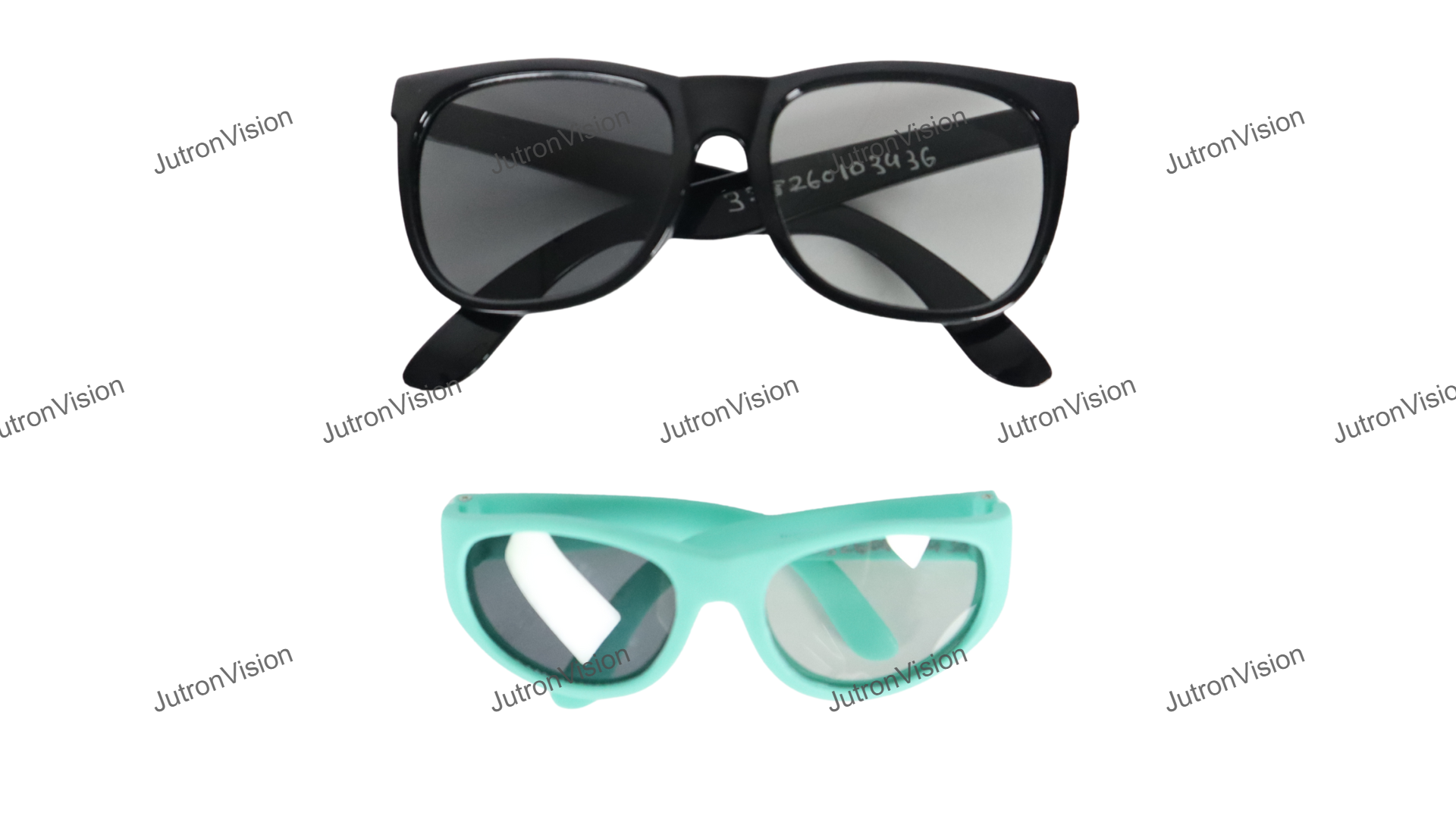
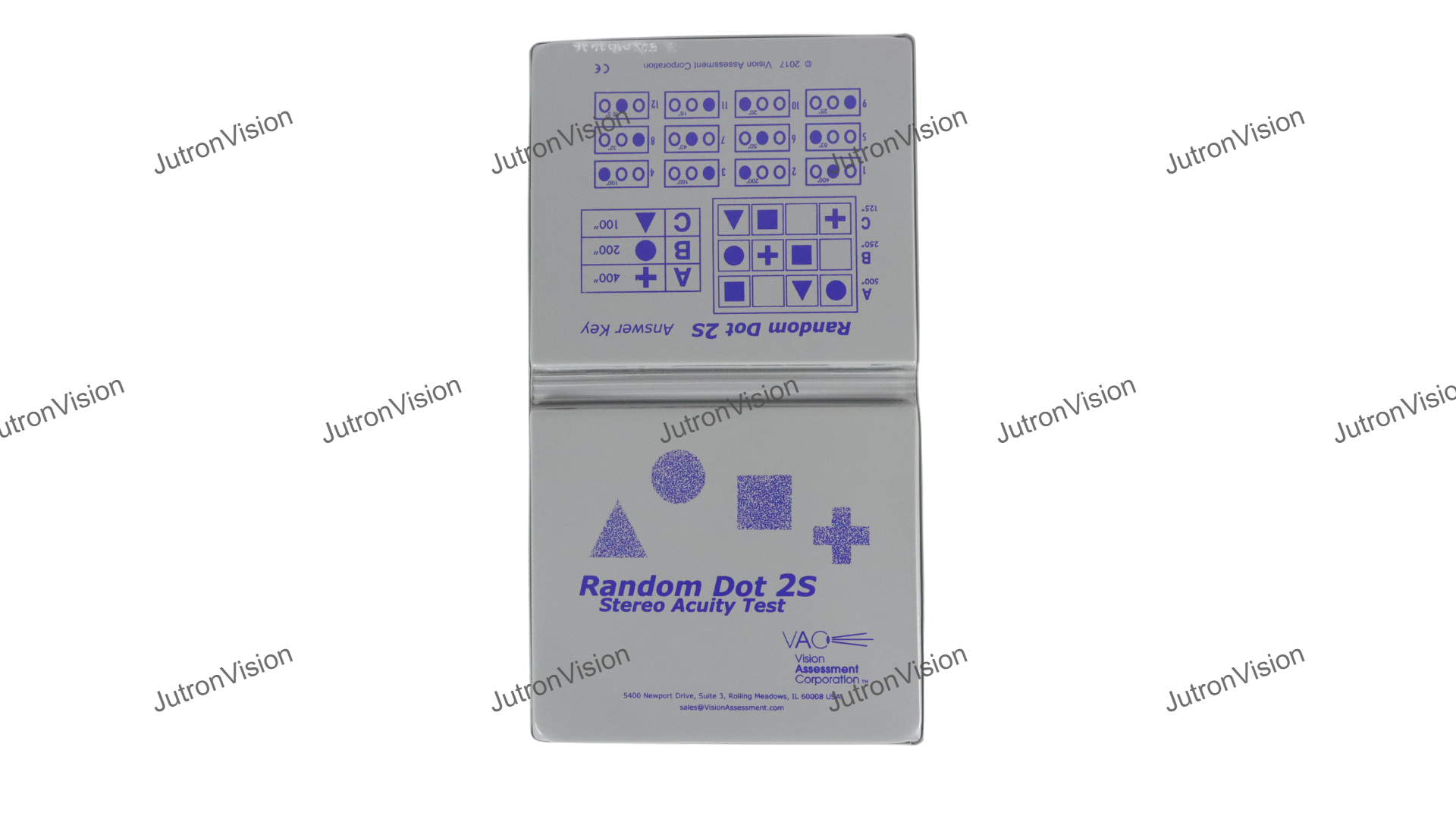
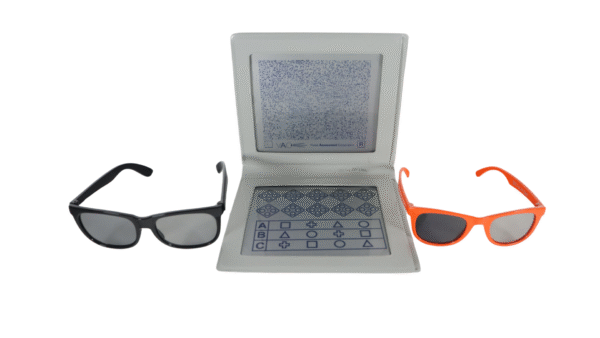
| Material | The test consists of a printed stereopsis booklet made from durable laminated card or heavy paper with polarized random-dot images. The set includes polarized viewing glasses made from lightweight plastic frames with polarized lenses to ensure correct binocular separation during testing. |
| How to use for | The patient views the test booklet while wearing the polarized glasses. Random-dot patterns and shapes become visible only when both eyes work together. The patient identifies or matches shapes and circles, allowing clinicians to measure stereo vision and detect binocular vision abnormalities. |
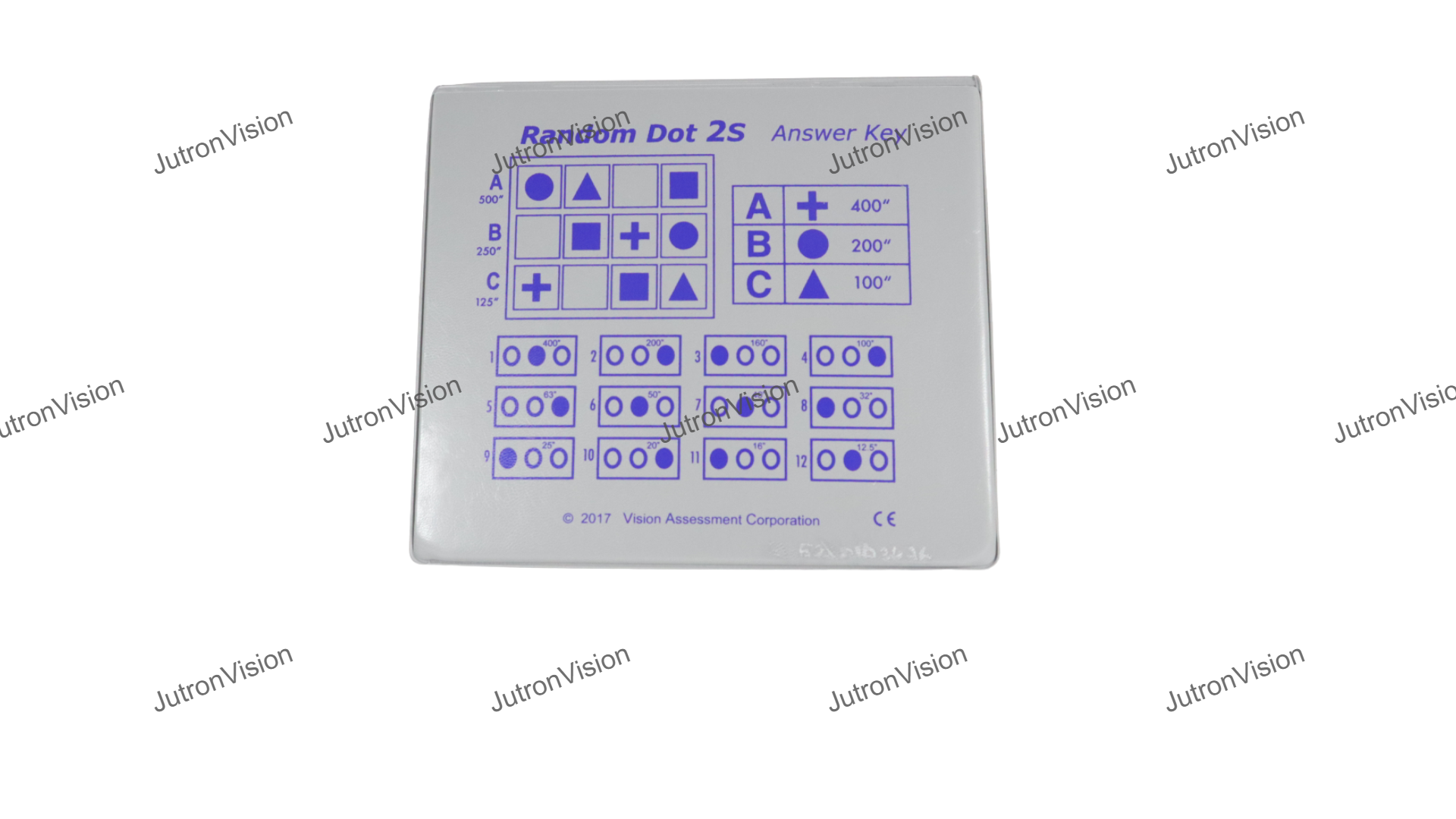
| Includes Special Glasses , Answer Key Included | The set includes polarized glasses for children and adults, an answer key printed on the booklet or included separately, and sometimes instructions for administration. |
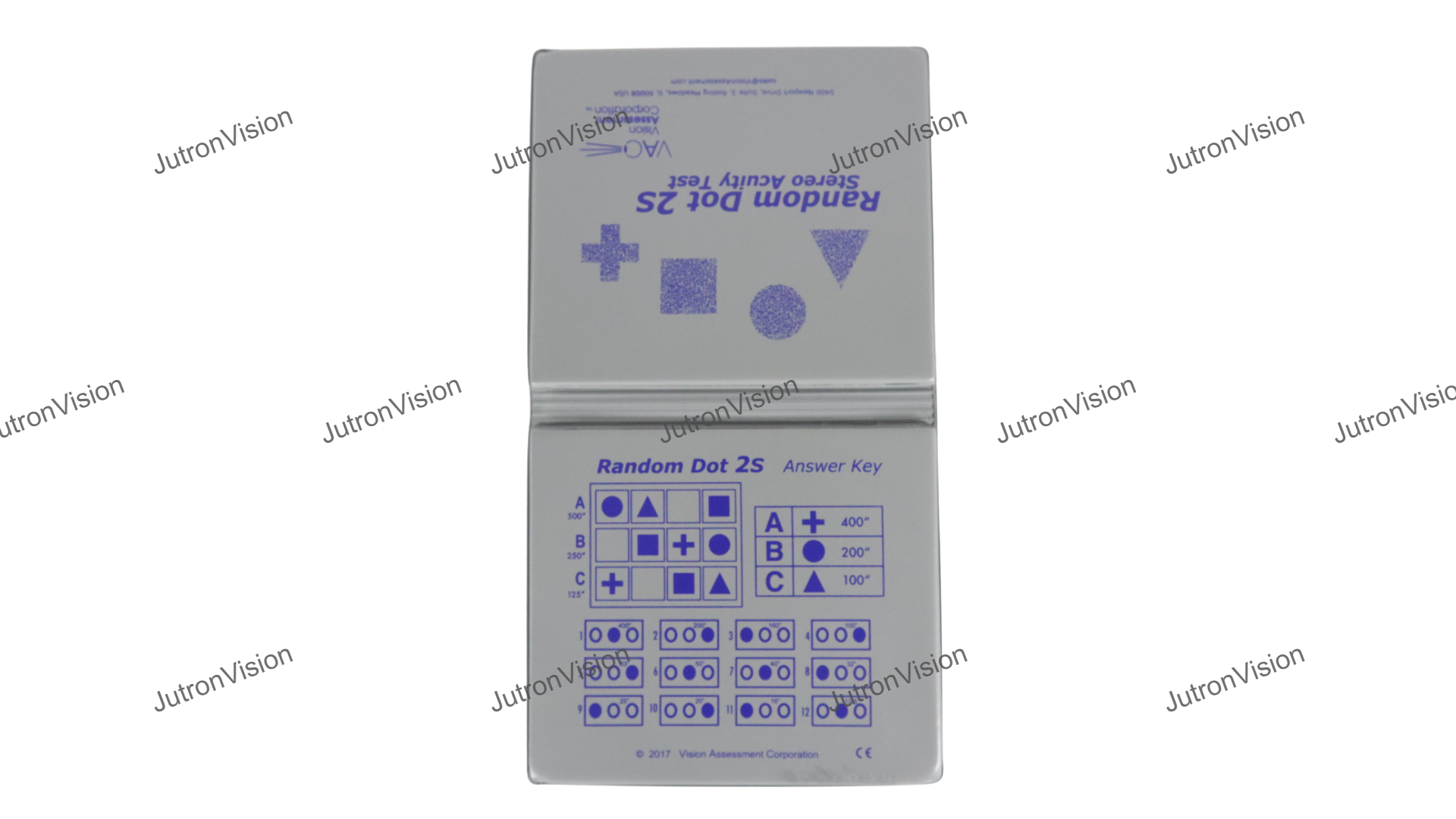
| Stereoacuity Levels / Disparity Range | The test includes random-dot shapes at approximately 500, 250, and 125 seconds of arc, along with graded circle tests that measure stereoacuity down to about 12.5 seconds of arc, enabling both screening and fine stereo discrimination assessment. |
| Durability | The booklet and polarized filters should be handled carefully to prevent bending, scratching, or exposure to excessive heat, which may damage the polarized layers or printed stereograms. |
| Purpose | The Random Dot 2 test is used to evaluate stereopsis (depth perception) and help detect binocular vision problems such as amblyopia (lazy eye), strabismus, or reduced stereoacuity in both children and adults. |
| Stereoacuity Levels / Disparity Range | The test includes random-dot shapes at approximately 500, 250, and 125 seconds of arc, along with graded circle tests that measure stereoacuity down to about 12.5 seconds of arc, enabling both screening and fine stereo discrimination assessment. |
| No Monocular Clues | The random-dot design eliminates monocular cues, ensuring that the hidden shapes or circles can only be detected when both eyes work together binocularly, making the test highly reliable for detecting binocular vision deficiencies. |
| Test Components / Format | The test is typically provided as a compact booklet containing random-dot stereograms, matching shapes for children, and graded circle tests for precise stereo measurement. An answer key and instruction guide are included to assist clinicians in interpreting results. |
| Testing Conditions | The test is conducted at near viewing distance (commonly around 40 cm) under adequate illumination while the patient wears the polarized glasses to ensure proper binocular separation of images. |
| Unique Selling Proposition (USP) | The Random Dot 2 test provides highly accurate stereoacuity measurement without monocular clues, making it suitable for screening and detailed stereo vision assessment in both children and adults, including non-readers and non-verbal patients. |
| Limitations | Very fine stereo thresholds (e.g., 12.5 arc seconds) may be difficult for patients with significant binocular vision disorders. Accurate results depend on proper lighting, correct viewing distance, and patient cooperation during testing. |

Reviews
There are no reviews yet.