| Topic | Details |
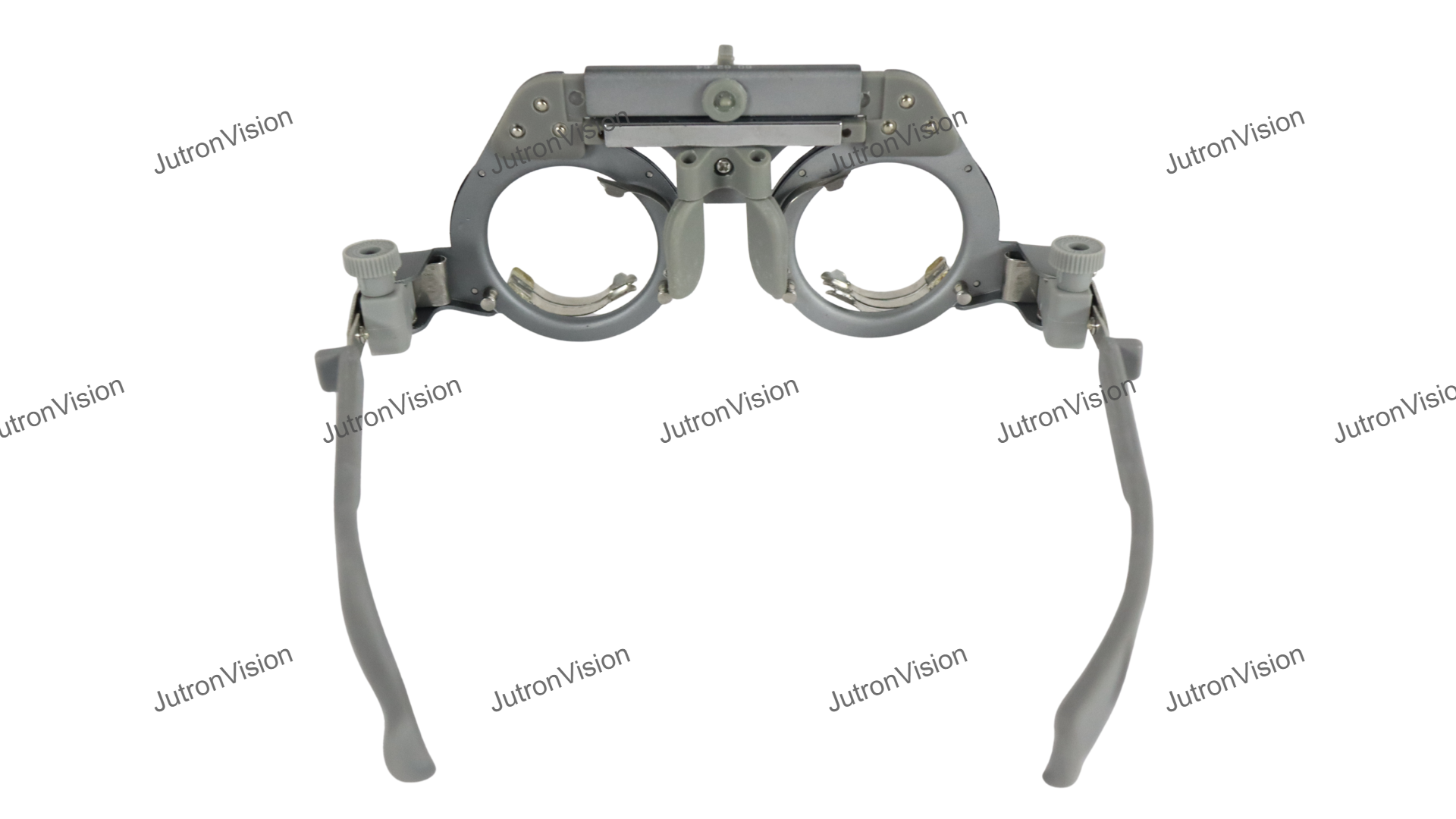
| PurposePurpose / Target Users | The Adult Titanium Trial Frame (PD 54–70 mm) is used during subjective refraction and binocular vision testing to hold trial lenses in front of the patient’s eyes. It enables clinicians to determine refractive errors and refine prescriptions by combining spherical, cylindrical, and prism lenses. The frame is designed for optometrists, ophthalmologists, orthoptists, vision therapists, and optometry students working in clinics, hospitals, and training institutions. |
| Optotypes / Symbols | The trial frame does not contain optotypes or symbols. It is used in conjunction with visual acuity charts such as Snellen, LogMAR, Landolt C, Tumbling E, or Lea Symbols, depending on the clinical testing protocol. |
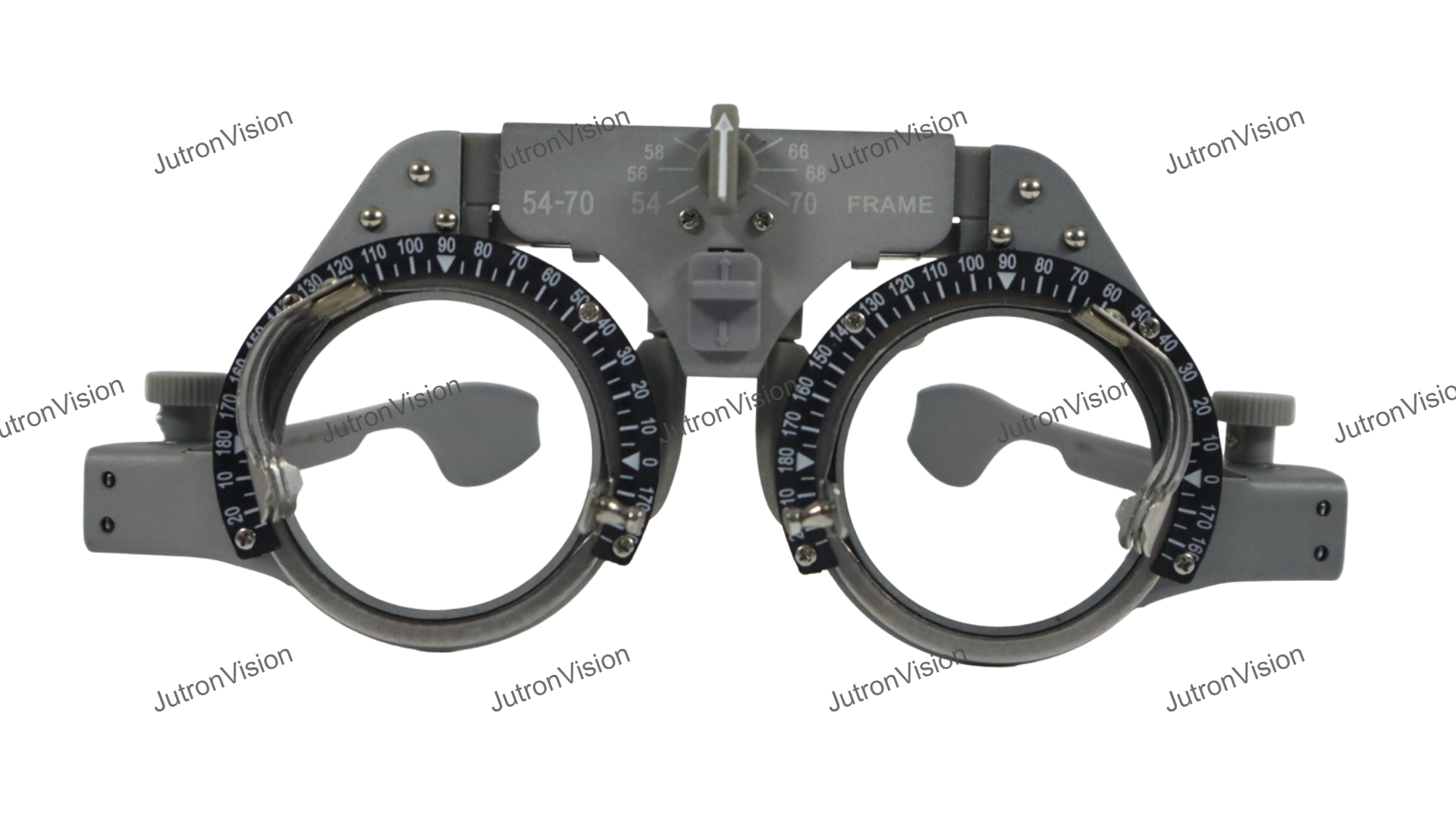
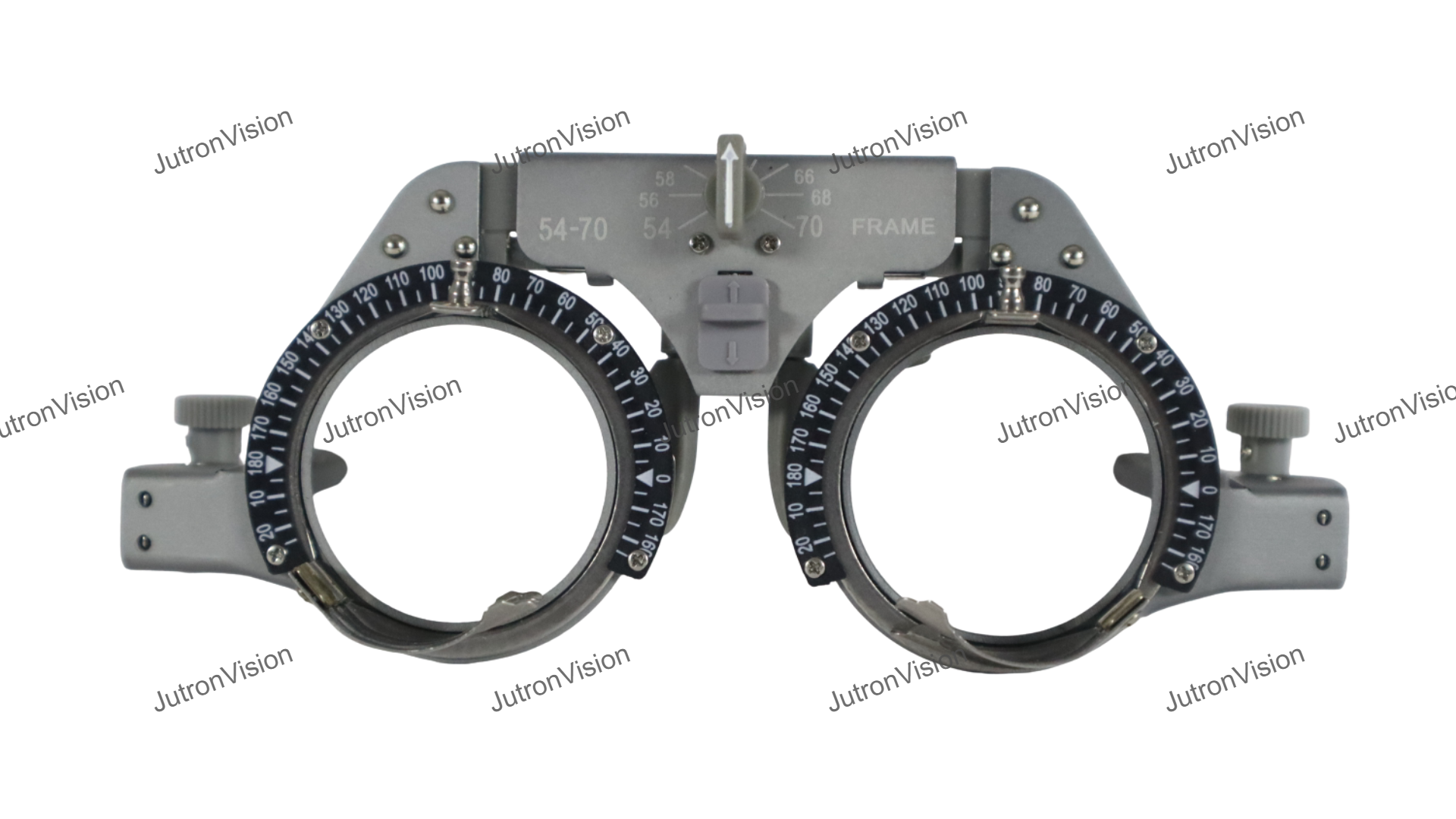
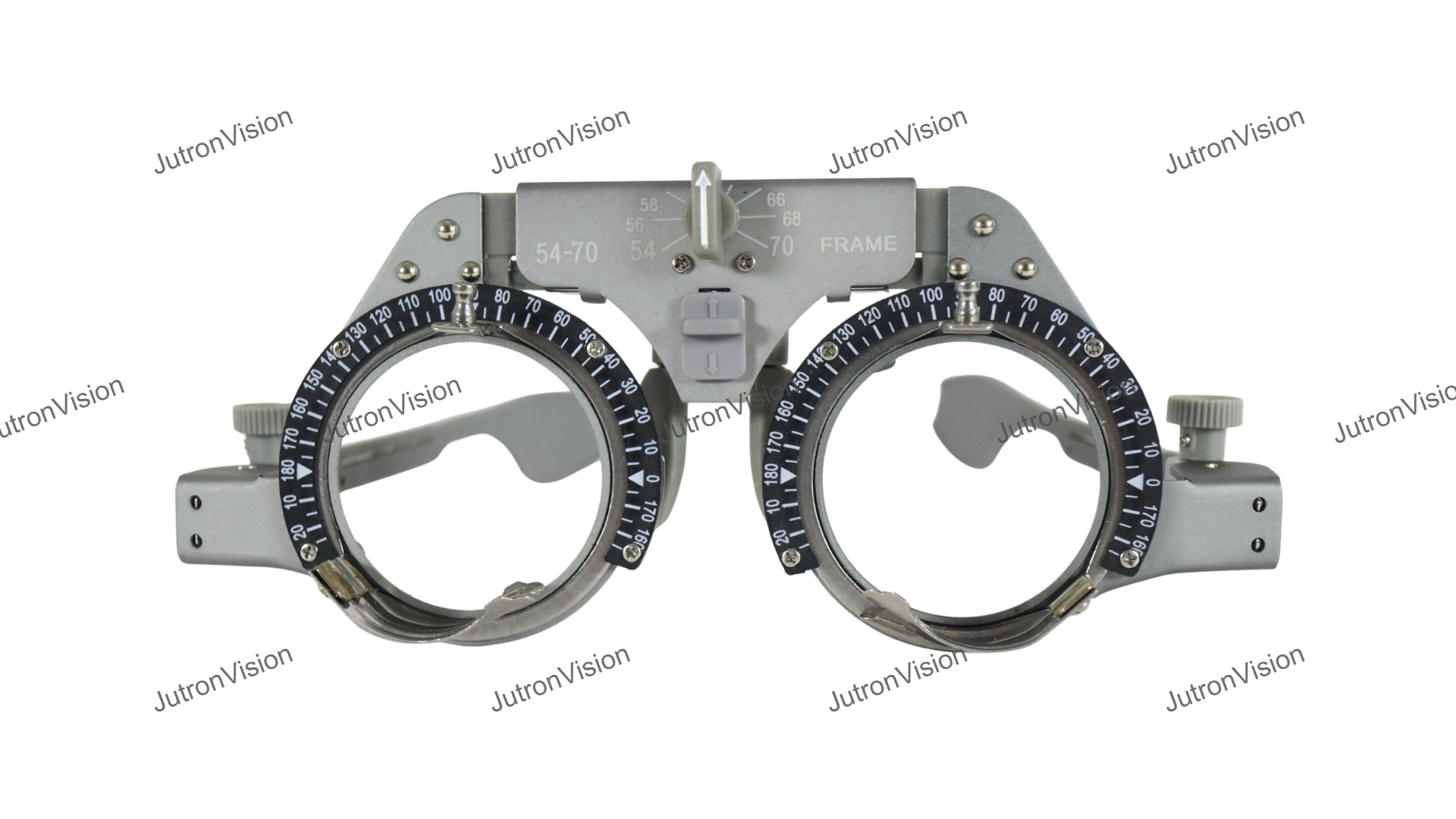
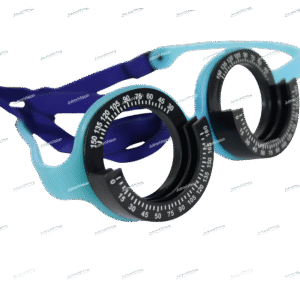
| Scaling / Spacing | The frame includes adjustable interpupillary distance (PD) typically ranging from 54 mm to 70 mm to match the patient’s pupil centers. It accepts standard 38 mm trial lenses and typically provides multiple lens holders per eye (up to four) to allow combinations of spherical, cylindrical, and prism lenses. Cylindrical axis scales are marked 0°–180° for accurate astigmatism alignment. |
| Range of Acuity / Line Sizes | Not applicable. The trial frame does not define visual acuity levels. Instead, acuity range depends on the visual acuity chart and trial lenses used during testing, allowing evaluation across the full range of visual acuity. |
| Testing Distance | The frame can be used for distance testing (typically 6 meters / 20 feet) and near testing (approximately 33–40 cm) depending on the visual target used. |
| Physical Size & Dimensions | The frame is designed for adult patients with an adjustable PD range of approximately 54–70 mm. It typically supports 38 mm diameter trial lenses and weighs approximately 50–100 grams, depending on the specific design and materials used. |
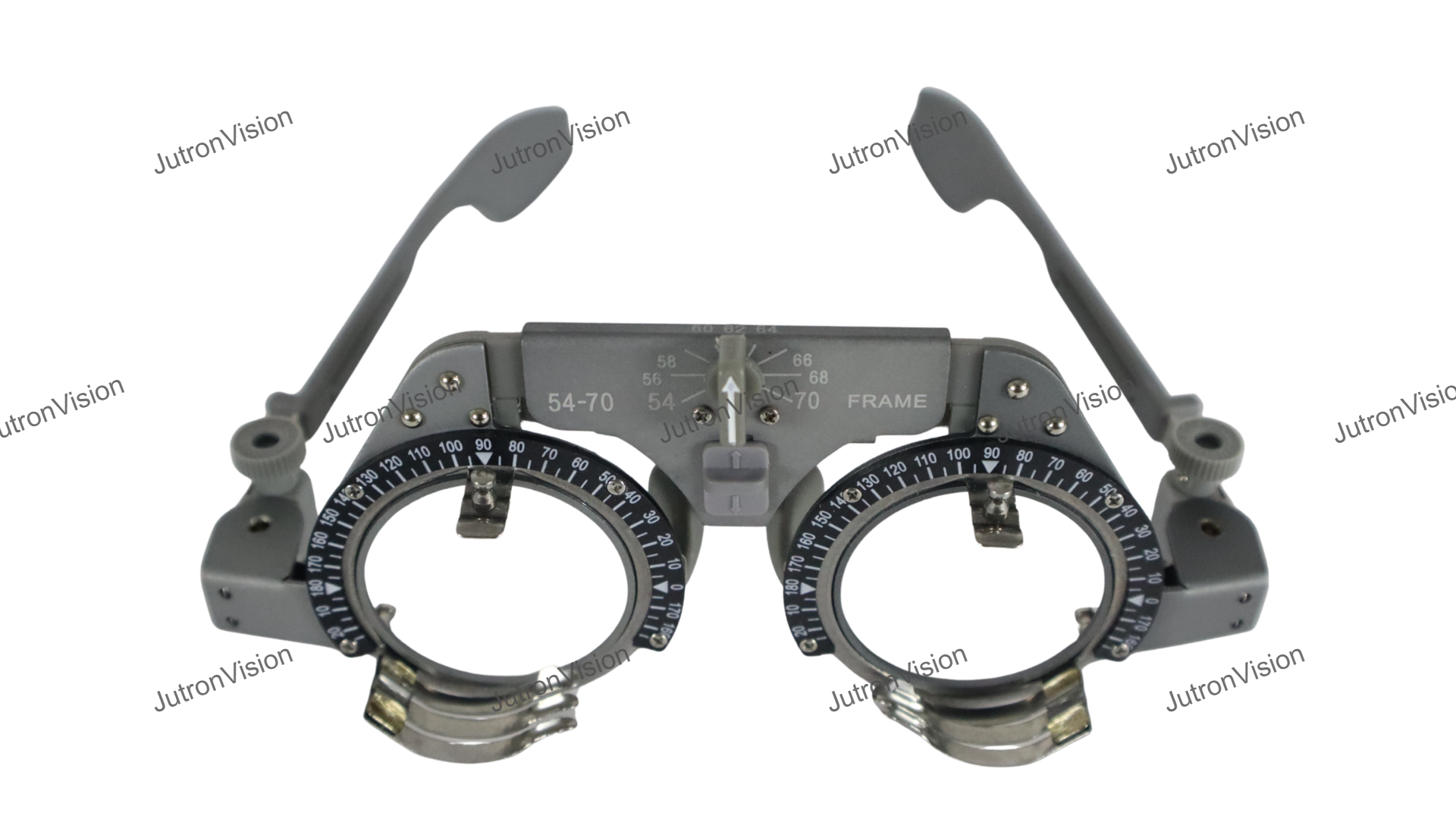
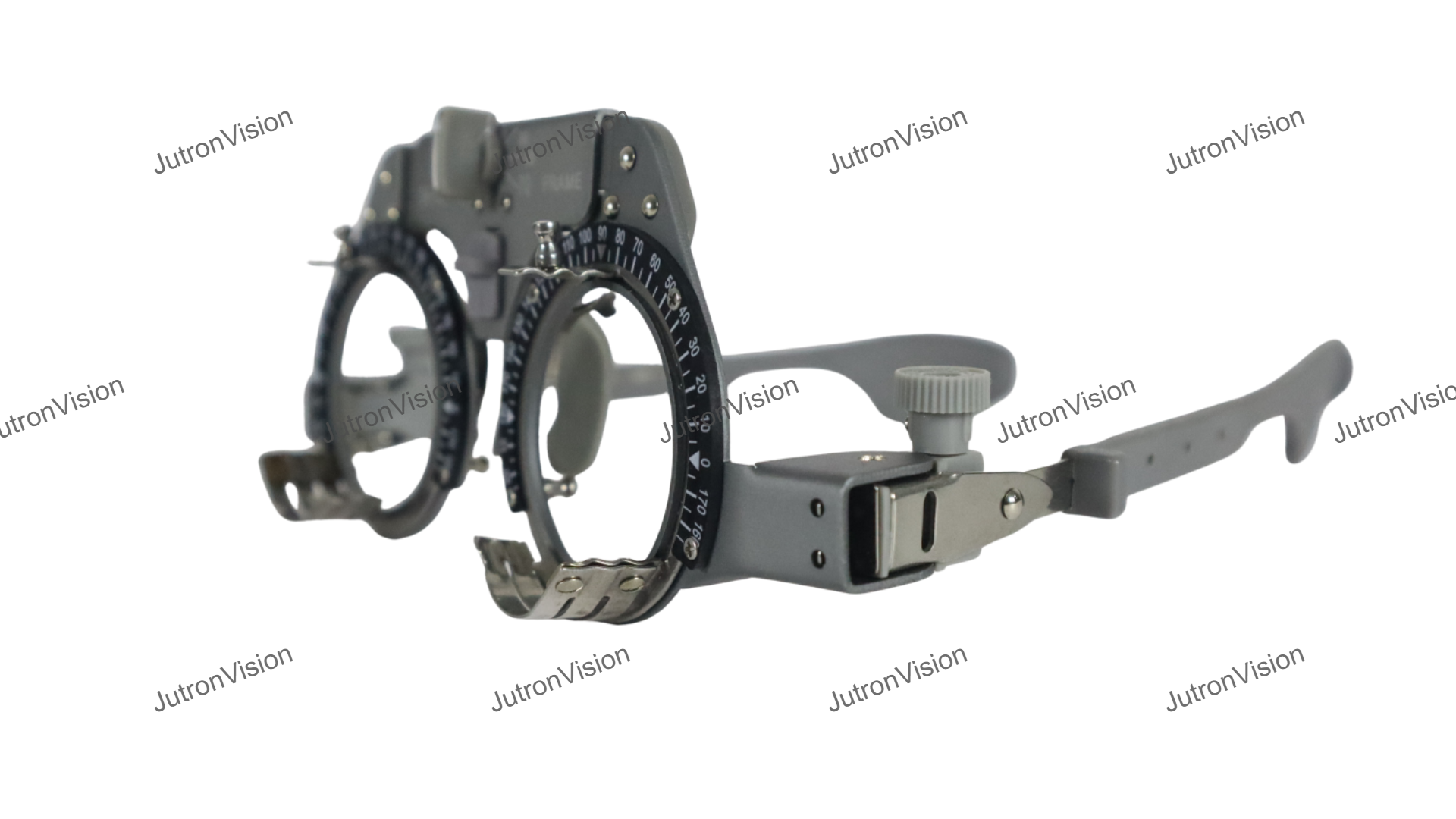
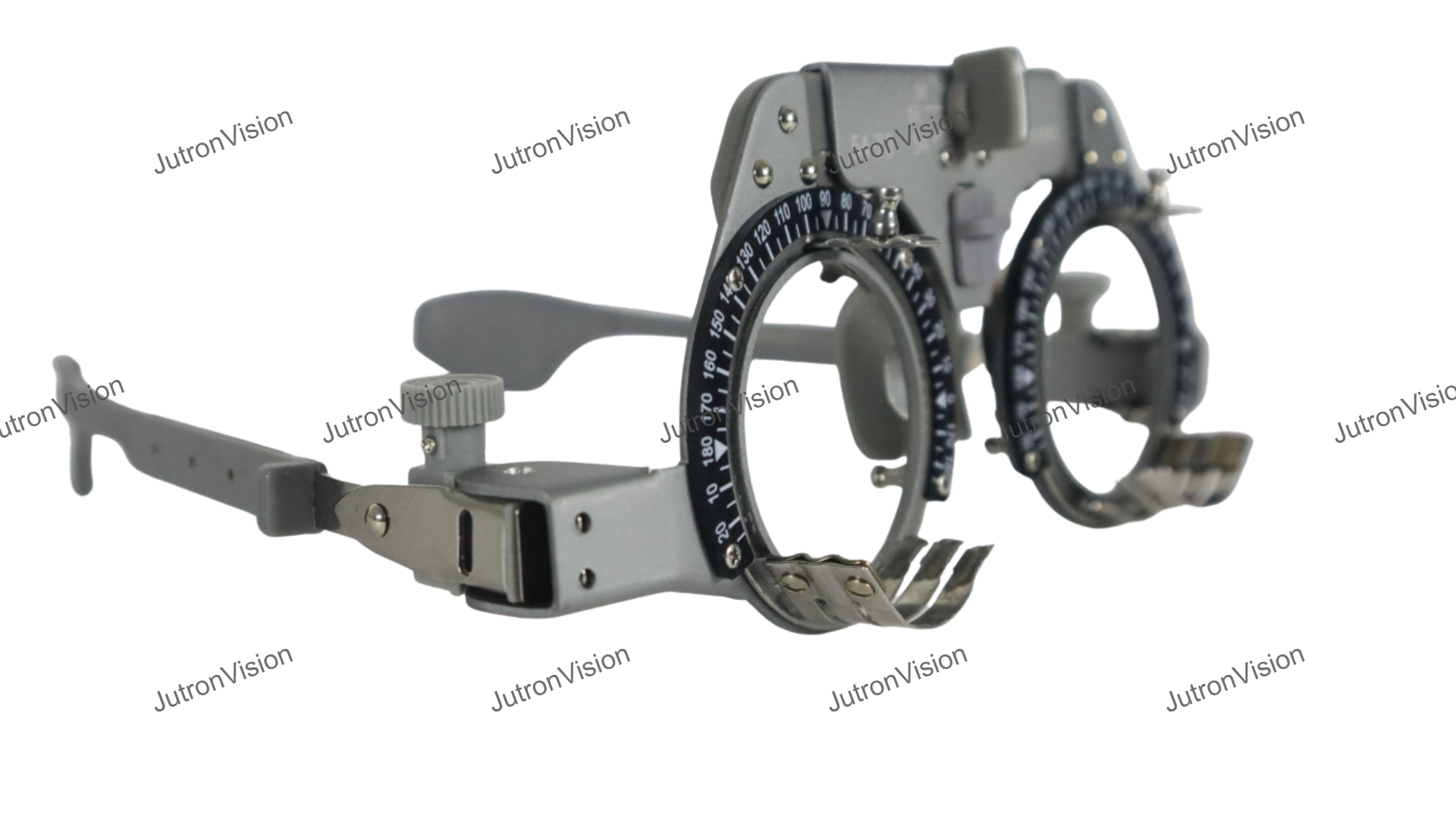
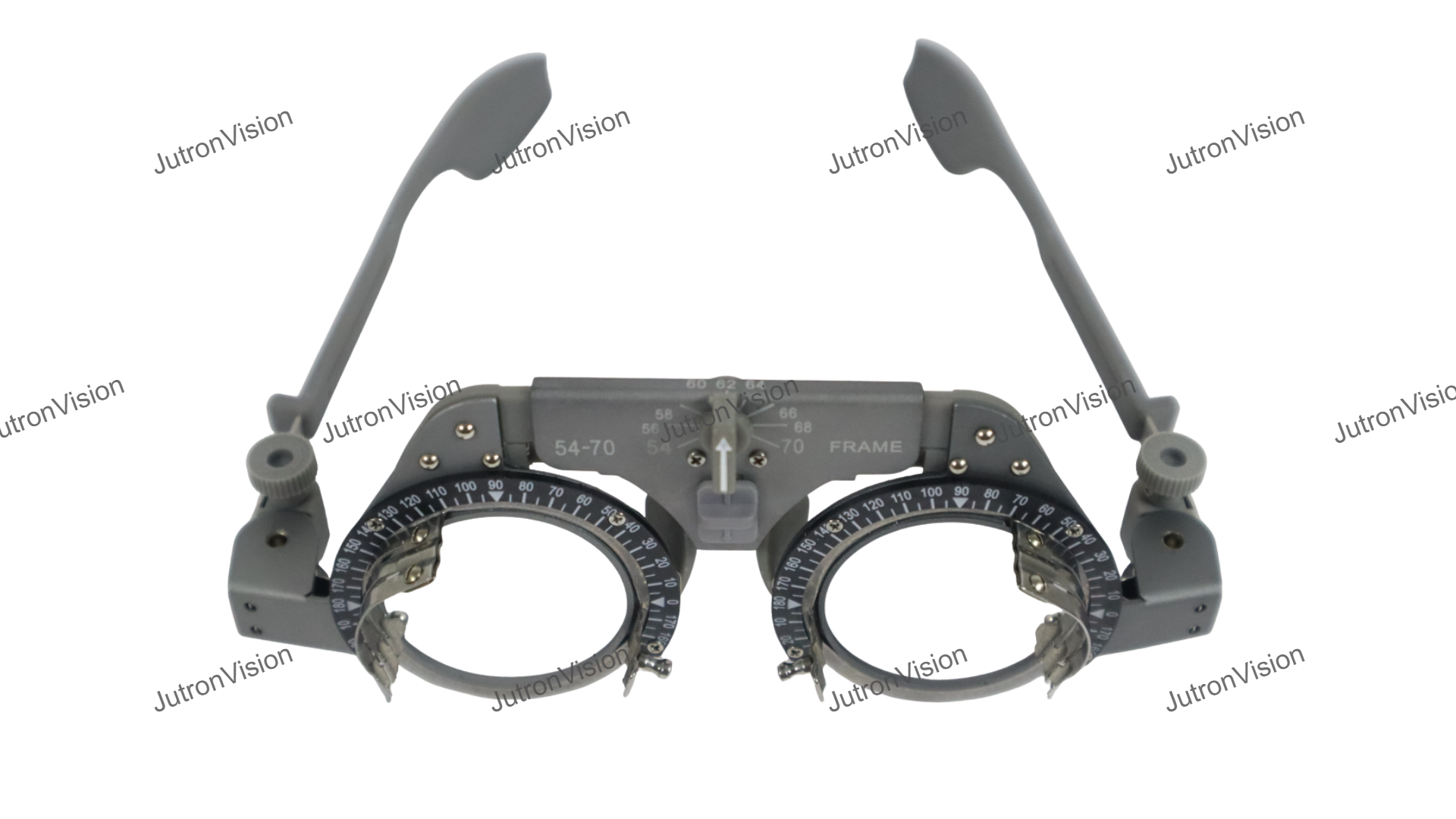
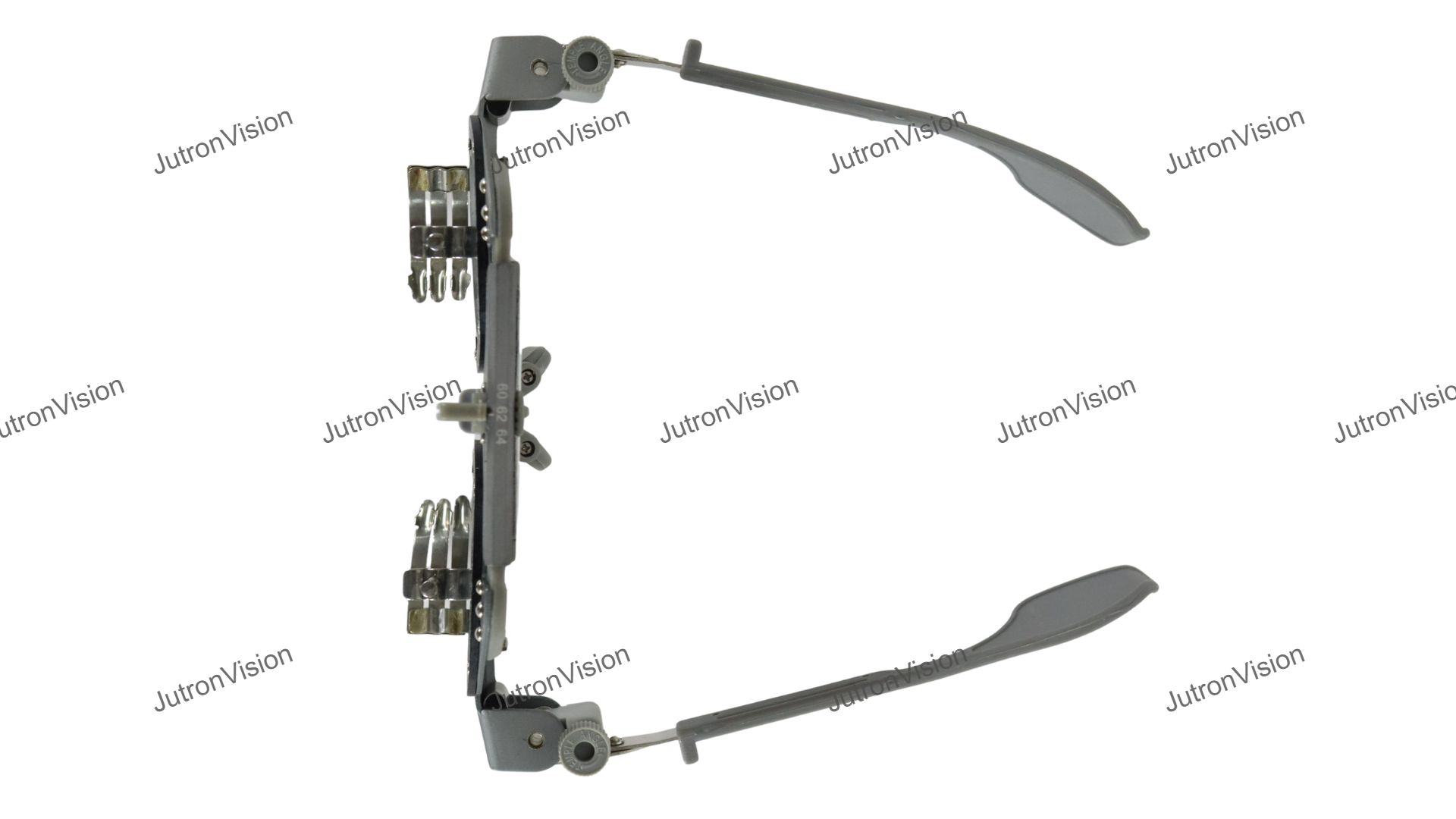
| Mounting / Display Features | The trial frame is a head-mounted optical instrument worn like eyeglasses. It includes engraved scales for PD adjustment and cylindrical axis alignment, along with adjustable temples and nose pads to ensure proper optical alignment with the patient’s eyes. |
| Features | Key features include lightweight titanium frame construction, adjustable PD mechanism, rotating axis discs for cylinder alignment, multiple lens holders per eye, adjustable nose bridge, and adjustable temple length. These features allow precise positioning of lenses and comfortable wear during examination. |
| Included Accessories / Extras | The trial frame is typically supplied with a protective storage case. Some suppliers may also include spare nose pads, adjustment tools, or cleaning cloths depending on the product package. |
| Durability / Material Qualities | The frame is constructed from titanium or titanium alloy, providing excellent strength, corrosion resistance, and lightweight comfort. The lens holders and mechanical components are designed for frequent lens insertion and removal while maintaining precise alignment. |
| Usability / Marker of Quality | A high-quality titanium trial frame features smooth PD adjustment, clearly engraved measurement scales, stable lens holders, and durable construction. Lightweight design improves patient comfort, while precise mechanical tolerances ensure accurate and repeatable results during refraction and binocular vision testing. |







Reviews
There are no reviews yet.