| Topic | Details |
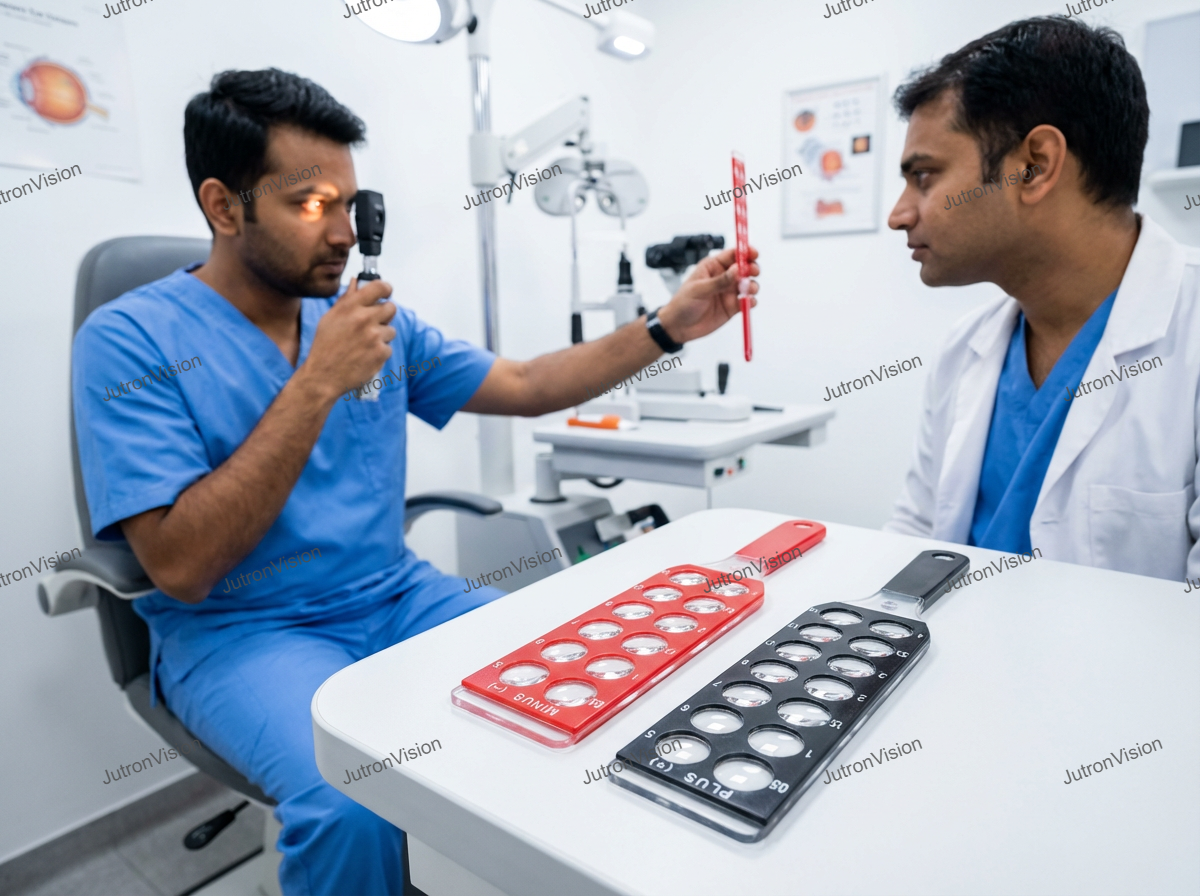
| Purpose / Target Users | The Retinoscopy Lens Rack is a diagnostic refraction tool used during retinoscopy (objective refraction) to determine a patient’s refractive error. It allows clinicians to quickly introduce different spherical lens powers while observing the retinal reflex with a retinoscope. The tool is commonly used by optometrists, ophthalmologists, optometry students, and refraction technicians during clinical eye examinations. |
| Optotypes / Symbols | Not applicable. The Retinoscopy Lens Rack is not a visual acuity chart and therefore does not contain optotypes such as letters or symbols. Visual targets used during retinoscopy are provided by external fixation targets or acuity charts. |
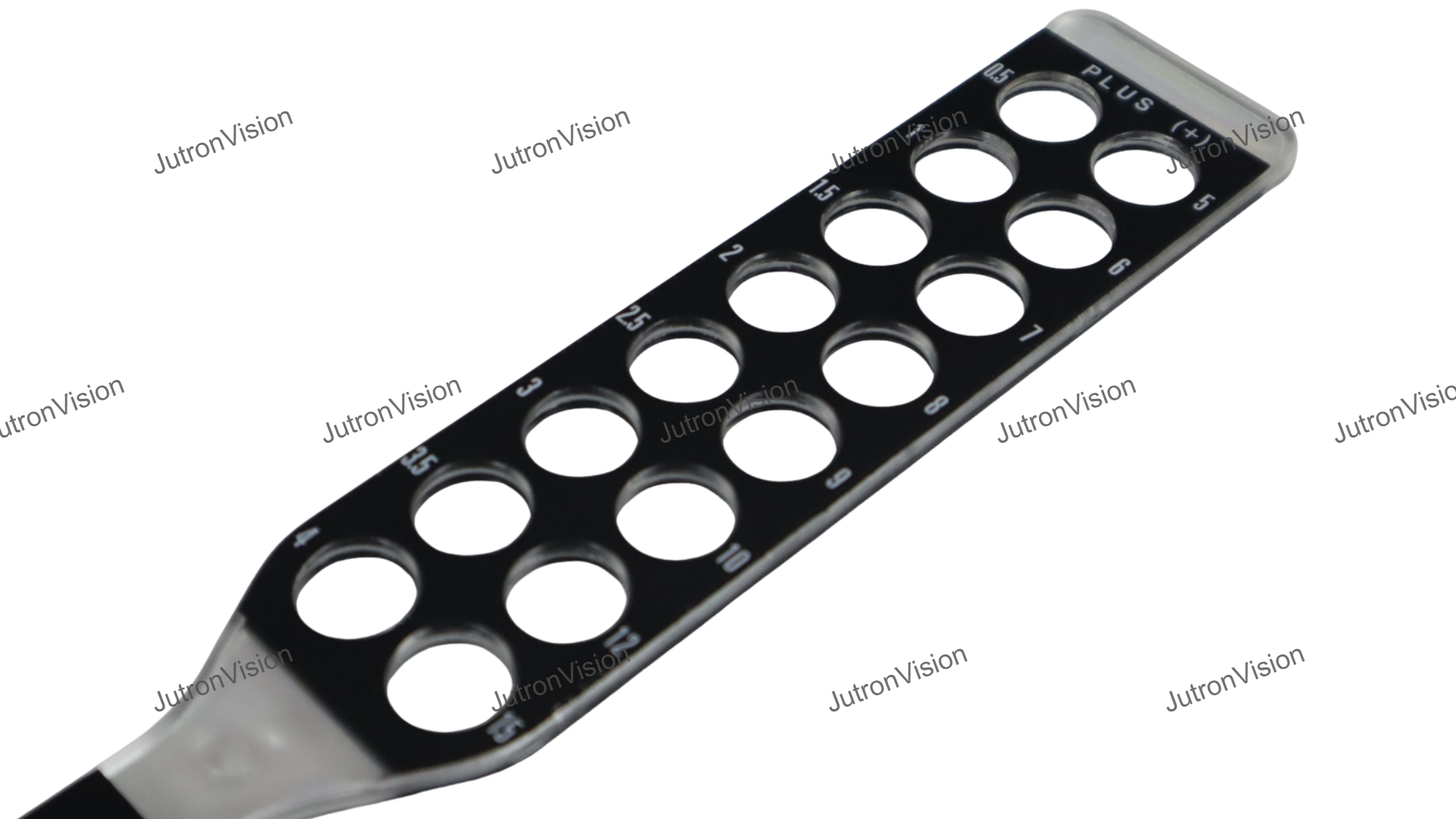
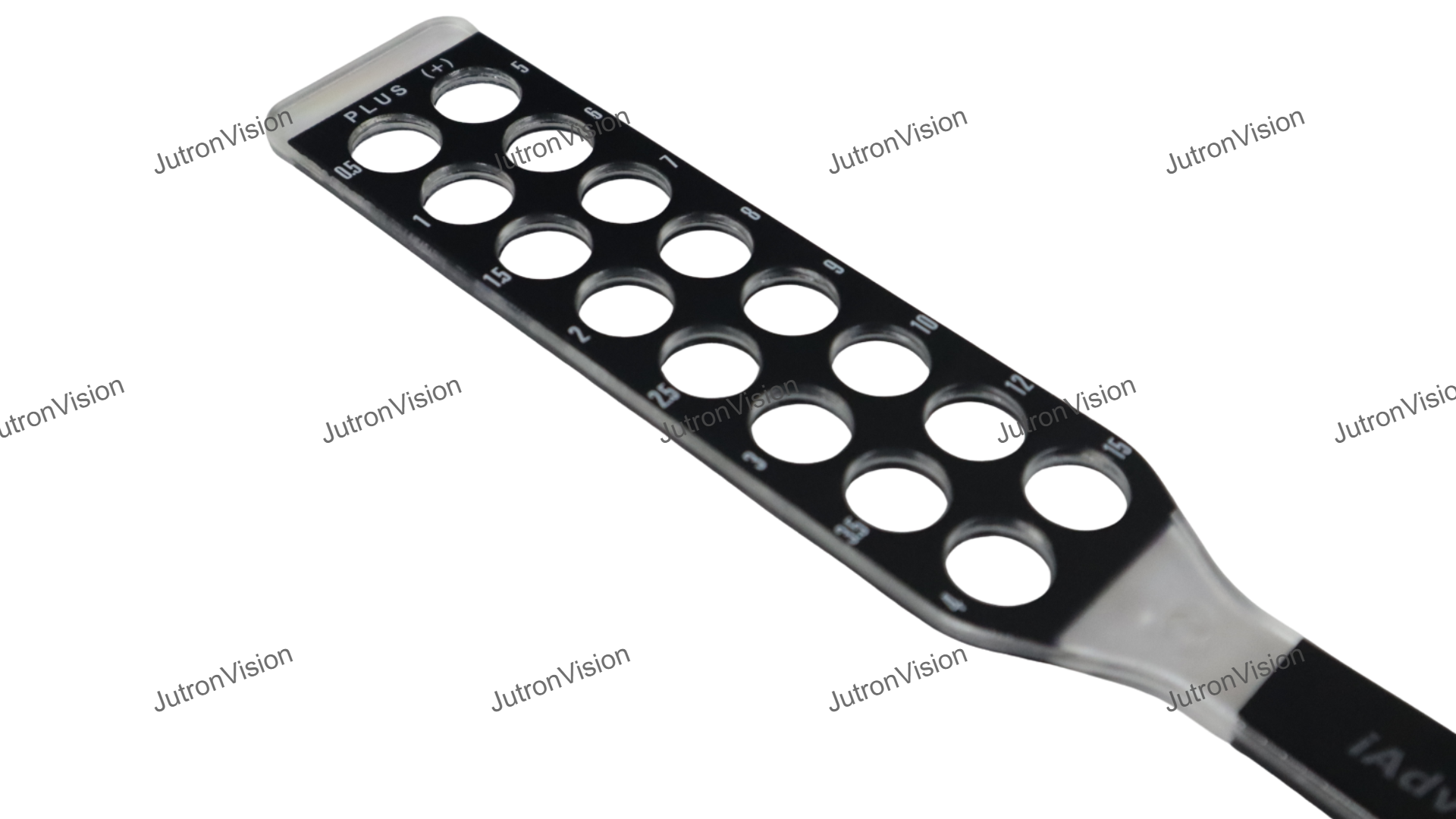
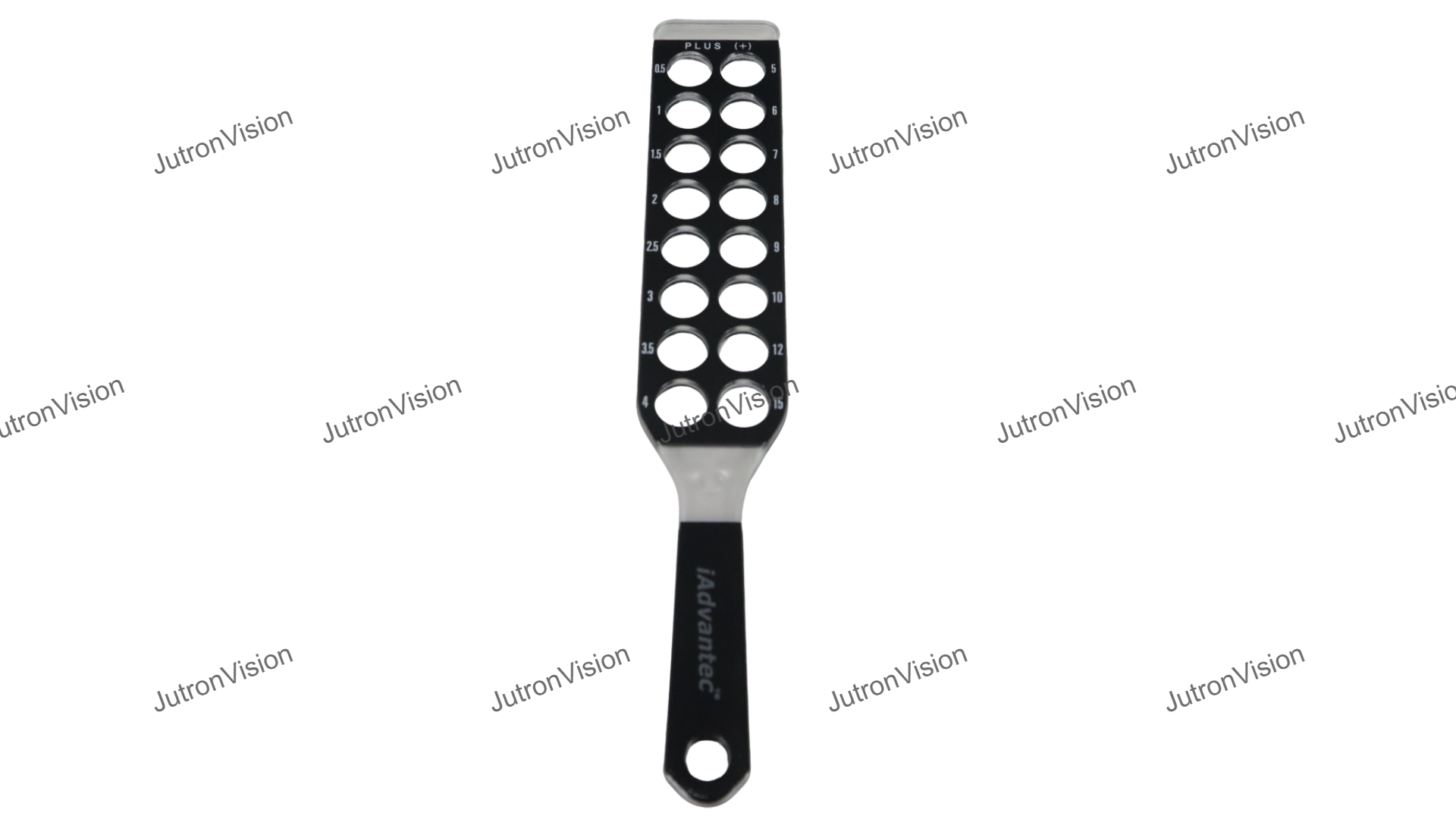
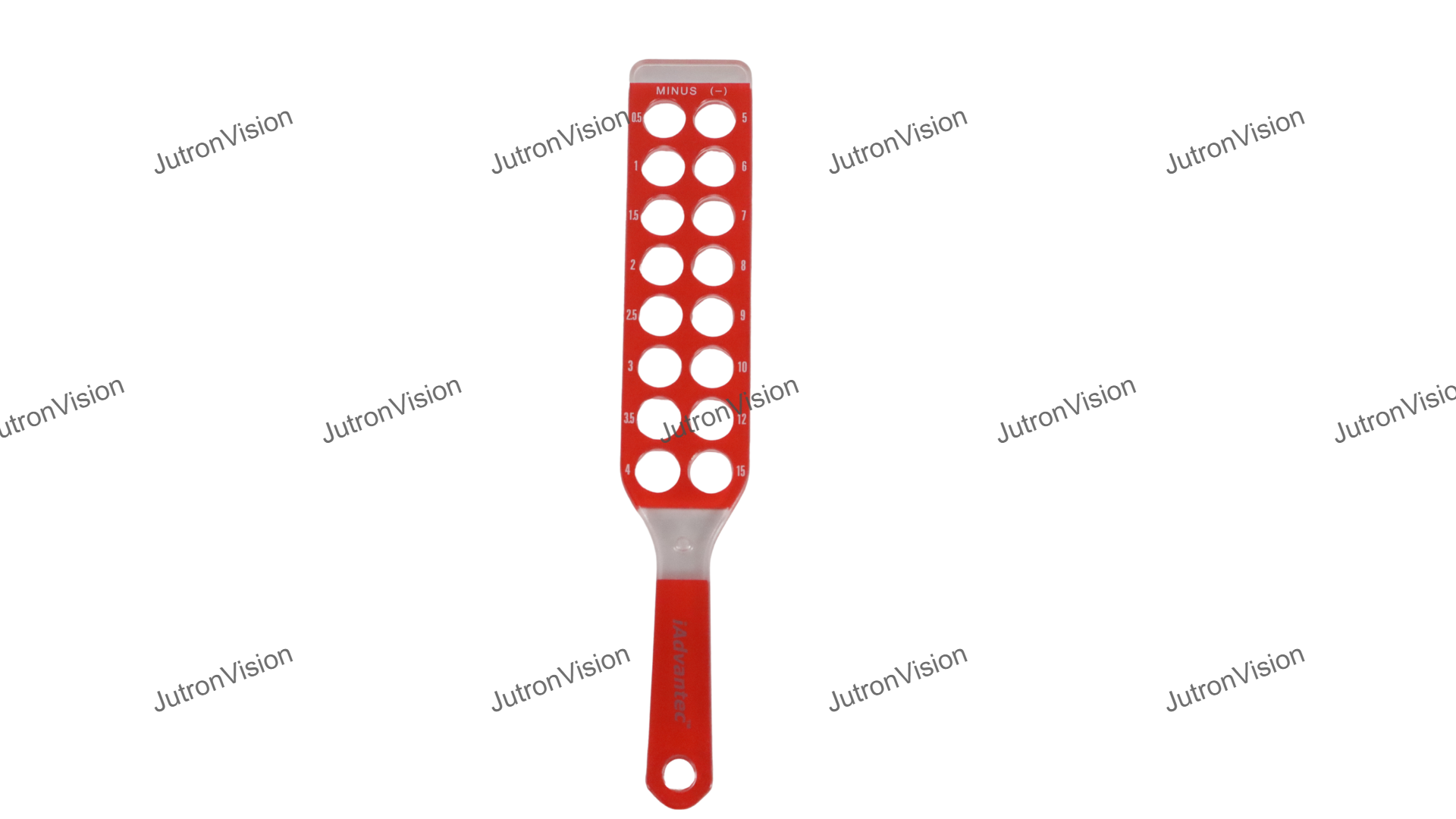
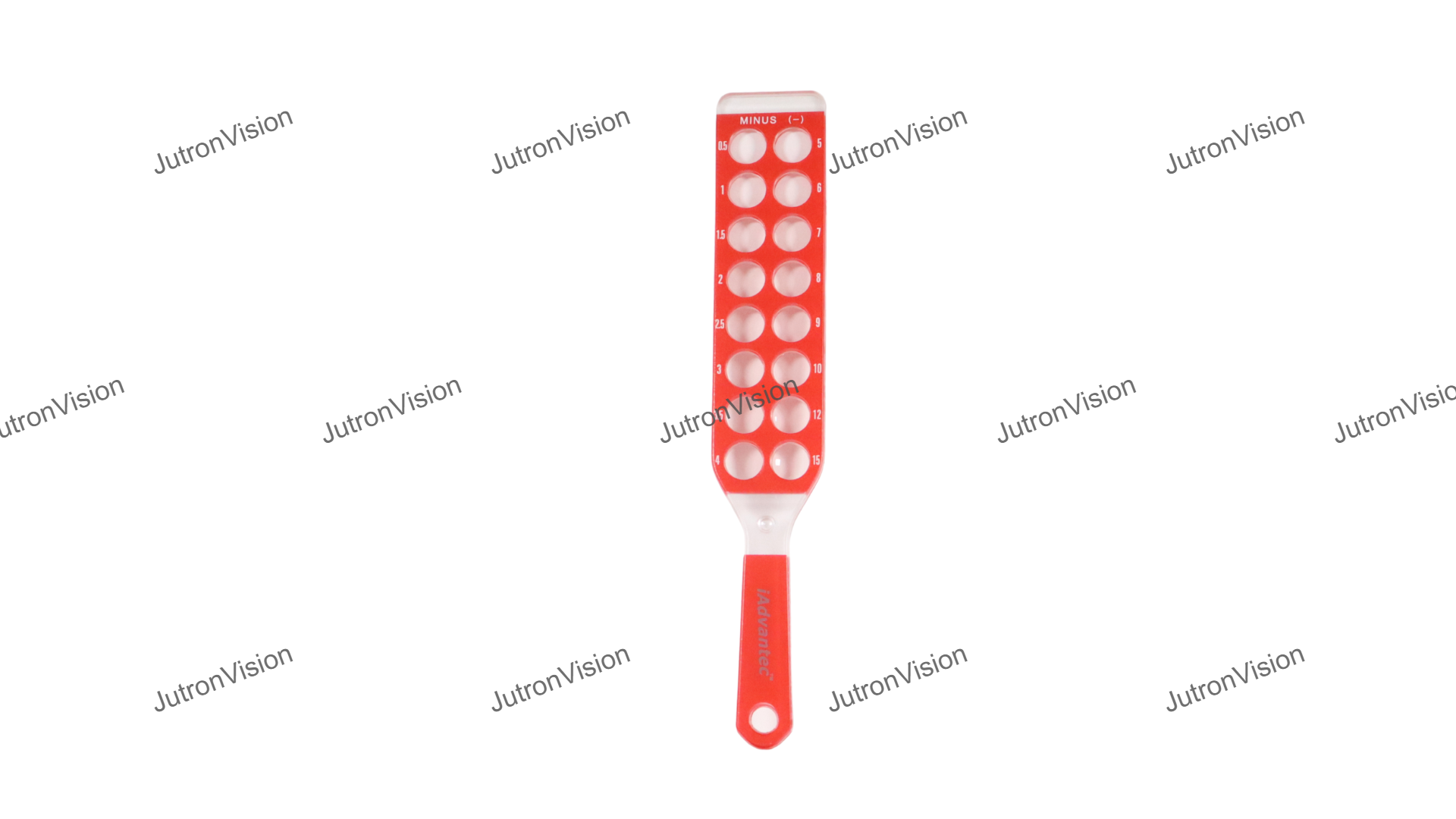
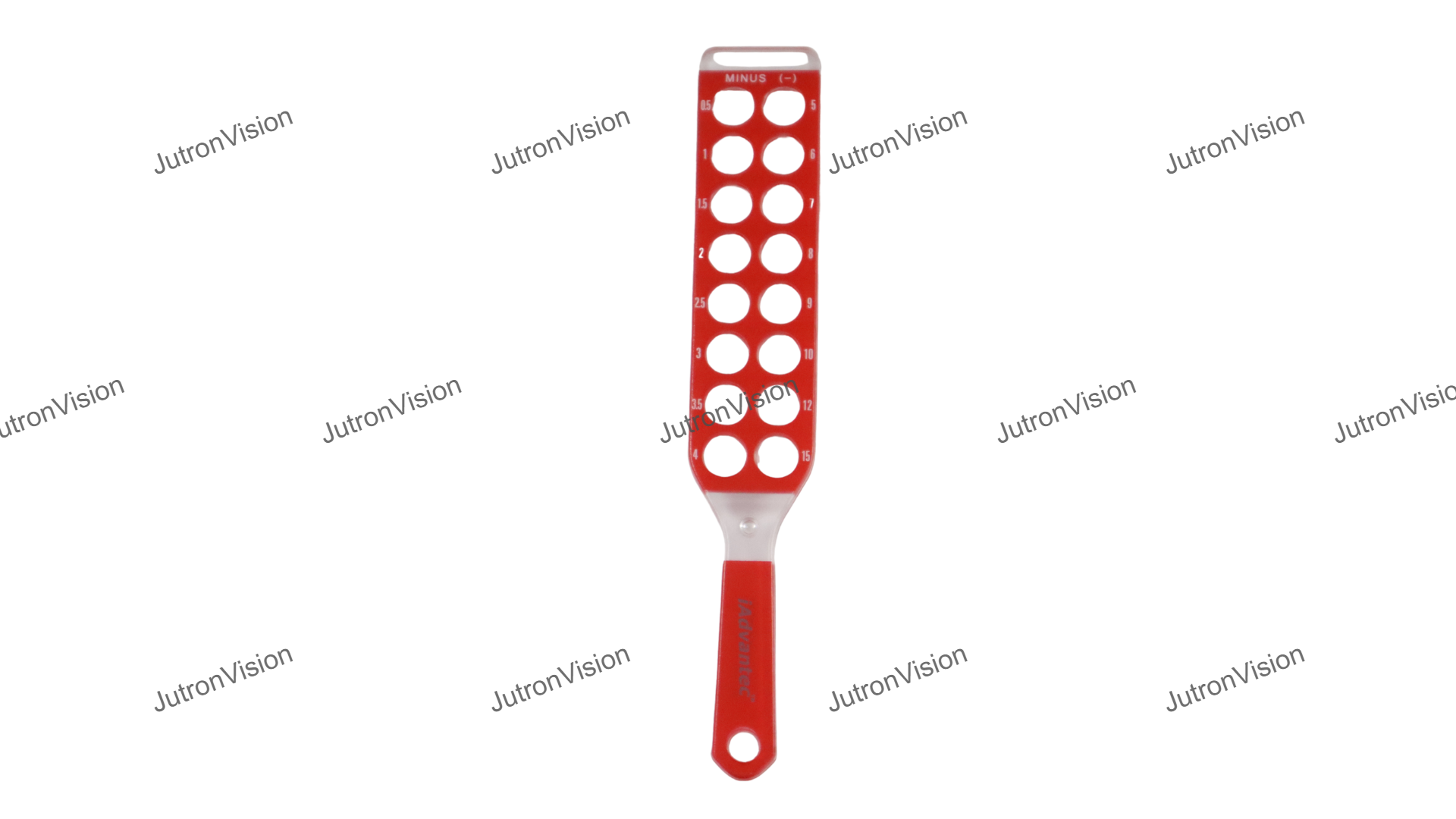
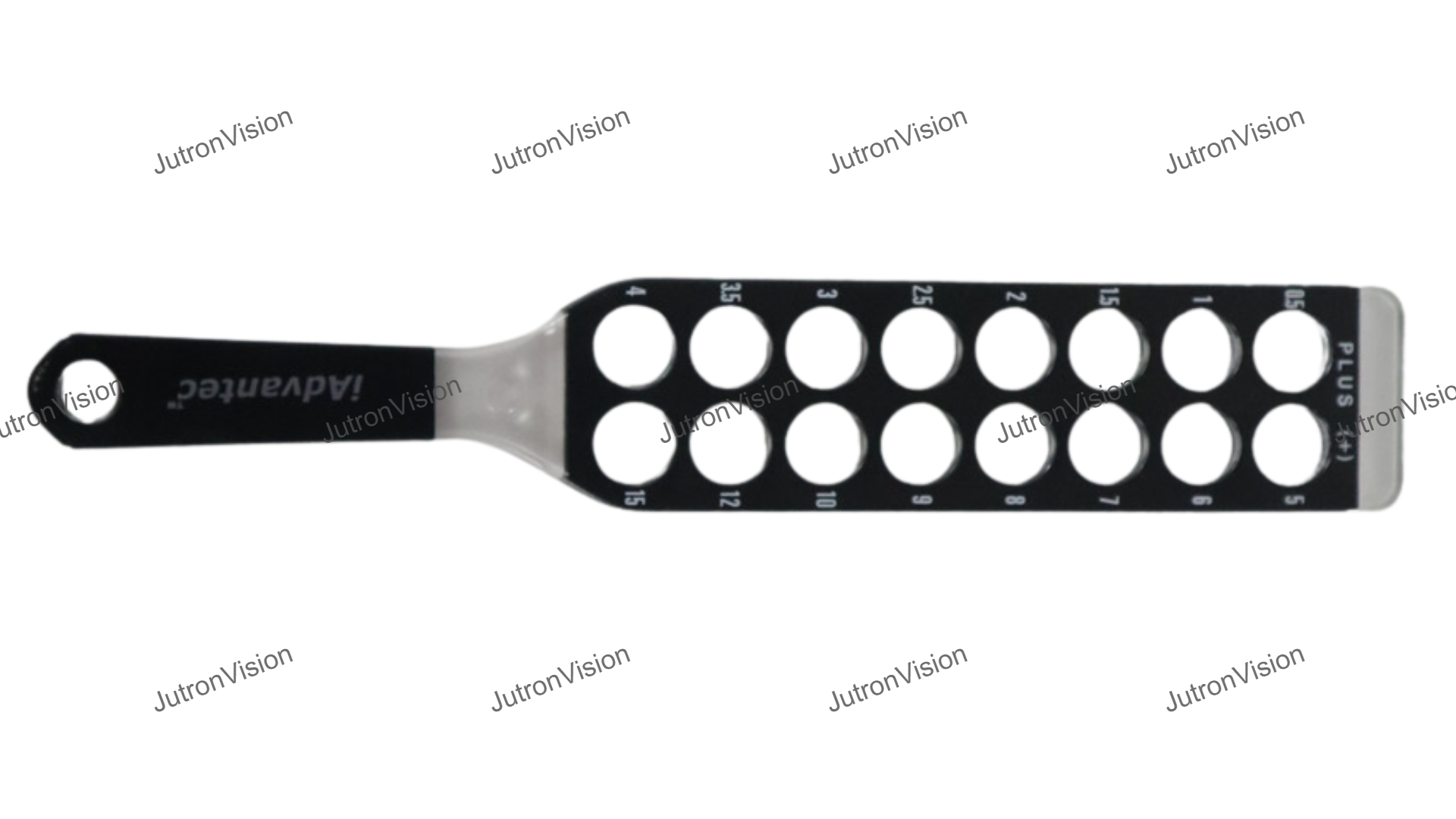
| Scaling / Spacing | The rack contains a series of precisely spaced trial lenses arranged sequentially by diopter power. Each lens is mounted in a sliding or rotating holder within the rack, allowing rapid selection during retinoscopy. |
| Range of Acuity / Line Sizes | Not applicable. The Retinoscopy Lens Rack does not measure visual acuity; it provides spherical lenses for neutralizing the retinoscopic reflex during objective refraction. |
| Testing Distance | Retinoscopy using the lens rack is typically performed at standard retinoscopy working distances (commonly around 67 cm or 50 cm depending on clinician preference). The working distance lens correction is later subtracted to determine the final refractive power. |
| Physical Size & Portability | The rack is designed as a compact handheld instrument, typically measuring approximately 10 inches in length and around 1.5–2 inches in width, making it easy to hold during retinoscopy examinations. |
| Mounting / Display Features | The lens rack is handheld and used directly during retinoscopy. The lenses are mounted in sliding racks or sequential holders, allowing the examiner to quickly move between lens powers while observing the reflex through the retinoscope. |
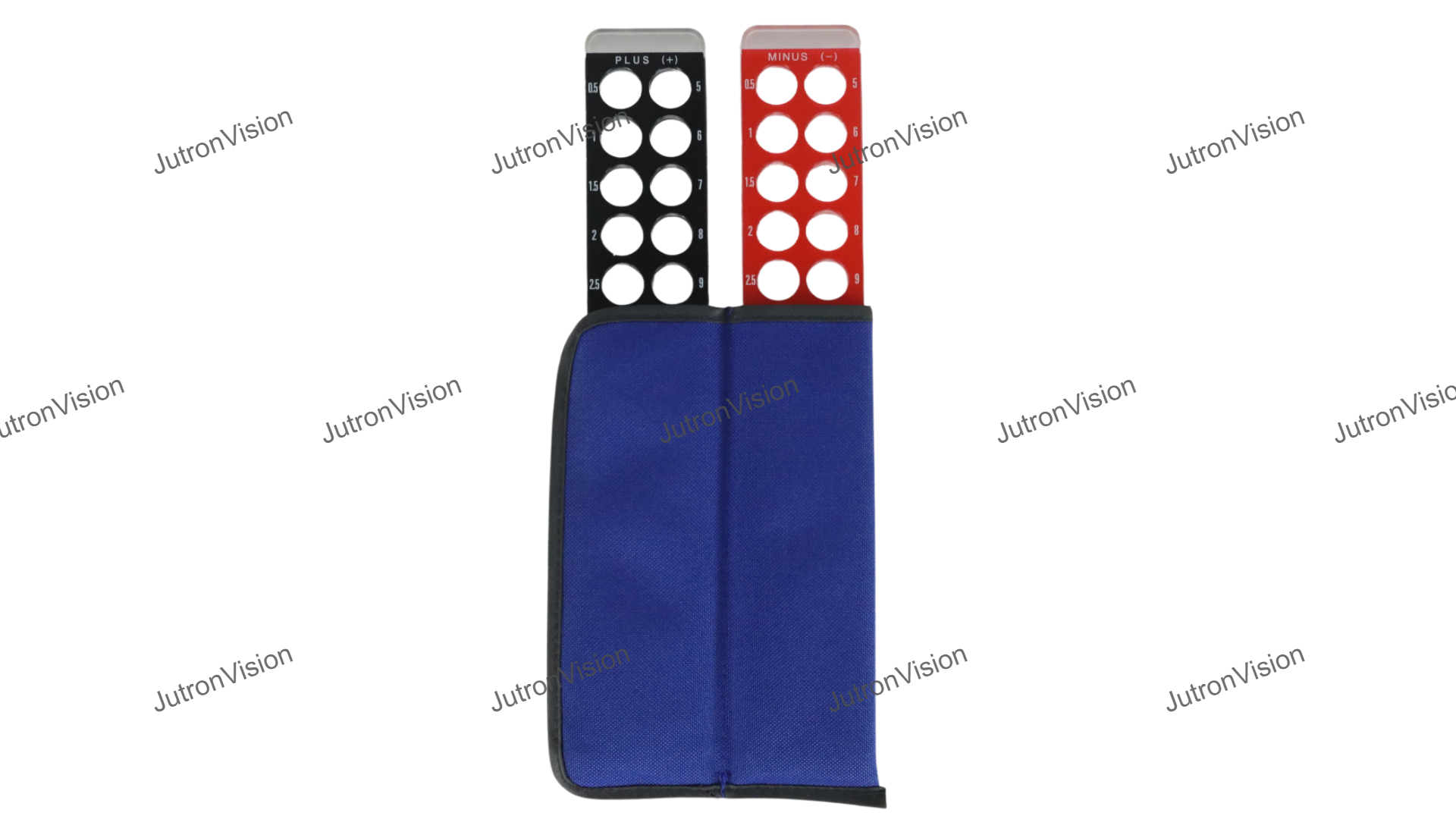
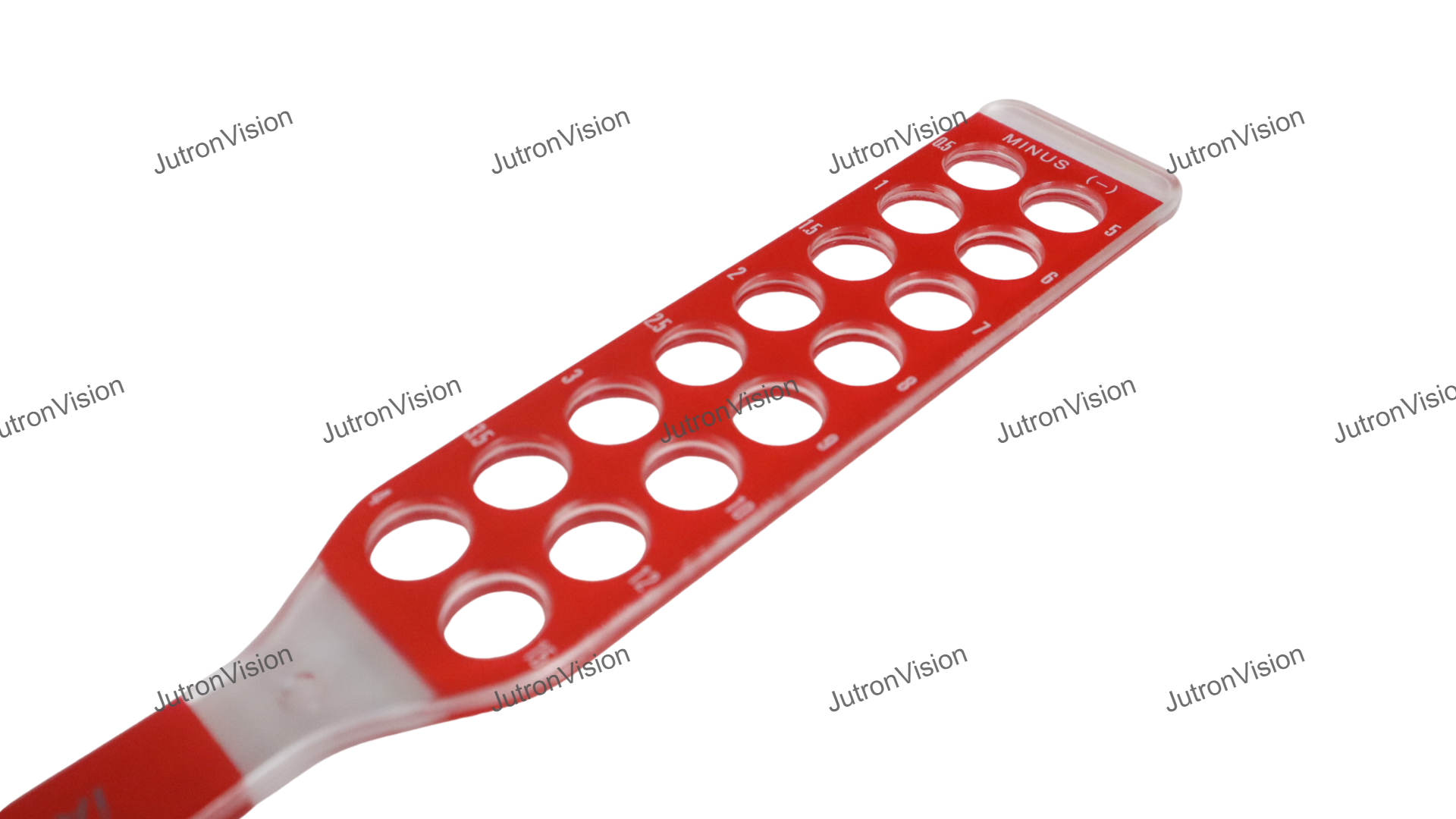
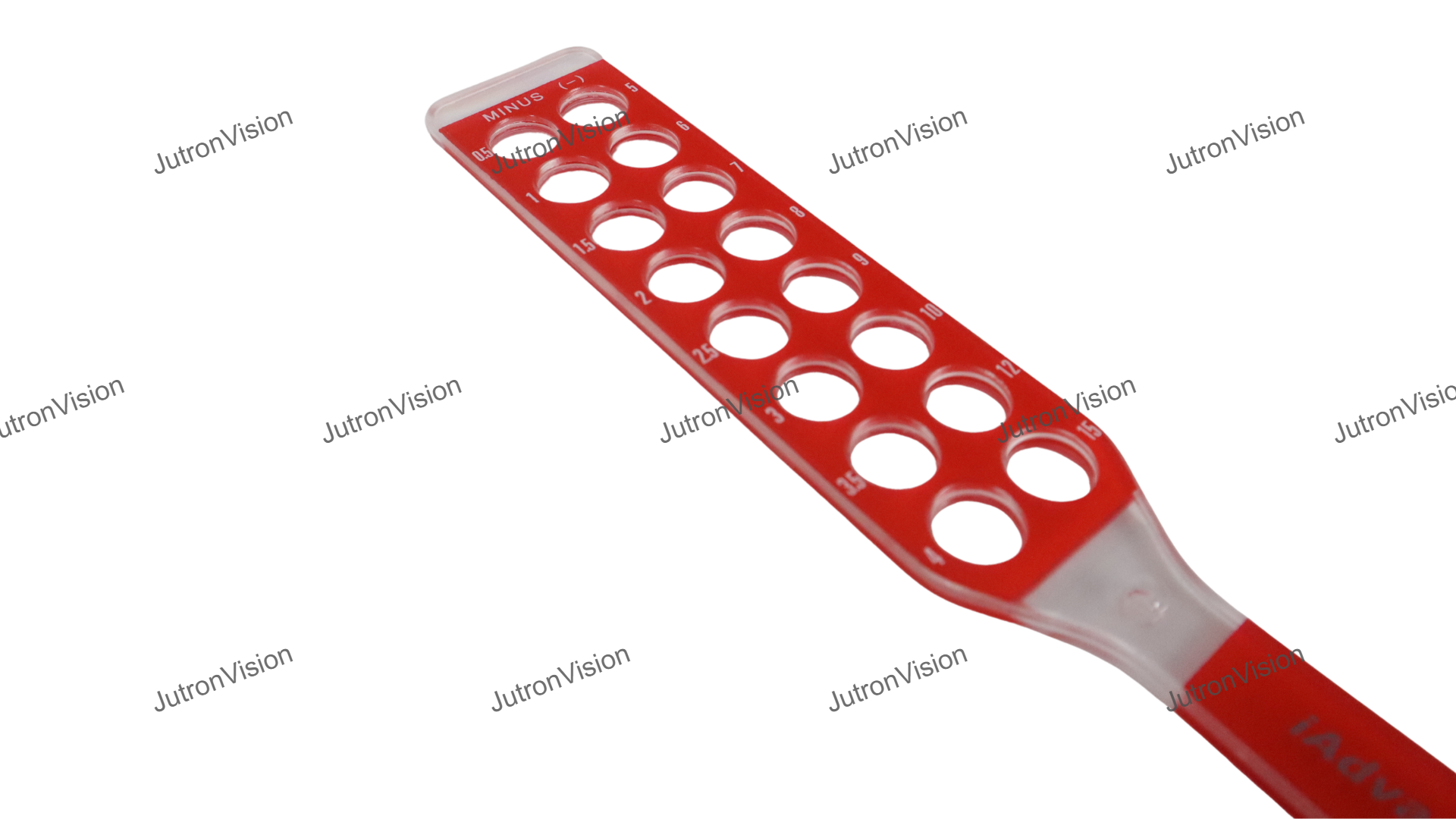
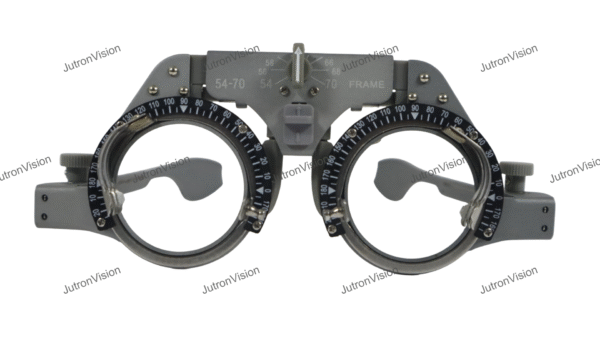
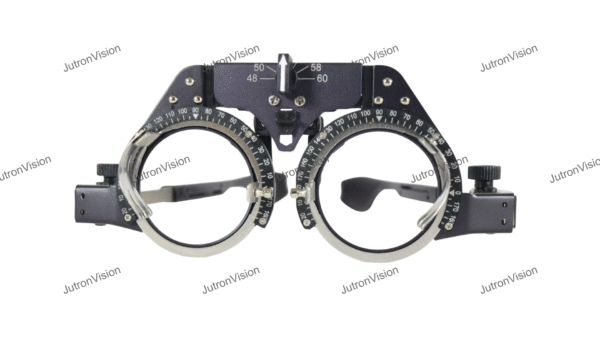
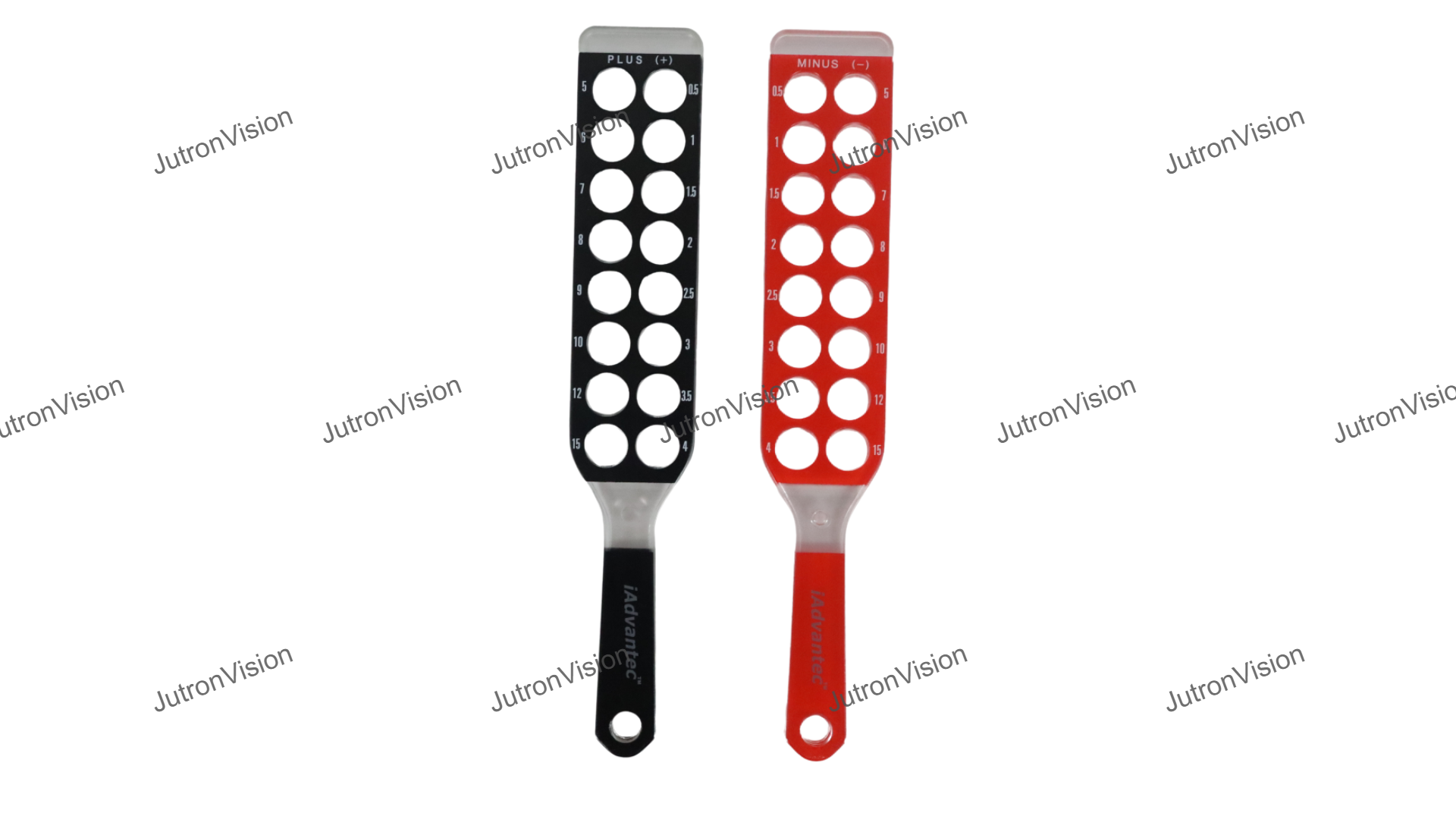
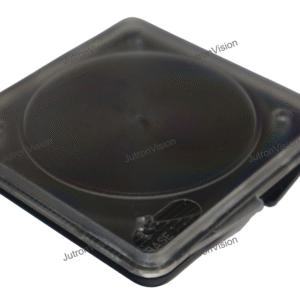
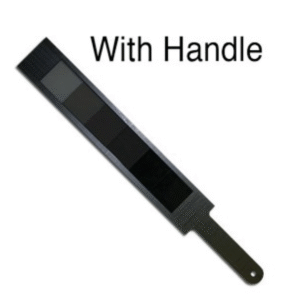
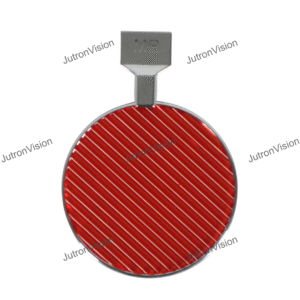
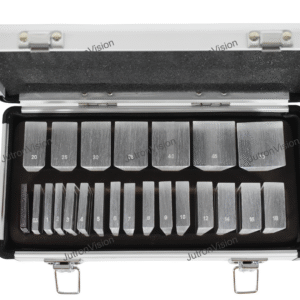
| Included Accessories / Extras | The standard set typically includes two color-coded racks (commonly red and black) containing 16 spherical lens powers each, along with a protective storage sleeve or case for safe handling and transport. |
| Durability / Material Qualities | Retinoscopy lens racks are typically constructed from durable metal or high-quality plastic housings with optical glass lenses. The robust design allows frequent clinical use while maintaining accurate lens alignment and power identification. |
| Usability / Marker of Quality | High-quality retinoscopy racks feature clearly marked diopter powers, smooth sliding lens movement, durable construction, and accurate optical lenses. Color-coded racks help clinicians quickly identify lens ranges, making the instrument efficient and reliable for routine objective refraction procedures. |




Reviews
There are no reviews yet.