



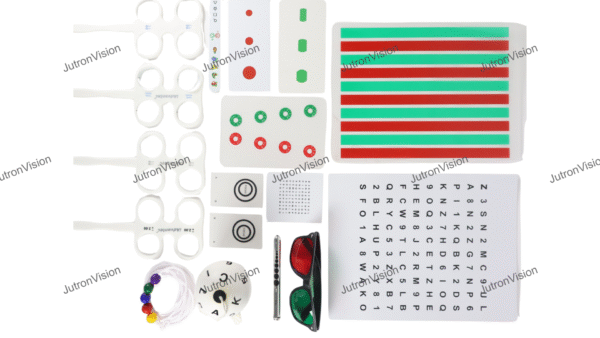
Description
Product description
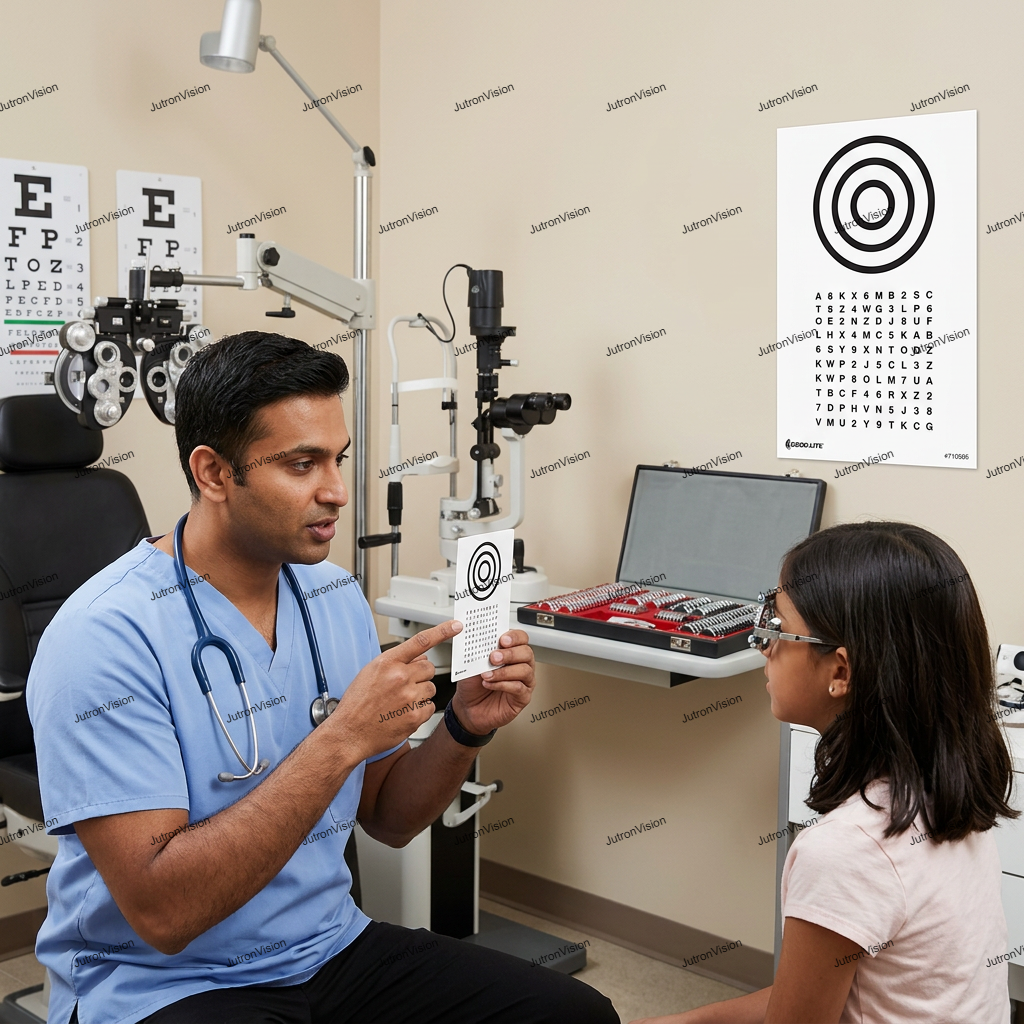
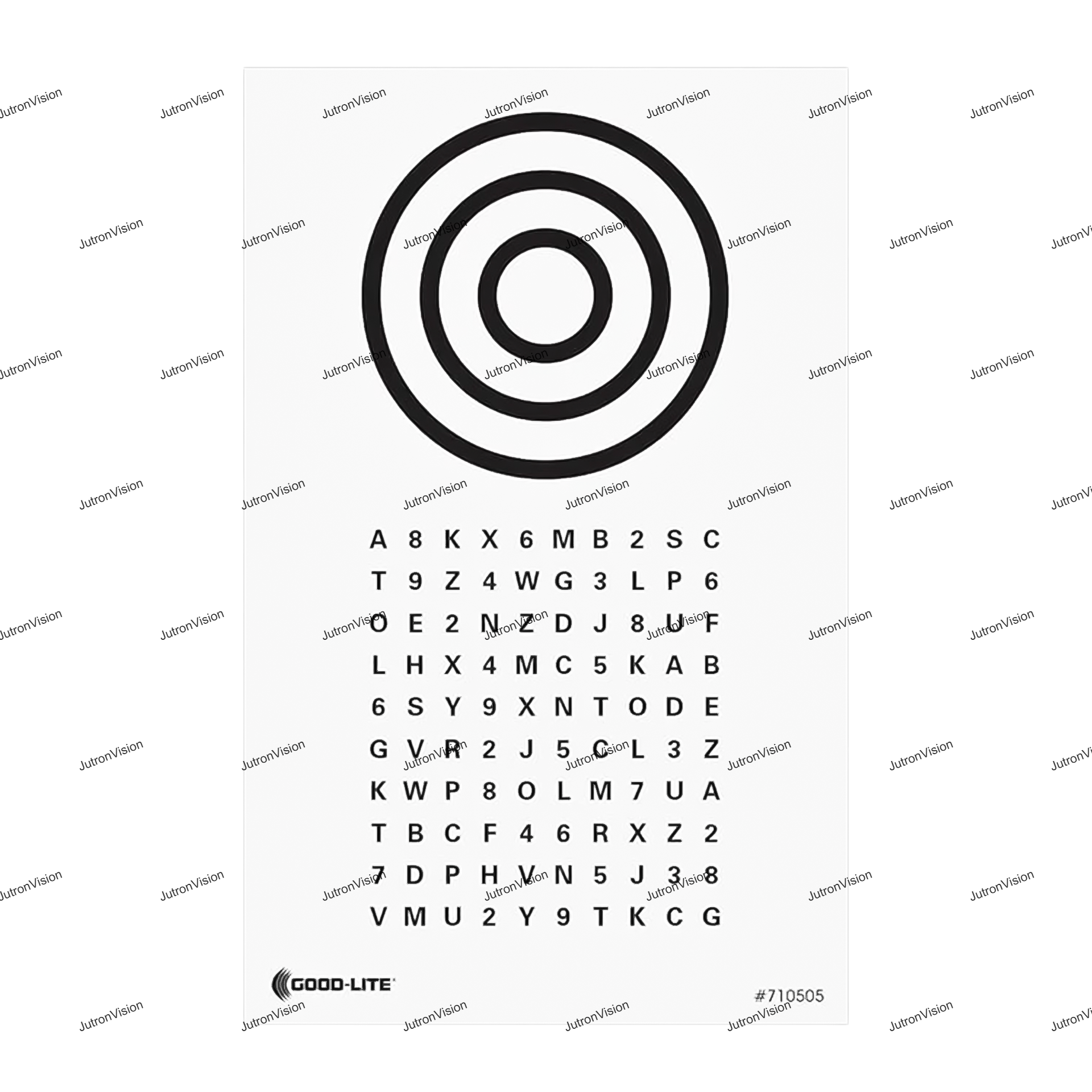
“The Z-Axis Accommodative Rock Chart – Clear Bullseyes is a matched near/distance target set that trains how quickly and accurately the eyes can shift focus (accommodative facility). Patients alternate their gaze between crisp bullseye rings at near and distance—“rocking” focus forward and back—while you time performance and, if desired, layer ±1.50 or ±2.00 D flippers to increase demand. The high-contrast rings make it easy to call “clear” vs “blur,” so sessions are simple to teach, repeat, and track in clinic or supervised home programs.
What it builds: Speed/accuracy of focus shifts (accommodation) and stamina at near
How to use (quick start): Place distance chart at eye level → hold near card at ~40 cm → alternate targets and call “clear” each time; record CPM
Progressions: Start without lenses → add ±1.50/±2.00 flippers → shorten decision time or increase trial duration
Why bullseyes help: Sharp concentric rings provide an immediate clear/blur cue for consistent scoring
Who it suits: Older children, teens, and adults; clinic blocks and home VT with provider guidance
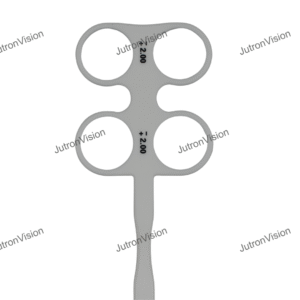
Pair with: Confirmation Flippers (±1.50/±2.00), fixation stick or metronome for pacing, log sheet for CPM/symptoms
Good practices: Keep posture steady, blink normally, use consistent lighting/working distance, and stop if sustained blur or headache develops
Care: Keep charts flat/clean; avoid glare; wipe gently with a dry, soft cloth”
| Topic | Details |
| Purpose / Target Users | The Z-Axis Accommodative Rock Chart – Clear Bullseyes is a vision therapy tool designed to improve accommodative facility and focusing flexibility. It trains the eye’s ability to shift focus between different depths by isolating the z-axis (depth / accommodation) from horizontal and vertical eye movements. It is commonly used in vision therapy programs, orthoptic clinics, and home-based exercises. Target users include patients with accommodative dysfunction, accommodative insufficiency, focusing instability, and individuals experiencing early presbyopic changes. |
| Optotypes / Symbols | The chart uses clear bullseye targets (concentric circle patterns) rather than traditional letters or numbers. These circular targets allow patients to easily recognize when the image is in focus or blurred while shifting focus between planes. |
| Scaling / Spacing | The bullseye targets are arranged with progressively varying sizes and spacing, allowing the patient to perceive changes in focus clearly. The design helps patients recognize when accommodation is engaged or relaxed during the focusing exercise. |
| Range of Acuity / Line Sizes | The chart does not follow traditional Snellen acuity scaling. Instead, it uses bullseye targets of varying diameters that serve as visual cues for clarity and blur detection during accommodative training. |
| Testing Distance | The tool is designed for near-vision accommodative training, typically used at approximately 40 cm working distance. The dual-plane design simulates shifting focus between near and slightly farther visual planes, encouraging accommodative flexibility. |
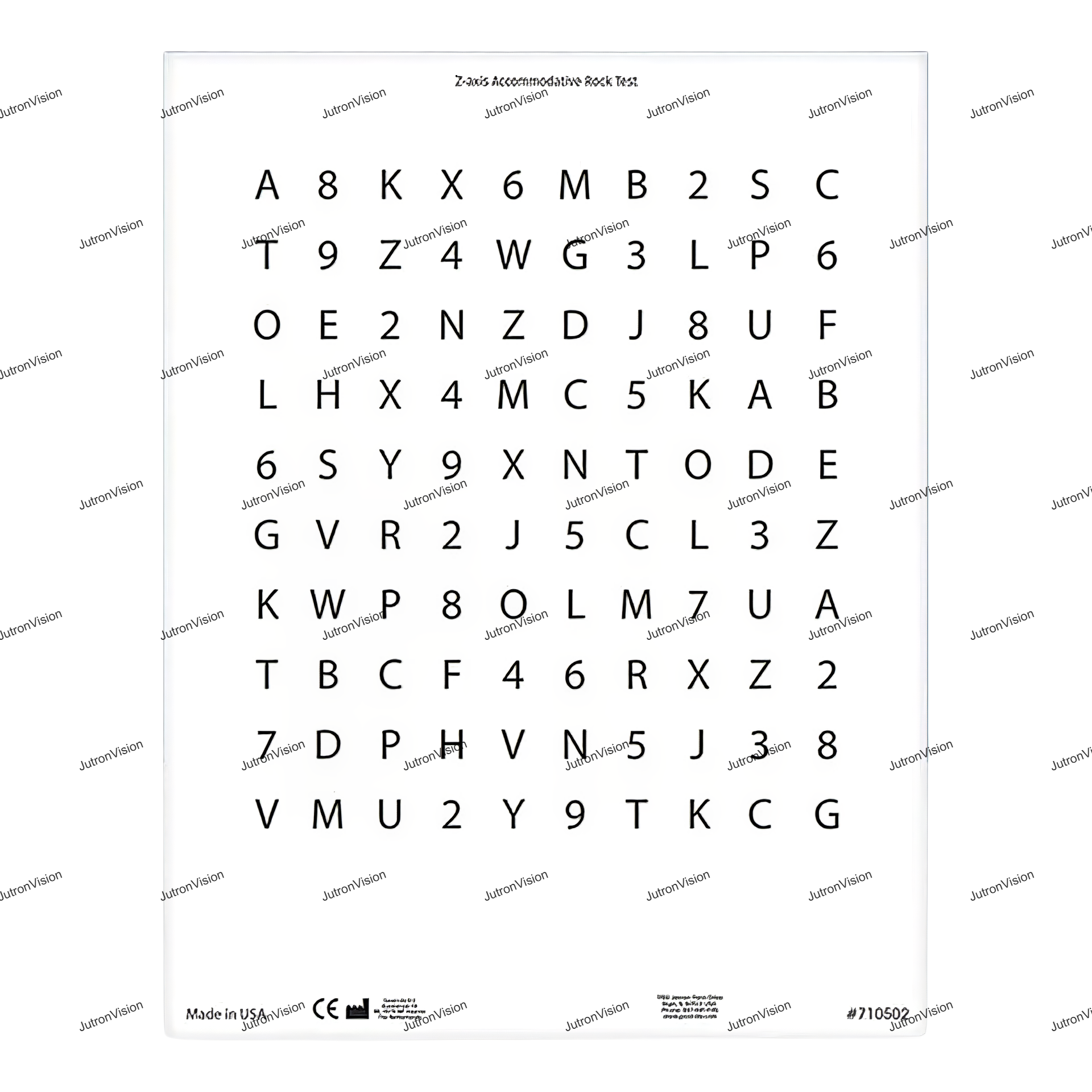
| Physical Size & Dimensions | The system consists of two aligned visual planes: a distance chart and a transparent near overlay card. The charts are typically lightweight and compact, making them easy to use in clinics or for home-based therapy exercises. |
| Included Accessories / Extras | The chart typically includes patient instruction guidelines explaining how to perform accommodative rock exercises. It may also include transparent overlay cards used to create the dual-plane focusing effect. |
| Used | The chart consists of a distance chart positioned behind a transparent near-card containing bullseye targets. When both are aligned, the patient views two visual planes simultaneously. As the patient shifts focus, one plane becomes clear while the other appears blurred. This method isolates the accommodative system (z-axis focusing) while minimizing horizontal or vertical eye movement influences. |
| Vision Therapy Application | The tool is used to train accommodative flexibility, focusing accuracy, and visual endurance. It helps patients develop the ability to rapidly shift focus between near and far visual planes, which is essential for reading, screen use, and other near-vision tasks. |
| Usability / Marker of Quality | A well-designed Z-Axis Accommodative Rock Chart provides clear bullseye targets, precise transparency alignment, and stable visual contrast to ensure reliable accommodative feedback. Its simple design allows easy integration into professional vision therapy sessions as well as supervised home training programs. |


Reviews
There are no reviews yet.