| Topic | Details |
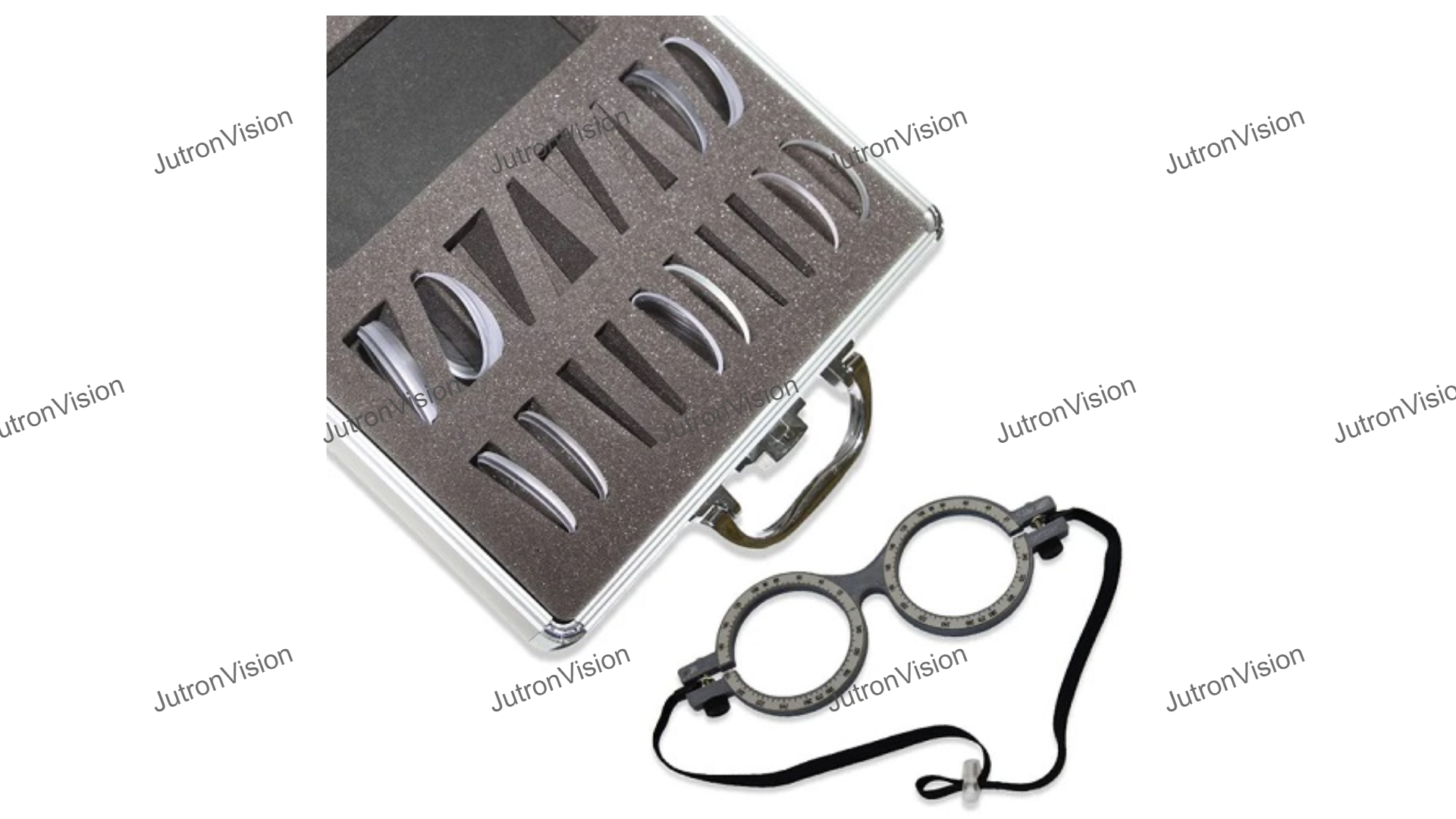
| Purpose / Target Users | While the kit is clearly meant for vision therapy / orthoptic use (binocular work, yoked prisms), the listing does not provide detailed user groups (e.g., children vs adults) or specific clinical applications. |
| Optotypes / Symbols | There is no mention of printed letters/symbols or optotypes on the lenses themselves — only that each lens is marked with its diopter and a “line” indicating the base. |
| Scaling / Spacing | The diopter increments (0.5 to 12 D) are given, but there is no information about spacing in terms of tasks, line sizes or how the prism magnitude translates to displacement for the patient. |
| Range of Acuity / Line Sizes | Because this is a prism set (not a visual acuity chart), no acuity range (e.g., 6/6 to 6/60) or line size specifications are given. |
| Testing Distance | The listing does not state a recommended viewing or testing distance for use of the kit (near, intermediate, distance). |
| Physical Size & Dimensions | We know the clear aperture diameter is 38 mm, but details such as lens thickness, rim outer diameter, weight of each lens, frame weight, and vertex distance of the frame are not provided. |
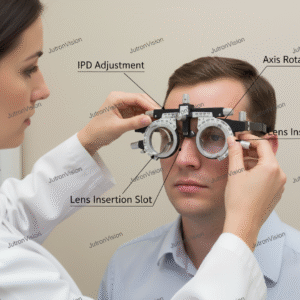
| Mounting / Display Features | The frame is included, but details are missing: how lenses mount (clips, screws), frame adjustability (PD range, nose‑piece adjustment, strap vs temples), orientation marks for base direction of prism. |
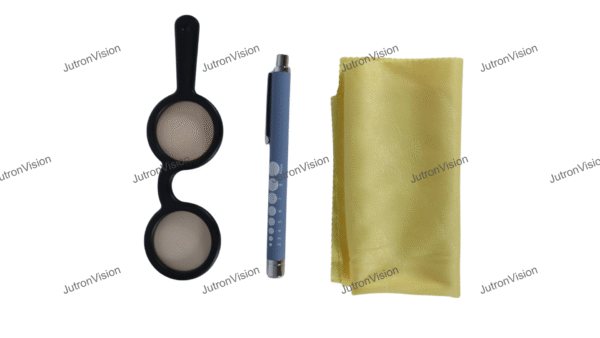
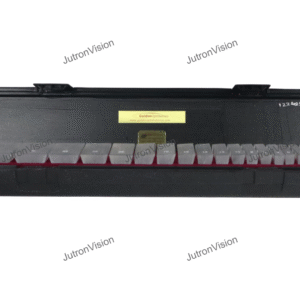
| Included Accessories / Extras | The kit includes the lenses, frame, and case. But accessory items such as cleaning cloth, instruction manual, spare pads/straps, or replacement lenses are not explicitly listed. |
| Durability / Material Qualities | While “Corrected Curve” suggests quality optics, the listing does not specify the lens material (glass vs acrylic/plastic), any coatings (anti‑scratch, anti‑reflective), rim/frame material, warranty, expected service life. |
| Usability / Marker of Quality | The CE approval and brand name are positive indicators, but the listing lacks optical tolerances (e.g., prism power accuracy, base direction accuracy), clinical validation user reviews, or compatibility with specific trial frame systems. |





Reviews
There are no reviews yet.