



Description
Product description
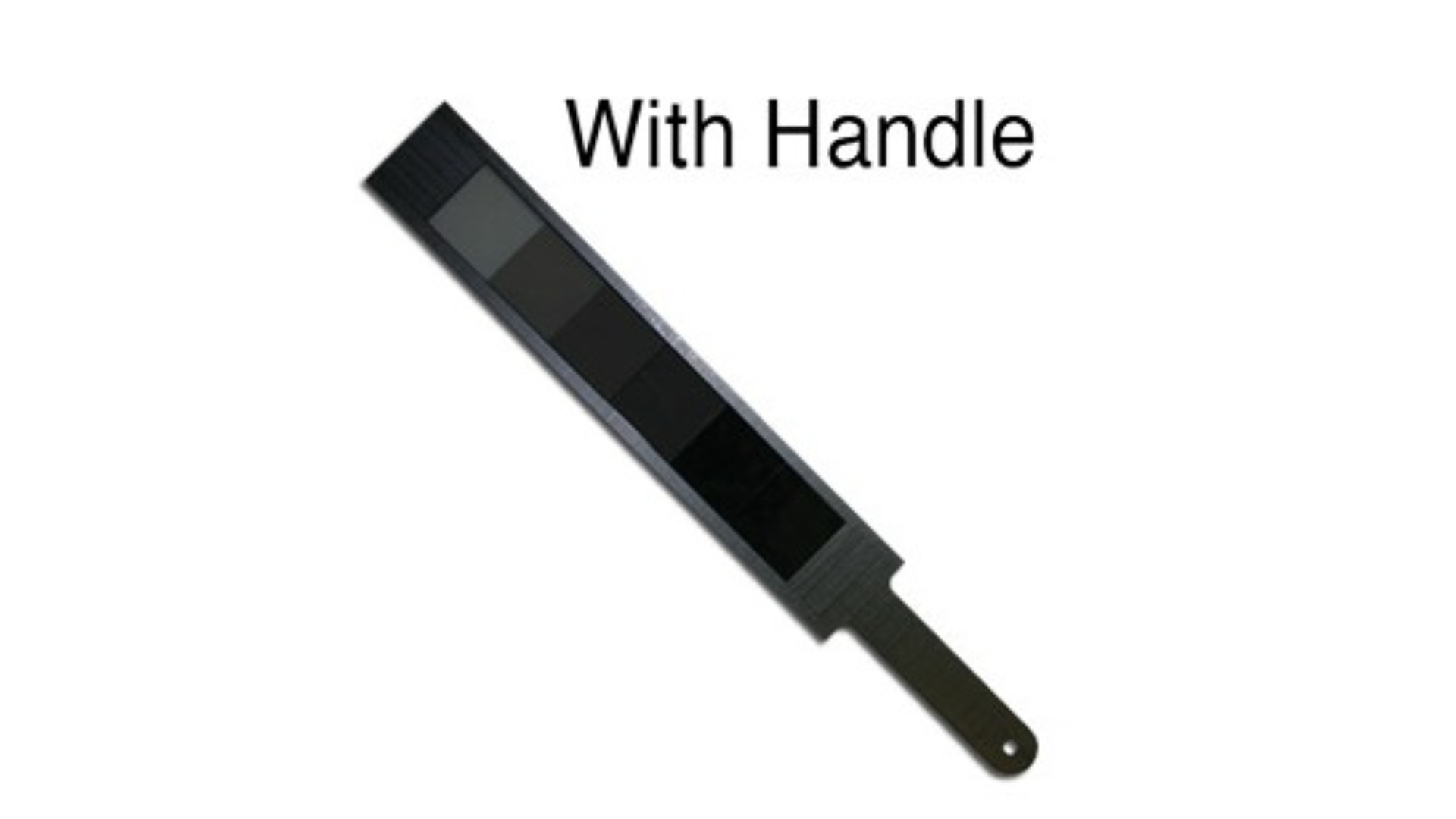
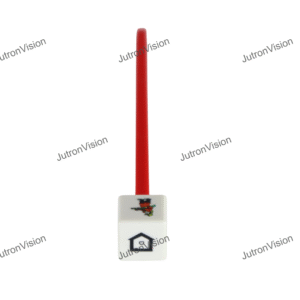
- The Neutral Density Filter Bar – Large (with Handle) is a stepped, calibrated set of neutral density (ND) filters designed to quantify Relative Afferent Pupillary Defect (RAPD) and standardize luminance during pupil testing and binocular checks. The oversized apertures give a wide, even field while the easy-grip handle enables smooth, one-handed operation at the chair—so you can match attenuation precisely, record the log unit that balances the response, and reproduce results across visits.
- Primary use: Objective RAPD quantification by placing ND filters before the better-reacting eye until direct/consensual responses appear symmetric
- How it helps: Neutral, spectrally balanced attenuation keeps color and contrast consistent—ideal for swinging flashlight testing and luminance control
- Stepped precision: Calibrated log unit steps (e.g., 0.3 increments, model-dependent) for accurate documentation and comparison over time
- Large apertures: Wide, uniform beam coverage reduces edge artifacts and makes alignment easy in pediatrics and adults
- Ergonomics: Easy-grip handle supports one-hand use while you control fixation and room illumination with the other
- Quick start: Dim room → perform baseline swinging flashlight test → add ND filter before the non-affected eye → step up until responses match → record log units
- Other uses: Standardize luminance for binocular balance, glare sensitivity checks, and controlled photopic/mesopic viewing tasks
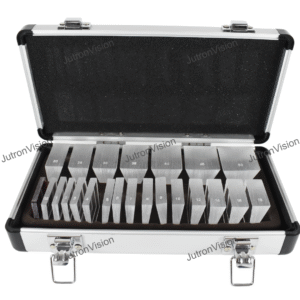
- Care: Wipe filters with lens-safe solution and a soft cloth; avoid scratches/solvents; store flat in the lined case to keep calibration pristine
| Topic | Details |
| Purpose / Target Users | his device is designed for assessing afferent pupillary defects (APD) / relative afferent pupillary defect (RAPD) — i.e., diminished pupil reaction to light levels. Target users are eye-care professionals (ophthalmologists, optometrists) engaged in functional pupillary testing rather than standard visual-acuity screening. The bar is used in conjunction with the “Swinging Flashlight” test to quantify the conduction defect. Not intended as an optotype or symbol-based acuity chart (letters, numbers, etc.). It is a diagnostic filtering device rather than a visual acuity chart. |
| Optotypes / Symbols | Not applicable in the usual sense (letters, symbols). This product uses neutral density optical filters (transparent grey filters) of increasing density, placed over one eye to balance pupillary response differences. The “symbols” are simply the numeric density log-units engraved on the bar. The filters are marked with values (0.3, 0.6, 0.9, 1.2, 1.5, 1.8 log units) representing their density. |
| Scaling / Spacing | Again, typical spacing of optotypes is not relevant here. Instead, the “scaling” is in log units of optical density: 0.3 → 1.8 log units. The standard increments are 0.3 log unit steps for this bar. No “line size” or “spacing between lines” specification is needed — the device is compact and used manually. |
| Range of Acuity / Line Sizes | Because this is not a visual-acuity chart, the “range of acuity / line sizes” does not apply in the traditional sense. Instead, the range of filter densities is: 0.3, 0.6, 0.9, 1.2, 1.5, and 1.8 log units. These values allow the clinician to quantify how much additional attenuation of light is needed on the “good” eye to equalize pupillary response when compared to the “bad” eye (i.e., the test of APD). |
| Testing Distance | There isn’t a fixed “testing distance” specification for this device in terms of meters/feet like a chart, because it is used in an ocular examination context (penlight / swinging flashlight test) rather than at a fixed vision-screening distance. The instructions note that the bar is placed over one eye and a light source is directed alternately between eyes. So, testing distance would be as per standard pupillary test: the distance of the flashlight to the eye; not a fixed room distance like 6 m. |
| Physical Size & Dimensions | The large version / “bar with handle” version (SKU 470200) is specified as 10″ × 1.5″ (25.3 cm × 3.8 cm). Also one source mentions the large size variant at 10″ × 2″ (25.4 cm × 5.0 cm) for a version without handle. Each individual filter on the bar is 1.5″ square (≈ 38 mm × 38 mm) for the large version. Comes with handle (in the “with handle” version) for easier manipulation. The handle length is integrated into the overall size. |
| Mounting / Display Features | This device is hand-held rather than wall-mounted or displayed. It comes with a handle and is used by the clinician holding it over the patient’s eye. It comes with a storage case or pouch for safe keeping. There are no “display features” such as lighting, back-light, etc, because it is a passive filter bar device. The filters are engraved with log unit values for quick visual reference. |
| Included Accessories / Extras | According to the spec sheet: Comes with a handle (for version 470200) and a case for storage. The instructions for use (e.g., version 15117/15118) mention a pouch for storage. There is no evidence of additional accessories like illumination, attachments, slide plates, etc — the device is simple. The variant may include a filter slider for more refined measurement (for the “Large with Filter Slider” version) in some catalogs. |
| Durability / Material Qualities | The device is reusable and intended for clinical use. The instructions for reuse state: clean with mild soap and water, never use alcohol (which may haze the bar). It is made with optical filters of precise densities; the engineering ensures log-unit accuracy of densities. – The large filters (38 mm square) minimise stray light leakage. The device should be stored in ambient temperature; no special conditions required. The construction appears to be of durable optical plastic or glass filter elements set in a bar with handle; though the exact substrate material isn’t specified in detail. The case/pouch protects it from dust/damage, and correct handling is emphasised to avoid light leaks or uneven cover. |
| Usability | The bar is ergonomic (handle for ease of use), clear log-unit markings, large filter size helps coverage of the eye area without light leak. The instructions emphasise correct placement and avoidance of light leaks. |
| Marker of Quality | The log-unit densities (0.3 →1.8) are standard in APD measurement and mentioned in multiple manufacturer catalogues, which indicates adherence to clinical norms. The instructions emphasise correct cleaning, handling, and calibration (log values engraved) which is a sign of professional grade. For best use: Ensure the clinician is familiar with the “swinging flashlight” protocol; ensure correct alignment, avoid bleaching of retina, ensure interpretable pupil responses. |
Reviews
There are no reviews yet.