| Topic | Details |
| Category | Stereo Acuity Test / Pediatric Ophthalmology |
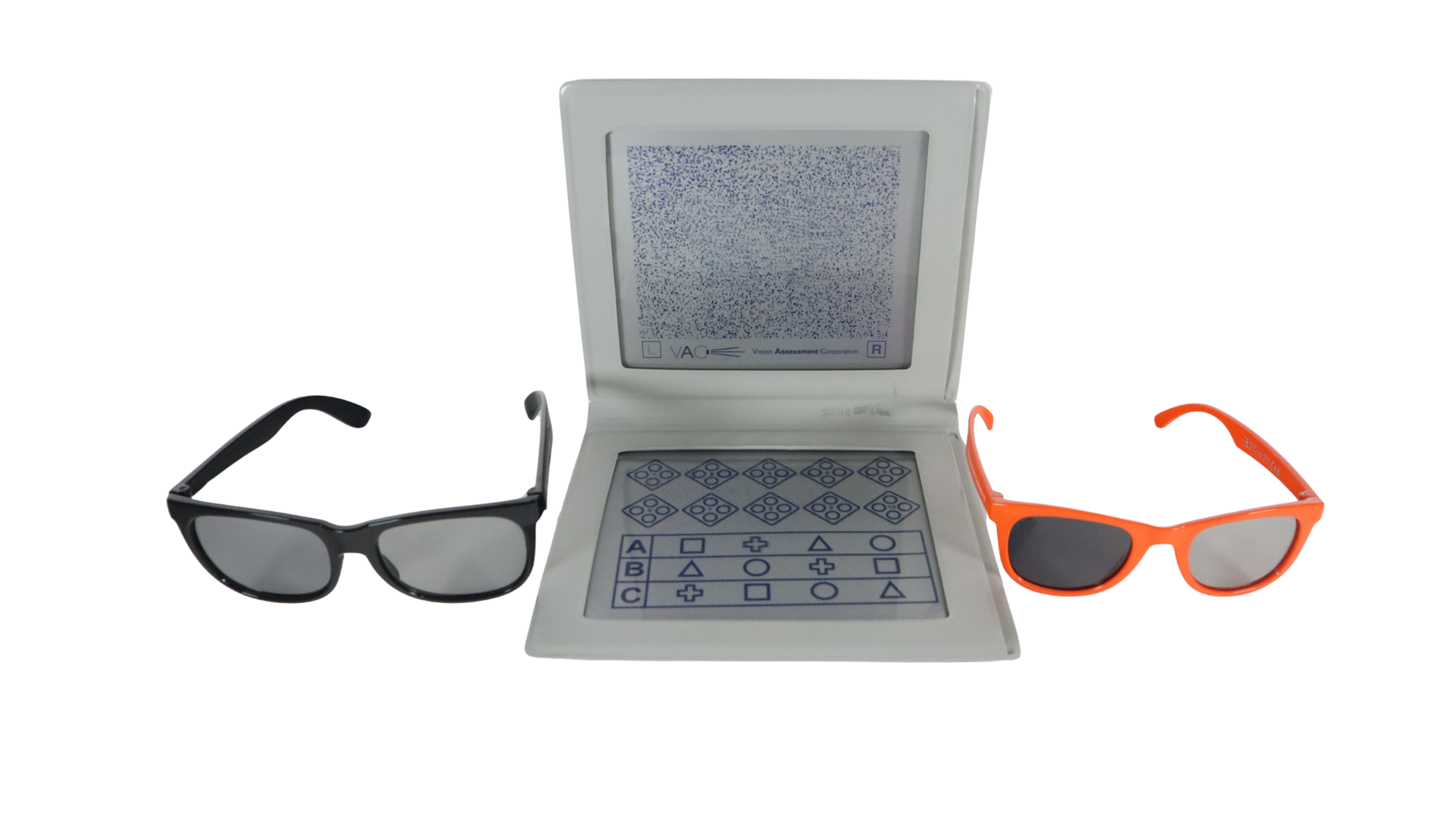
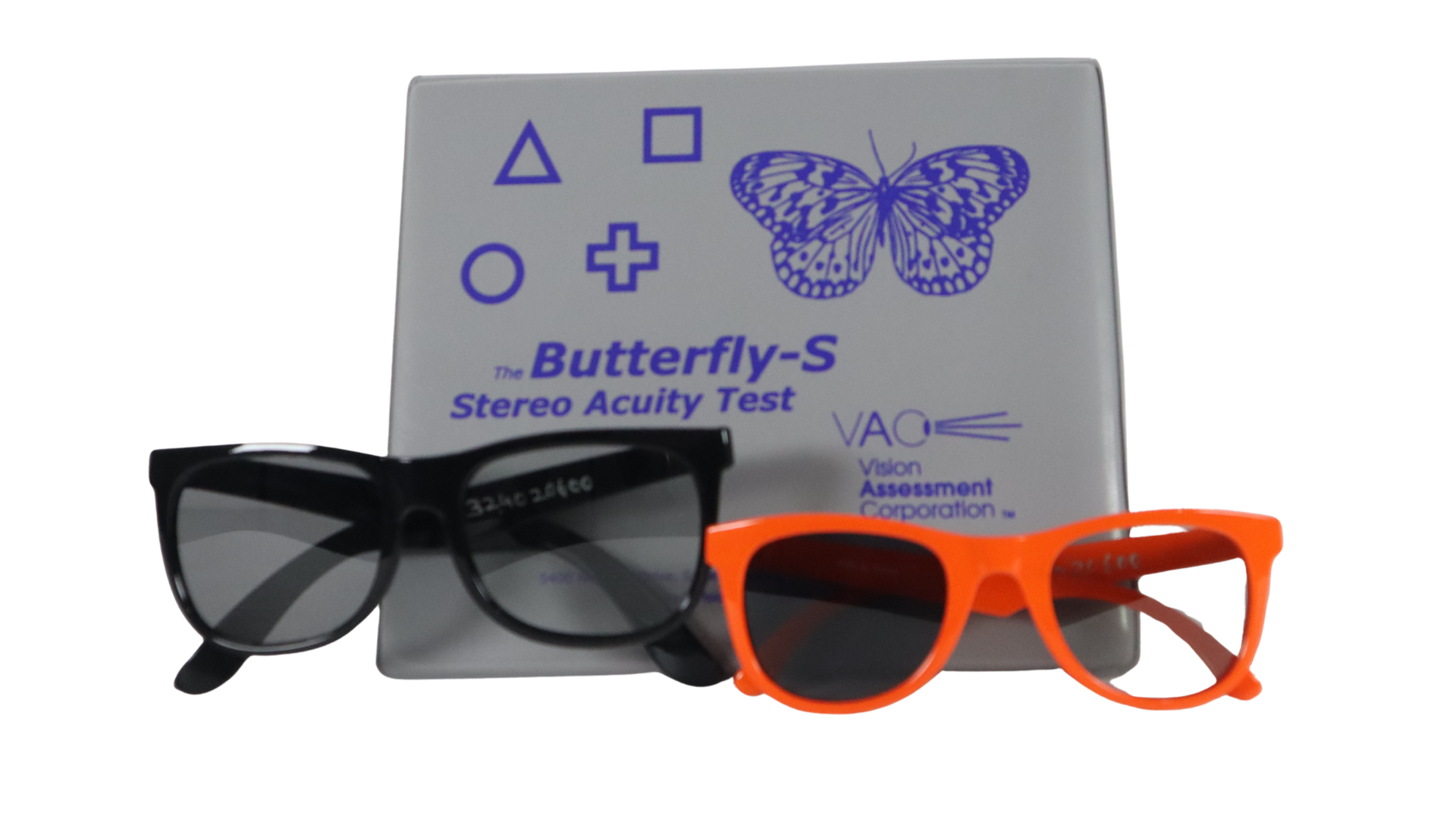
| Product Name | Stereopsis Butterfly Test |
| Purpose | Used to assess stereopsis (depth perception) and screen for binocular vision disorders such as amblyopia, strabismus, and suppression. Provides both gross and fine stereopsis evaluation. |
| Target Users | Optometrists, ophthalmologists, orthoptists, pediatric eye clinics, vision therapists, and screening programs for children and adults. |
| Test Principle | Based on polarized stereopsis testing, where each eye is presented with slightly different images to create a perception of depth when viewed through polarized glasses. |
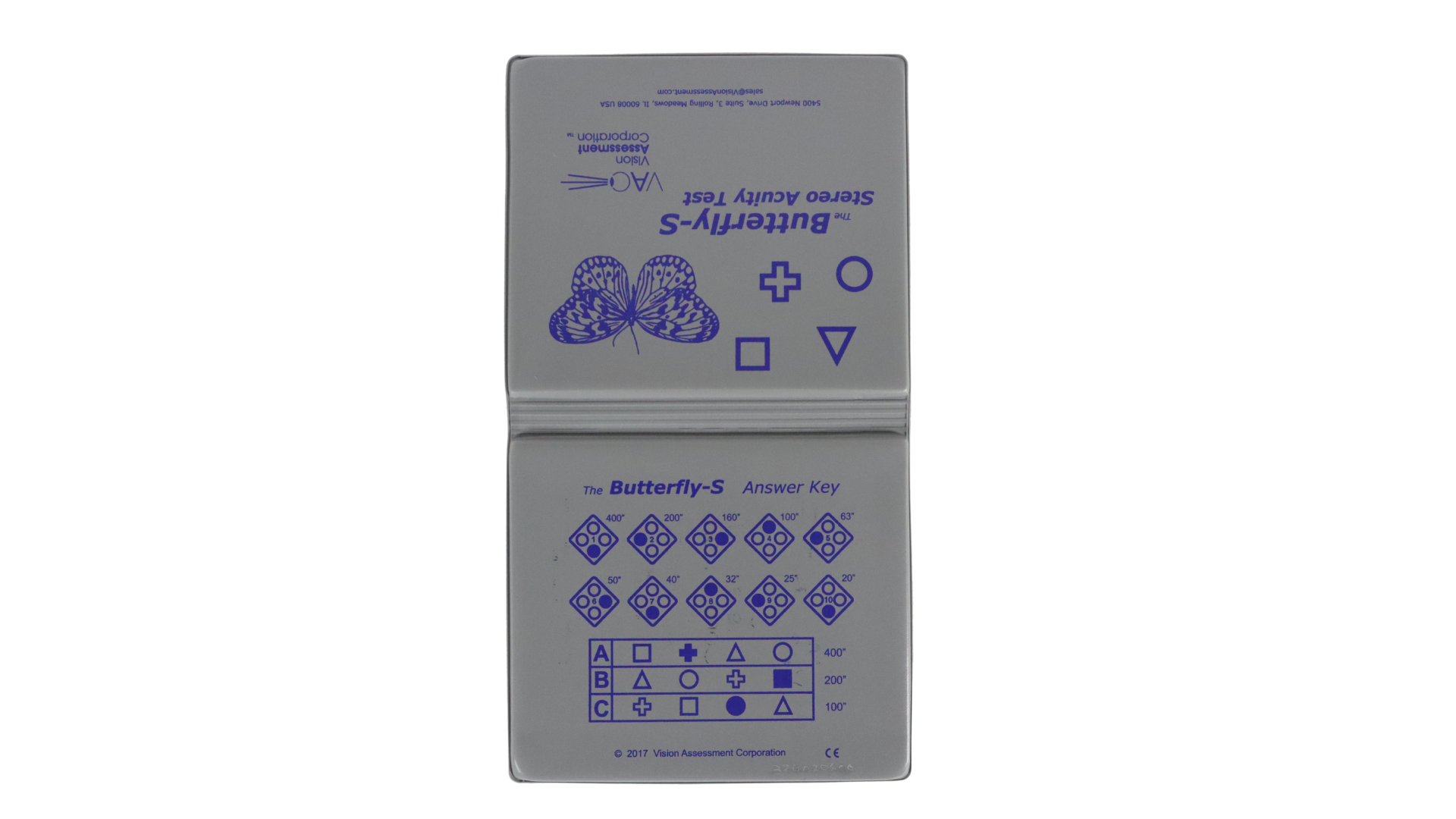
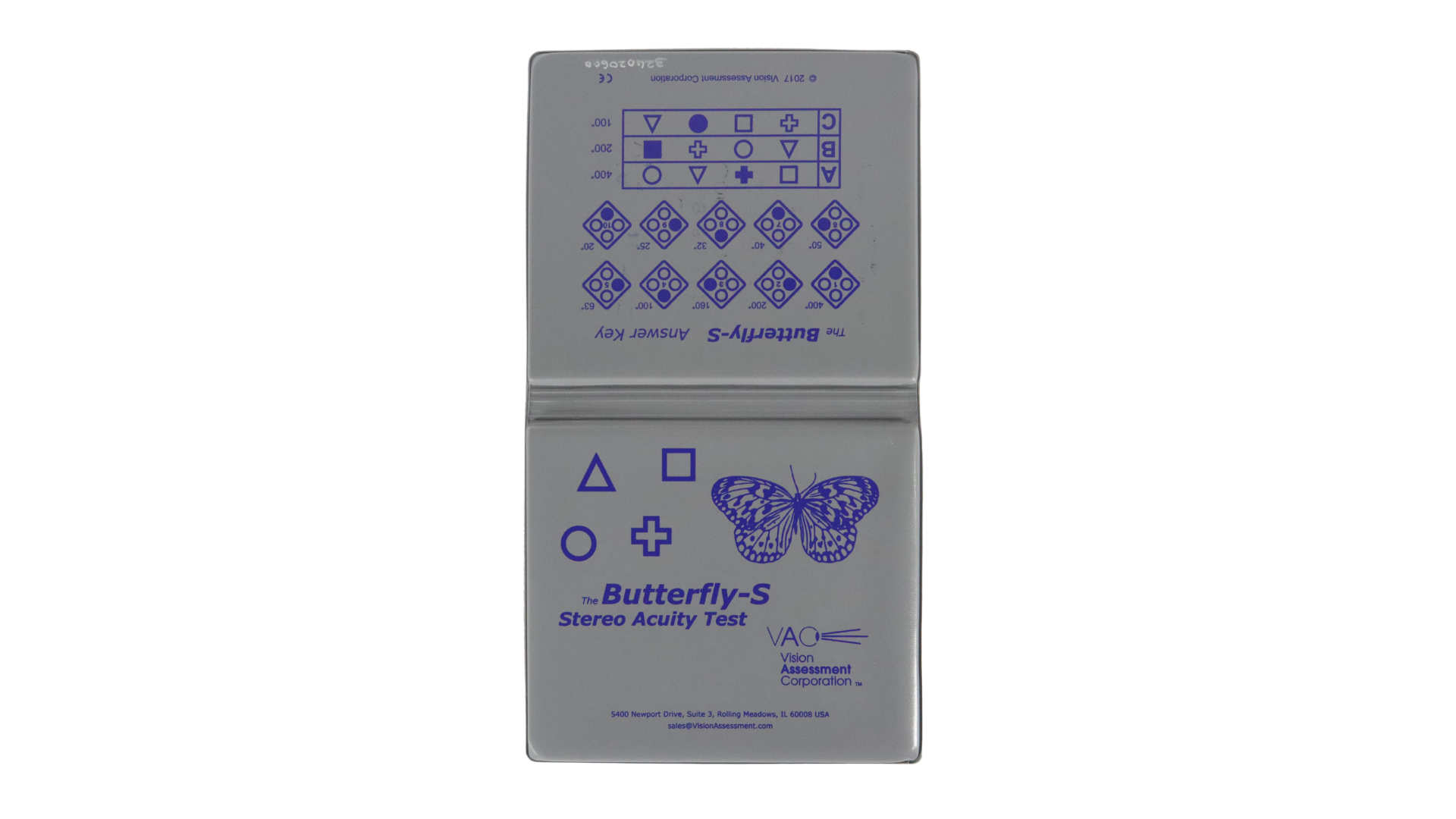
| Optotypes / Symbols | Includes butterfly figure (gross stereopsis), animal shapes (for children), and graded circles for fine stereopsis measurement. Designed to be engaging and easy for pediatric patients. |
| Stereoacuity Range | Measures stereopsis from gross disparity (~2000–3000 arc seconds) down to fine stereopsis (~40 seconds of arc) depending on model/version. |
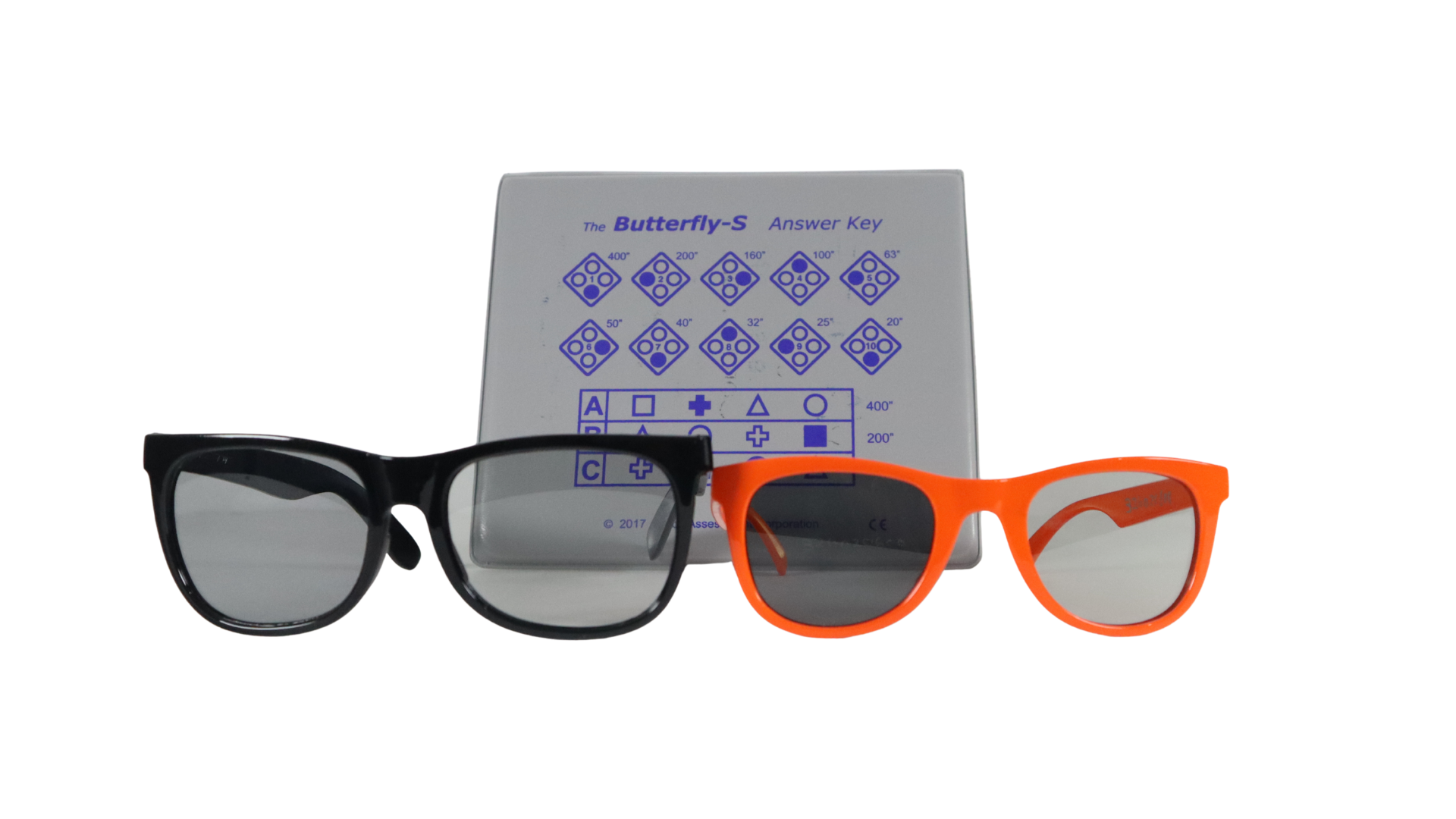
| Test Components | Butterfly figure (gross stereo), Animal series (pediatric-friendly), Graded circle test (fine stereo acuity), Stereo plates/booklet format. |
| Monocular Clues | Designed to minimize or eliminate monocular cues, ensuring true binocular depth perception is measured. |
| Testing Distance | Typically performed at near distance (~40 cm / 16 inches) using polarized glasses. |
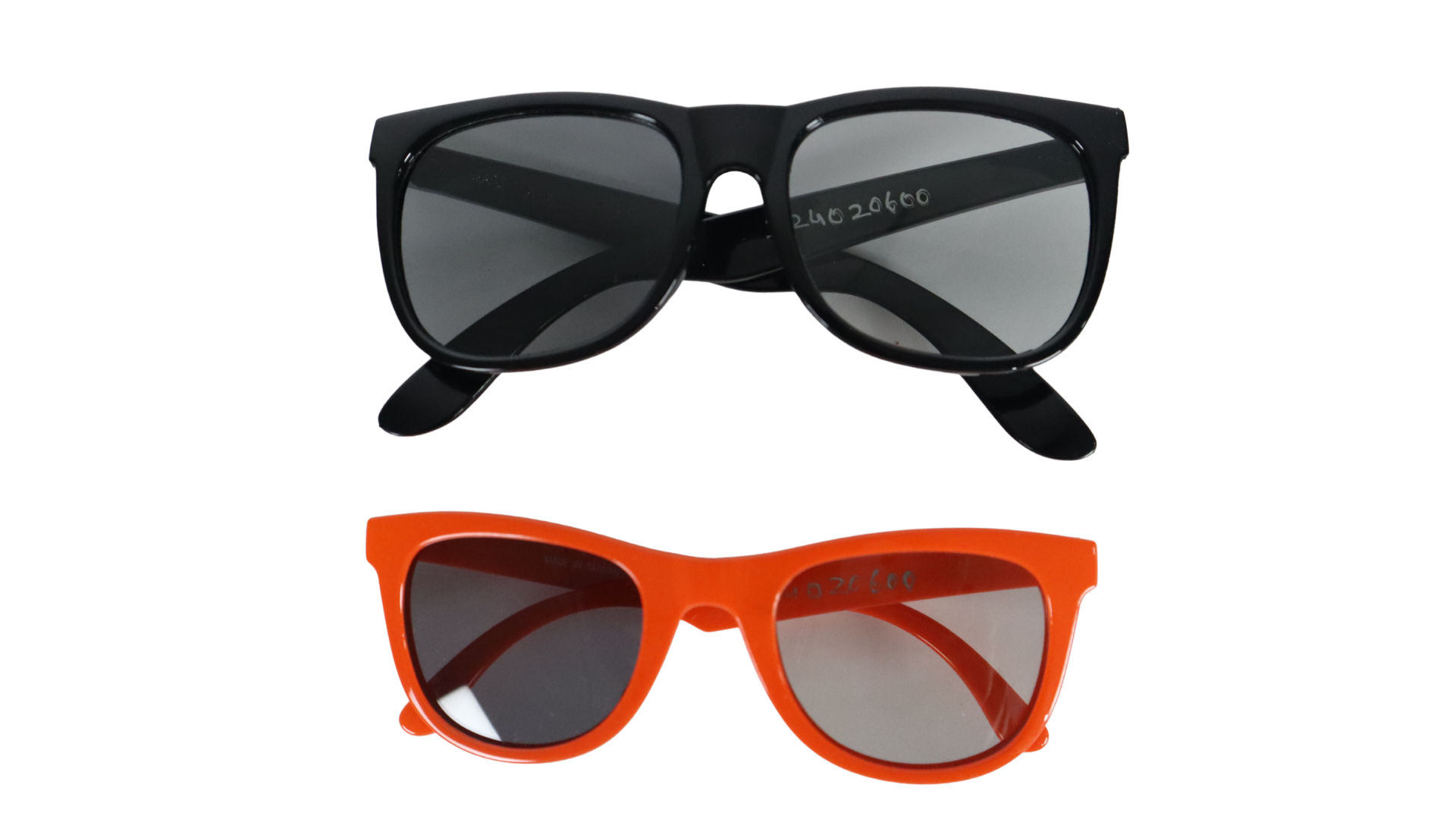
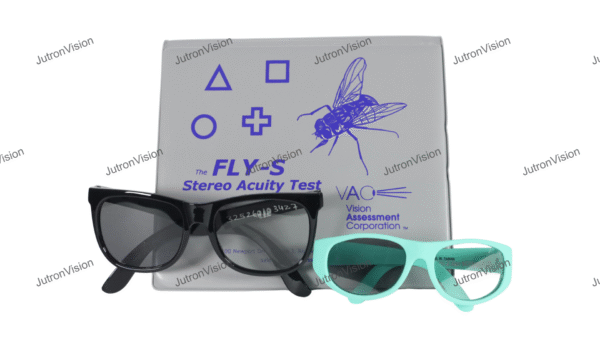
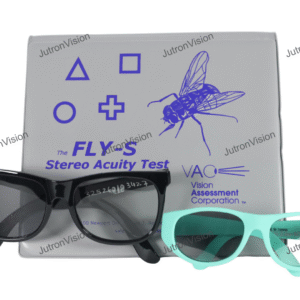
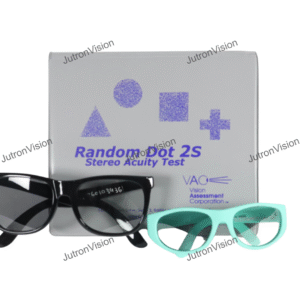
| Material | Printed stereo plates on durable card/vinyl material, often with protective coating. Includes polarized plastic glasses. |
| Physical Size & Dimensions | Booklet size typically around 6.5″ × 8.5″ (≈16.5 × 21.5 cm) depending on manufacturer. Portable and easy to handle. |
| Mounting / Display Features | Handheld booklet format; used at near distance. No wall mounting required. |
| Included Accessories | Polarized glasses (adult and/or pediatric), test booklet, answer key (usually printed on back), instruction manual. |
| Durability | Designed for repeated clinical use. Durable pages but should be protected from bending, scratches, and excessive heat. |
| Usability | Easy to administer, especially for children. Does not require reading ability. Quick screening tool for binocular vision and stereopsis. |
| Marker of Quality | Widely used and clinically accepted stereopsis test. Good quality versions offer clear polarization, accurate disparity levels, and durable print quality. |
| Clinical Applications | Screening for amblyopia, strabismus, binocular vision disorders, pediatric vision testing, vision therapy baseline and monitoring. |
| Limitations | Requires proper use of polarized glasses. Some versions may still have minimal monocular cues. Fine stereo levels may be difficult for patients with binocular dysfunction. |
| Storage | Should be stored in a protective case, away from heat, moisture, and direct sunlight to maintain polarization and print quality. |






Reviews
There are no reviews yet.