



Description

Plastic
Beads

Nylon
String

Beads
wood

Therapeutic
heavier cords
Product description
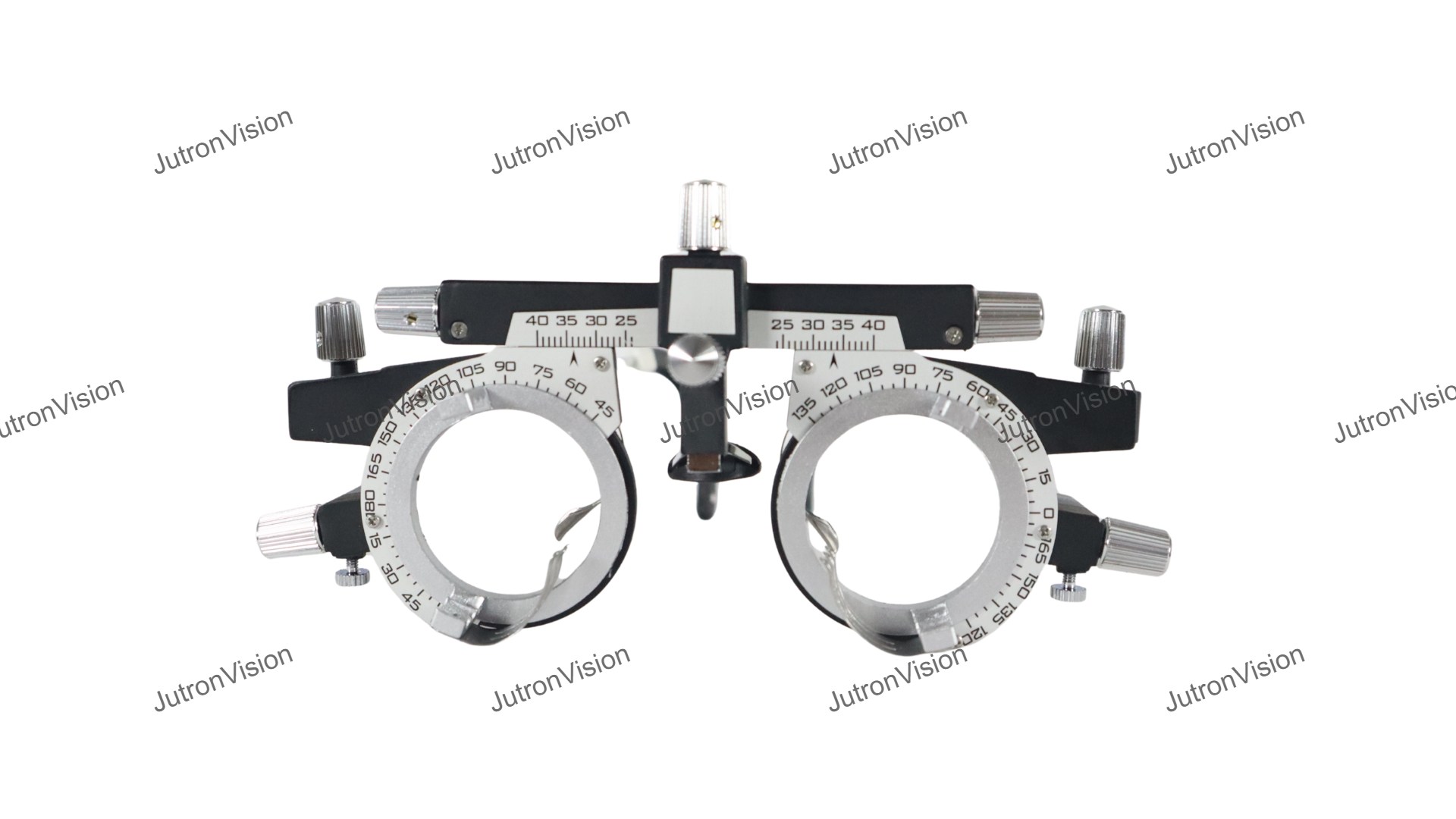
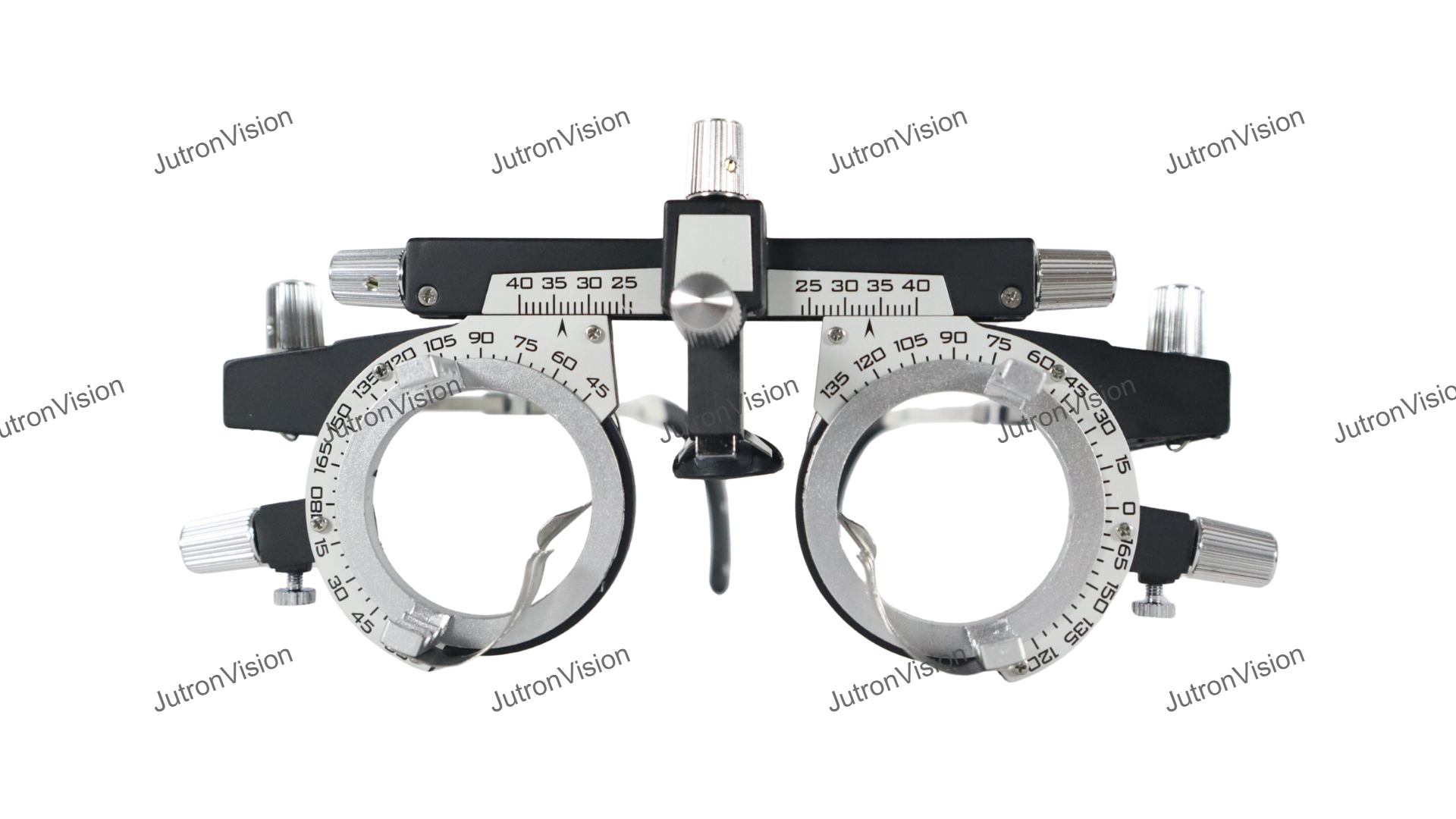
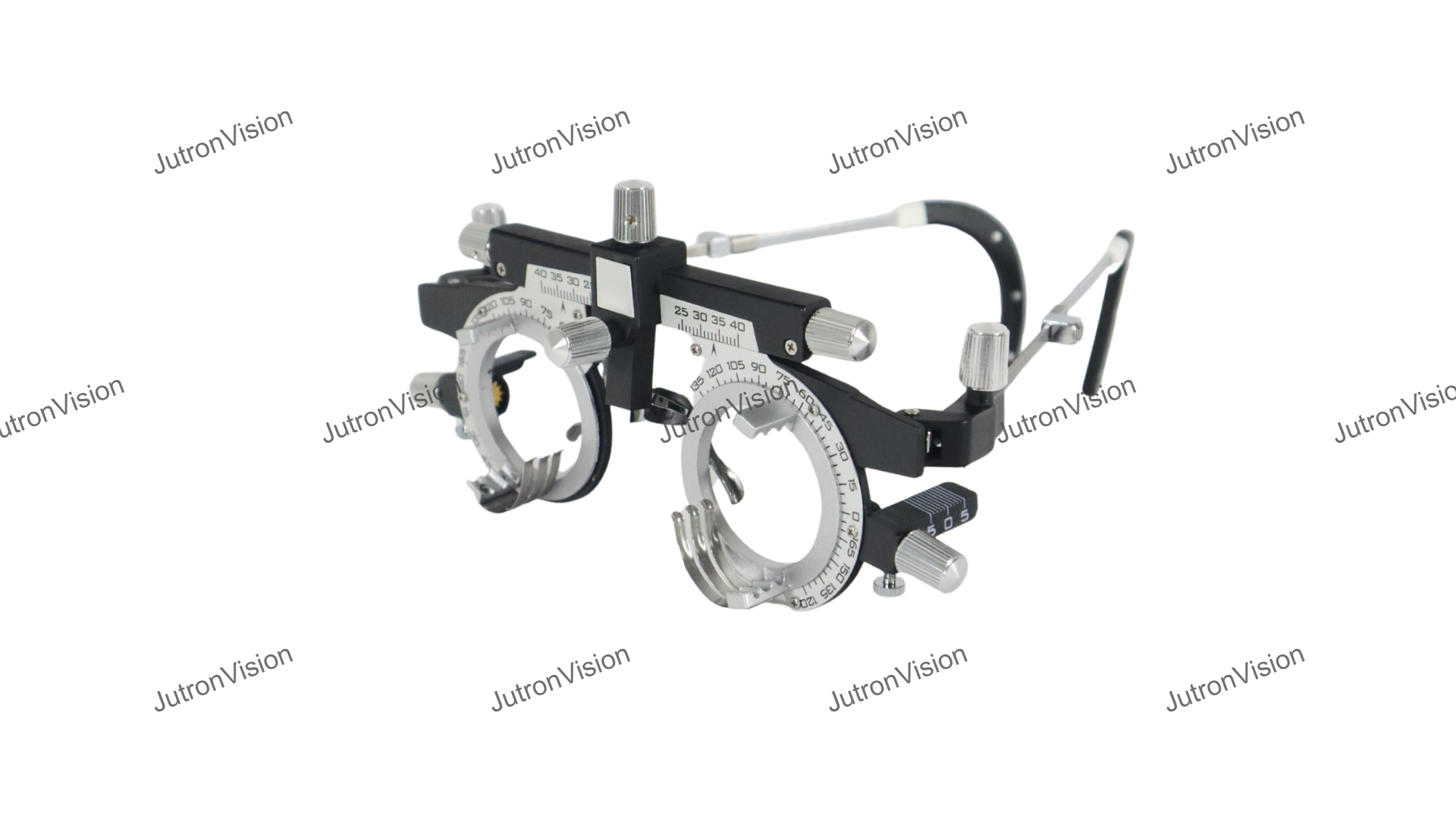
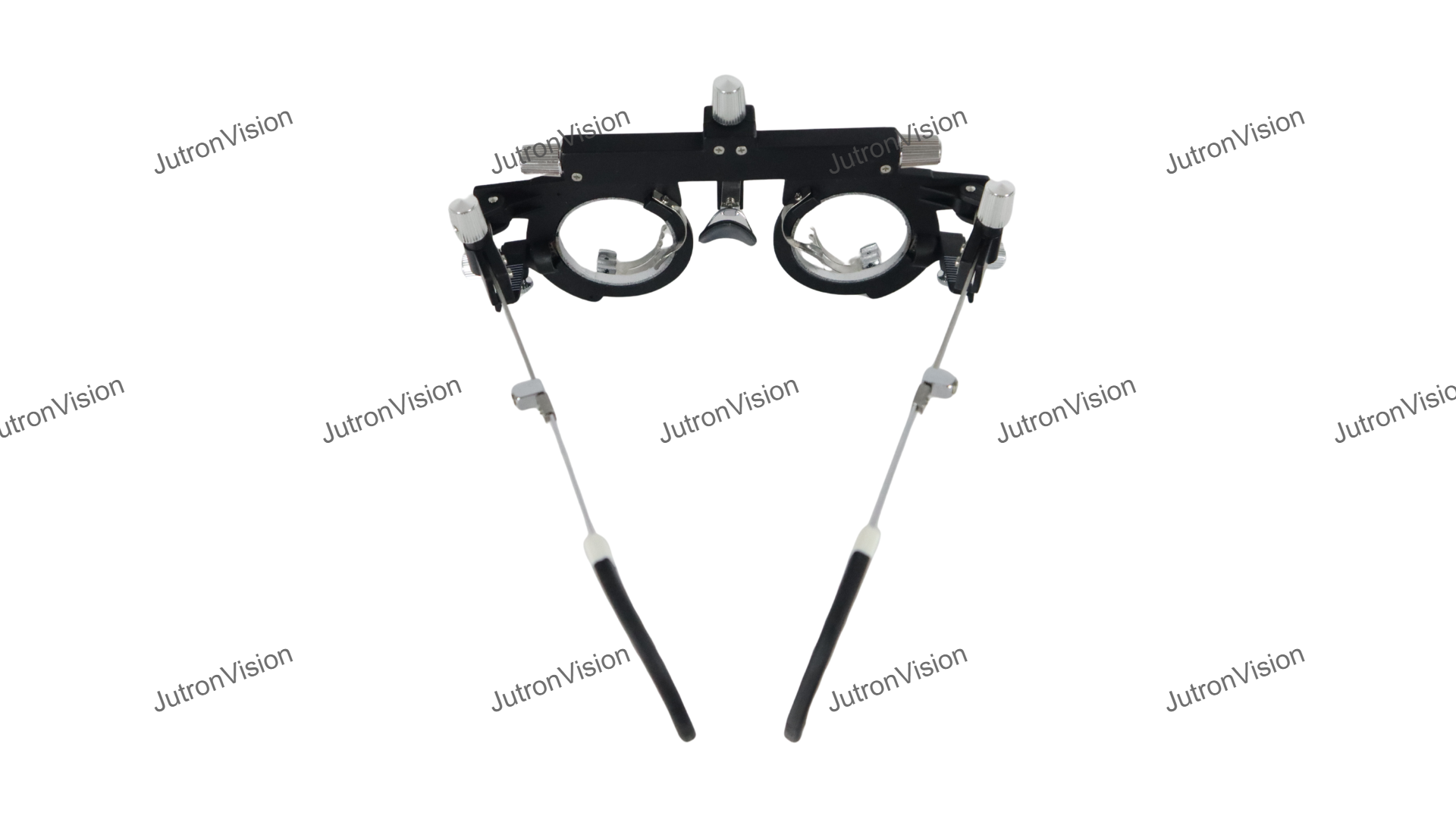
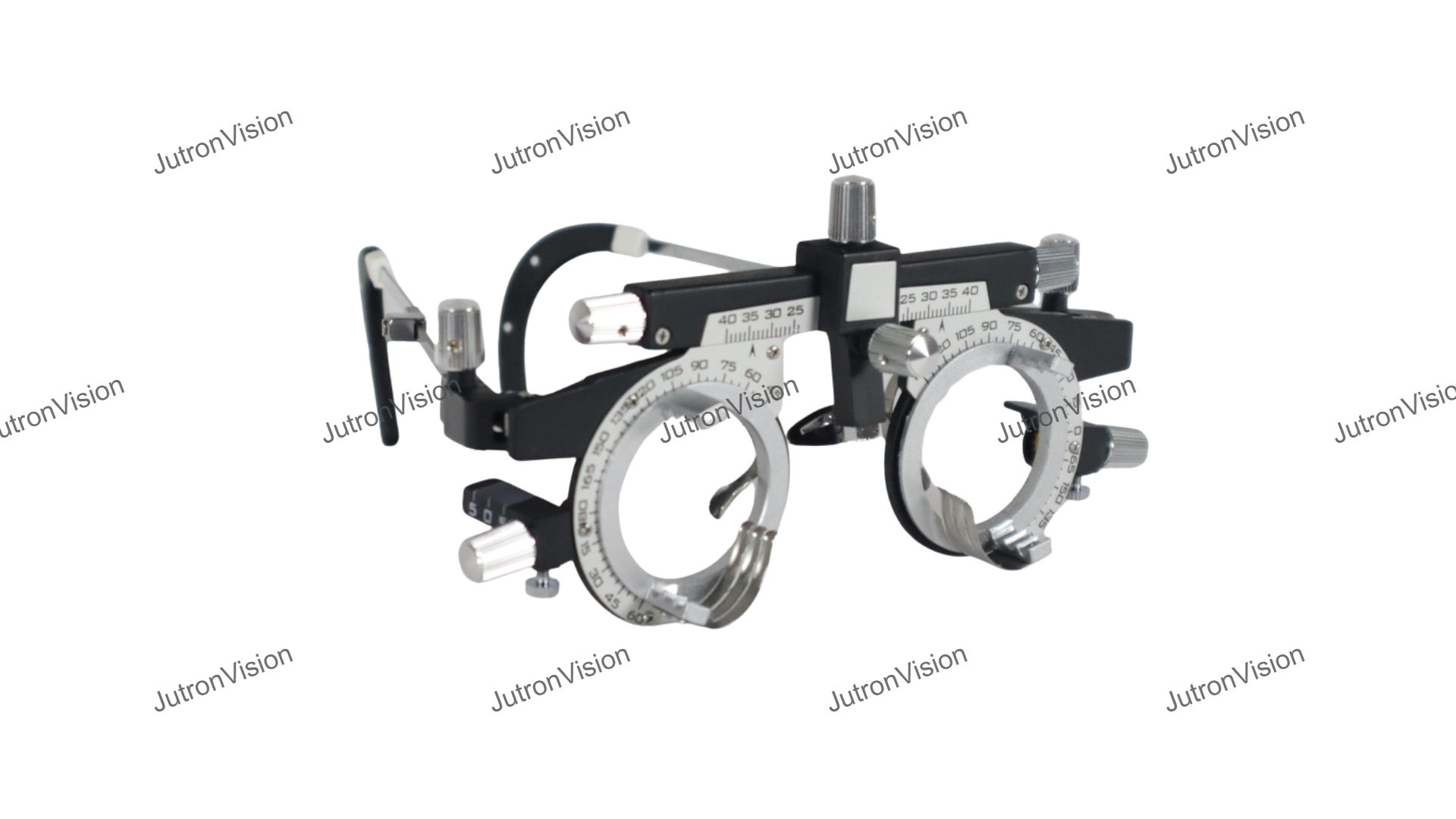
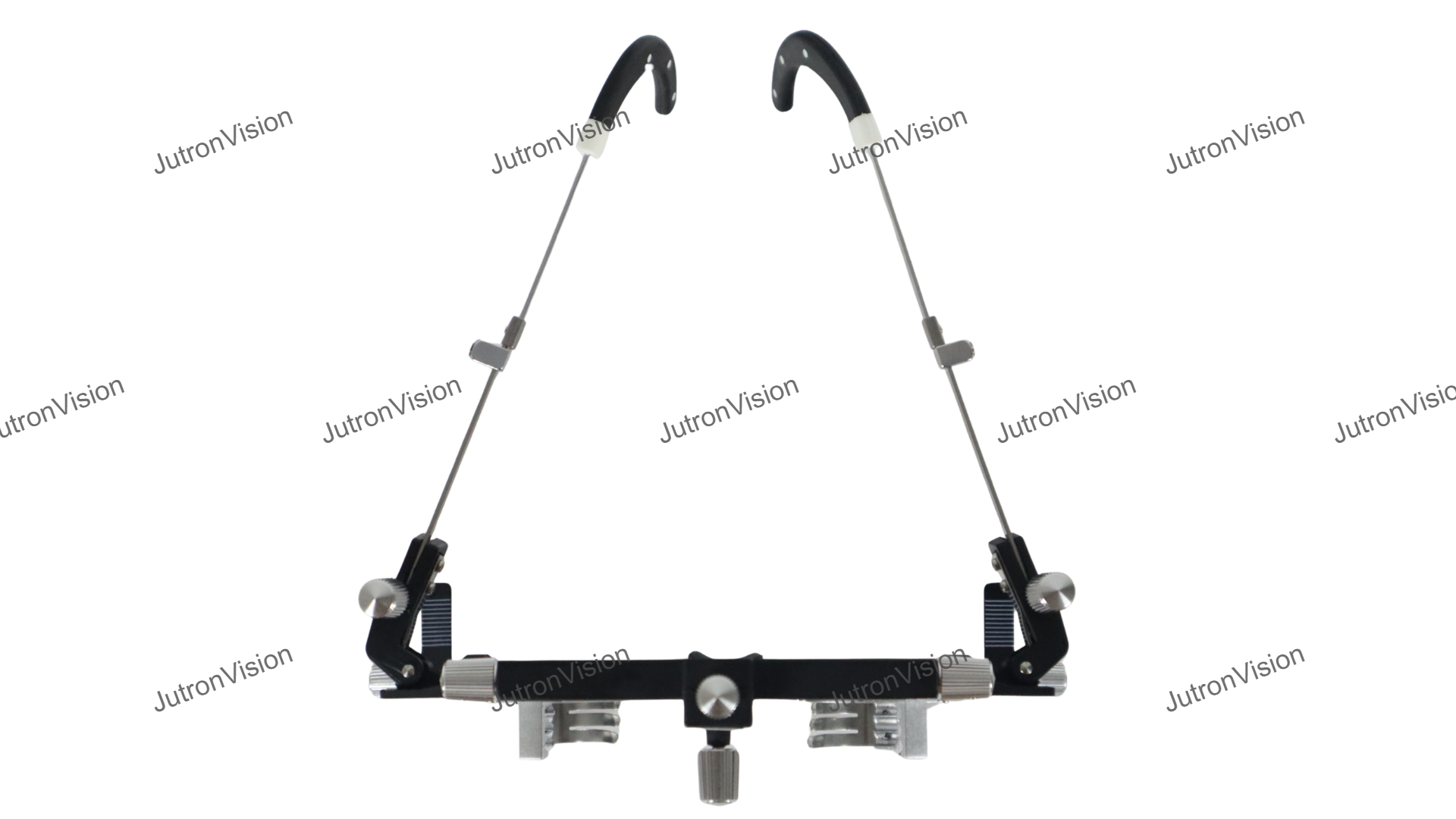
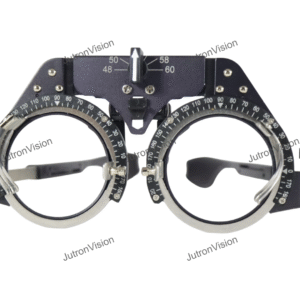
- The Universal Trial Frame is a lightweight, fully adjustable adult refraction frame engineered to keep trial lenses precisely centered and aligned during subjective refraction and binocular balance. Independent (mono) PD dials, bridge height/projection, pantoscopic tilt, and a clear 0–180° axis scale make setup fast and repeatable, while multi-slot 38 mm cells let you stack sphere/cylinder, fogging, pinhole, or occluder lenses without juggling. Balanced temples and soft pads enhance comfort for longer exams—making this the dependable workhorse for busy clinics and teaching labs.
- Precision controls: Independent PD (≈48–80 mm), vertical height, bridge projection, tilt, and 0–180° axis with fine markings
- Lens capacity: Standard 38 mm cells; typically 3–4 lenses front + 1–2 rear per eye (model-dependent)
- Speed & accuracy: Quick power swaps without losing centration; crisp axis scale supports precise cylinder alignment
- Comfort & stability: Balanced frame with soft nose pads/temples for secure fit over longer sessions
- Use cases: Routine refraction, binocular balance, fogging techniques, low-vision high-power stacks, and student training
- Fit workflow tip: Set PD first → level frame → adjust height/projection & tilt → insert lenses → re-check centration after major power changes
- Care: Clean with lens-safe solution and soft cloth; avoid solvents/heat; store in a protective case to keep dials smooth and scales legible
| Topic | Details |
| Purpose / Use-Case | A universal trial frame is used in refraction testing — to hold trial lenses in front of a patient’s eyes during eye examinations. It allows optometrists and ophthalmologists to manually determine refractive errors (myopia, hyperopia, astigmatism, presbyopia) and test different lens combinations. |
| Target Users: | Optometrists Ophthalmologists Optometry students |
| Mounting / Display | Handheld or wearable (not mounted). Designed to sit comfortably on the patient’s face like spectacles. Adjustable nose bridge and temple length ensure a snug fit during testing. |
| Scaling / Spacing | Interpupillary Distance (IPD): Adjustable from approximately 48 mm to 80 mm (varies by manufacturer). Lens Spacing: Typically holds 3–4 lenses per eye with standardized 38 mm lens diameter.Axis Scale: Marked from 0° to 180°, allowing precise placement of cylindrical lenses. Vertex Distance Adjustment: Usually adjustable from 5 mm to 25 mm. Pantoscopic Tilt and Temple Length: Adjustable for comfort and optical alignment. |
| Physical Size & Dimensions | Typical Dimensions: Width: 130–160 mm (adjustable) Height: 45–55 mm Weight: ~70–120 g (lightweight for comfort) Lens Holders: 38 mm inner diameter (standard trial lens size). |
| Physical Size & Dimensions | According to the Good-Lite catalogue (2023), the mailbox game is described (in the same listing) thus: “Double Sided (Four Cards) 253500 … Cards are 9″ x 9″ (23cm x 23cm).” While this might refer to cards rather than the full mailbox device. The item listing (Bernell) doesn’t specify full device dimensions. Therefore we know approximate card size 23 cm square (in one variant) but do not have exact overall device dimensions, tray size or thickness.If you require full device dimensions we might need to contact the manufacturer or examine a detailed spec sheet. |
| Durability / Use Lifetime | Material: High-grade anodized aluminum, stainless steel, or medical-grade plastic. Durability: Corrosion-resistant, lightweight, and easy to sterilize. Longevity: Built for frequent clinical use. |
| Included Accessories / Extras | Standard inclusions: Protective storage case , Adjustment key or screwdriver (for fine-tuning) Instruction manual Optional extras (depending on model): vCleaning cloth Cleaning cloth |
| Range of Acuity / Line Sizes / Testing Distance | This instrument is not measuring visual acuity or line sizes. There is no “testing distance” like you would have for a visual acuity chart; it is placed directly on the patient’s orbital rims and used immediately in front of the patient. For instance: the patient is asked to look straight ahead, and the instrument is applied at the lateral orbital rims. |
| USP /Usability | Usability Features: Quick lens insertion and removal.Smooth rotation of lens holders.Clear, engraved axis markings. Comfortable, non-slip fit. |
| Quality Indicators: | Precise calibration marks. Smooth mechanical movements (no play or wobble). ISO / CE certification for medical devices. Reputable brand (e.g., Topcon, Reichert, Heine, Shin-Nippon, Appasamy). |
Reviews
There are no reviews yet.