



Description
Product description
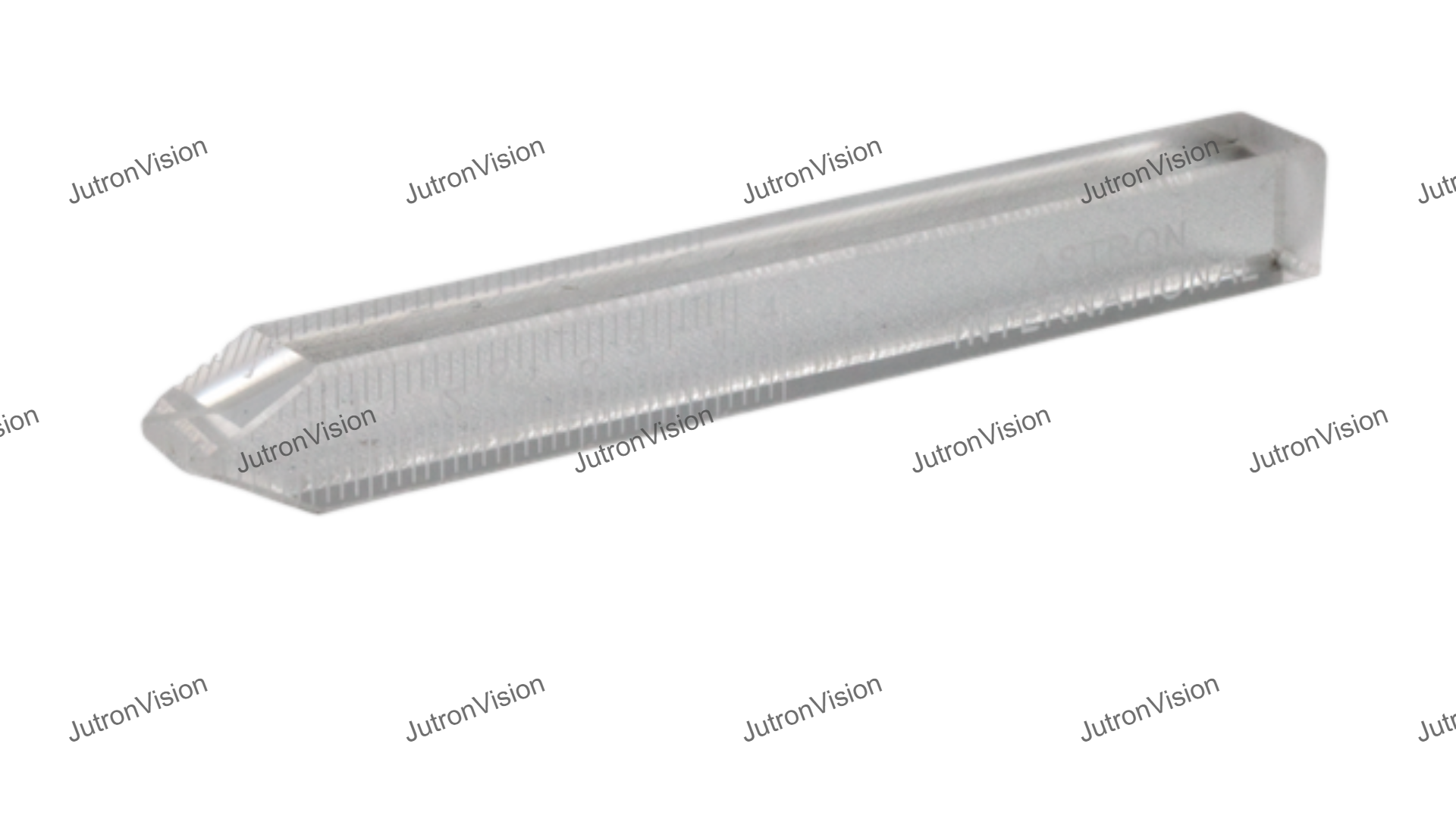
- The Luedde Exophthalmometer is a simple, portable tool for measuring proptosis/exophthalmos—the forward position of the eye—using a calibrated ruler-style scale that can be read directly while the patient wears a trial frame or glasses. Unlike mirror-based devices, it’s quick to deploy, easy to carry for screening camps, and helpful for serial monitoring when you need a fast, consistent method to document changes in eye prominence in conditions like thyroid eye disease, orbital inflammation/masses, and post-trauma follow-up.
- What it measures: Eye protrusion in millimeters (each eye) and side-to-side differences
- How it’s used: Positioned through a trial frame/spectacle lens; align to the corneal apex and read the scale directly
- Why clinicians like it: Compact, lightweight, and fast—excellent for screening and chairside follow-ups
- Best for: Thyroid eye disease monitoring, suspected unilateral proptosis, orbital pathology screening, trauma follow-up
- Advantages: Minimal setup, no mirrors, easy to train staff; ideal for mobile clinics
- Best practices: Keep head straight, use consistent lighting, repeat readings for reliability, and use the same technique/device for follow-up comparisons
- Documentation tip: Record OD/OS readings + date, and note symptoms (pain, diplopia, redness) for trend tracking
- Care: Wipe with approved disinfectant; avoid scratching the scale; store in a protective sleeve/case to keep markings legible
| Topic | Details |
| Purpose / Target Users | Purpose: To measure the degree of forward displacement (protrusion) of the eyeball (exophthalmos) relative to a reference point on the lateral orbital rim. This helps detect and monitor conditions such as thyroid eye disease, orbital tumors, trauma, enophthalmos, etc. Target Users: Ophthalmologists, oculoplastic surgeons, optometrists, endocrinologists (in context of thyroid orbitopathy), and allied eye-care professionals in clinics, hospitals, and surgical settings. |
| Optotypes / Symbols | Not applicable in the sense of letters or optotypes (used in acuity charts). The device uses a millimetre scale engraving on clear plastic (or acrylic) prisms on both sides for reading displacement. For example: “easy-to-read millimetre lines on both sides” is specified. |
| Scaling / Spacing | The “scale” is in millimetres (mm) of protrusion from the lateral orbital rim to the apex of the cornea. The increments correspond to mm markings on the transparent ruler/prism. Spacing: The markings are etched so that the examiner sights at right angles and reads off the mm value. For example the instructions: “The eye is seen through the lower half of the scale and the scale is seen through the upper half, eliminating parallax.” |
| Range of Acuity / Line Sizes | Not applicable for “acuity” or “line sizes”. However the device measures protrusion in mm. Typical normal reference ranges: e.g., normal adult values often ~ 12–21 mm; a difference of >2 mm between eyes considered significant. So the “range” of measurement depends on the scale on the instrument (though the manufacturer doesn’t specify maximum mm limit in every listing). The little 3″ model measures mm through its etched scale. |
| Testing Distance | There is no “testing distance” like a vision chart at 6 m. Rather, the instrument is placed directly on the patient’s lateral orbital rim, and the examiner views the instrument at right angle. Instructions: “Place the curved end of the Luedde to fit the apex of the deepest angle of the lateral orbital notch … move to the patient’s side and look through the Luedde at a 90 degree angle … use the scale to measure the corneal apex in millimetres.” So the distance is essentially “at the patient’s orbital rim” – direct contact or reference point. |
| Physical Size & Dimensions | The standard single-Luedde model: Length ~ 3″ (7.62 cm) according to manufacturer listing. Some references: The Endocrine Society listing says “3⅜″ long by 3/8″ wide”. Material: lightweight acrylic, transparent, or clear plastic prisms with millimetre lines. So approximate dimensions: ~7.6 cm length; width thickness small (few mm) depending on model. |
| Mounting / Display Features | Mounting: Hand-held / direct placement on orbital rim – not wall-mounted or displayed. The curved end is placed on the lateral orbital notch. Display features: Transparent prism with mm scale on both sides; designed so the clinician sees the eye through the lower half of the scale and simultaneously the scale through upper half, eliminating parallax. No additional lighting or digital display – a purely mechanical/measured instrument. |
| Included Accessories / Extras | According to some listings, the instrument comes with a soft leather protective case or storage sleeve. For example: “furnished with a soft leather protective case” (Good-Lite listing). Instructions for Use (IFU) are provided (see pdf for model 16104). No mention of extra attachments, digital readouts, or interchangeable parts for the basic model. |
| Durability / Material Qualities | Materials: Clear plastic or acrylic prisms, lightweight durable acrylic in manufacturer description. Markings: “Easy-to-read millimetre lines on both sides … imprinted with quality screened score marks. Edges are hand-polished to ensure safety.” Cleaning: For the model 16104 IFU: “Do Not use alcohol to clean. The Luedde can be cleaned with mild soap and water.” Protection: The protective case helps sustain the instrument when not in use. Durability wise: Because exam usage involves contact with orbital rim, the build should resist small knocks; acrylic construction is typical for such small clinical instruments. |
| Usability | Usability: The device is simple, quick to deploy, and does not require complex technique (relative to some exophthalmometers). For instance, the “Dual Luedde” variant is described as requiring no special technique or skill. The parallax-eliminating design (seeing the eye through lower half, scale through upper half) is a usability advantage. |
| Marker of Quality | Manufactured by a recognised company (Good‑Lite) (formerly Richmond Products) – indicates credibility. Precision scale in mm, polished edges for patient safety, durable acrylic – all suggest professional grade. Inclusion of cleaning instructions, IFU, protective case. Clinical use: Cited in studies of exophthalmos measurement (e.g., Thai population usage) showing reliability. Limitations to usability: Because measuring uses reference (lateral orbital rim), if the orbital rim is damaged (after trauma or surgery) then measurement may be compromised – this is noted in comparative discussions. |
Reviews
There are no reviews yet.