



Description
Product description
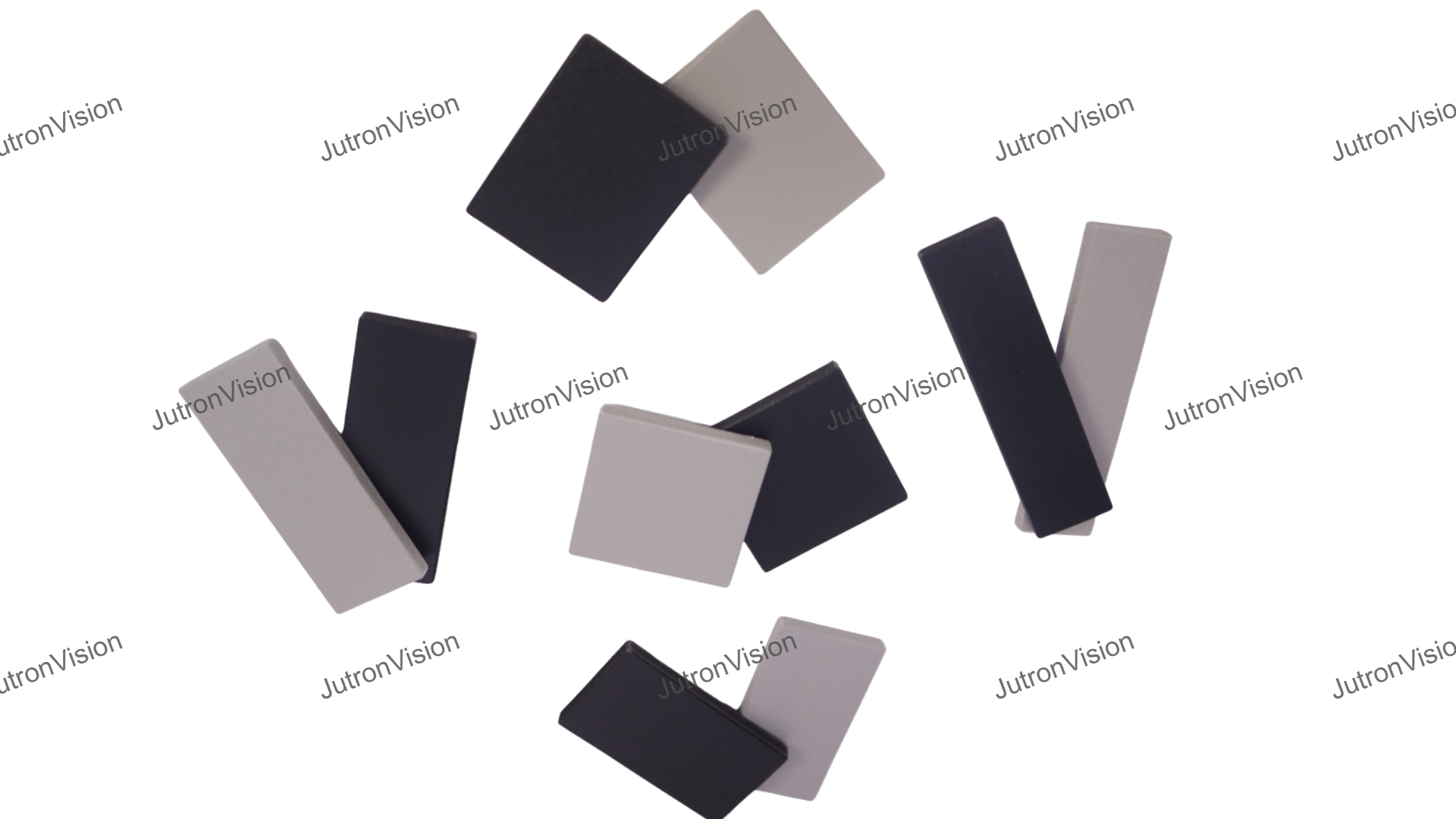
- The LEA Rectangles Game is a play-based pediatric vision tool designed to assess and strengthen visual perception skills such as shape/size discrimination, orientation awareness, spatial relations, and eye–hand coordination. Children work with rectangle pieces in different sizes and orientations, matching them to targets or placing them correctly—an engaging way to observe how they scan, compare, rotate mentally, and organize visual information. It’s widely used in pediatric vision care and therapy settings because it feels like a game while giving meaningful insight into functional vision skills that support reading readiness and classroom performance.
- What it targets: Visual discrimination, orientation (horizontal/vertical) awareness, spatial relations, visual-motor integration
- How it’s used: Match rectangles to a model/board, sort by size/orientation, place pieces accurately, and progress to timed or multi-step tasks
- Why it’s effective: Builds the ability to notice direction and alignment, a key foundation for letter/shape recognition
- Kid-friendly: High engagement and low pressure—great for preschoolers and early primary children
- Clinical value: Helps identify difficulties with scanning, comparing, mental rotation, and attention
- Progressions: Increase distance, reduce prompts, add left–right commands, memory sequencing, or bilateral hand use
- Settings: Pediatric clinics, VT/OT programs, early intervention, and school-readiness screening
- Care: Wipe with approved disinfectant; store all pieces together to prevent loss and maintain consistent sets
| Topic | Details |
| Purpose / Target Users | Purpose: To assess size perception / length discrimination in young children, i.e. the ability to visually distinguish which of two rectangles is longer. It is a playful test to detect deficits in visual processing of size/length. It is a modification of Effron’s rectangles, adapted for pediatric use.Also, the test allows observation of eye-hand coordination (visuomotor integration) and how precisely the child lays one rectangle onto the matching one, giving clues about dorsal-stream function (parietal) vs ventral (inferotemporal) processing. Target users: Young children (often from 2–3 years onward), including those with possible visual processing or cortical visual dysfunction, or when standard optotype tests are not feasible |
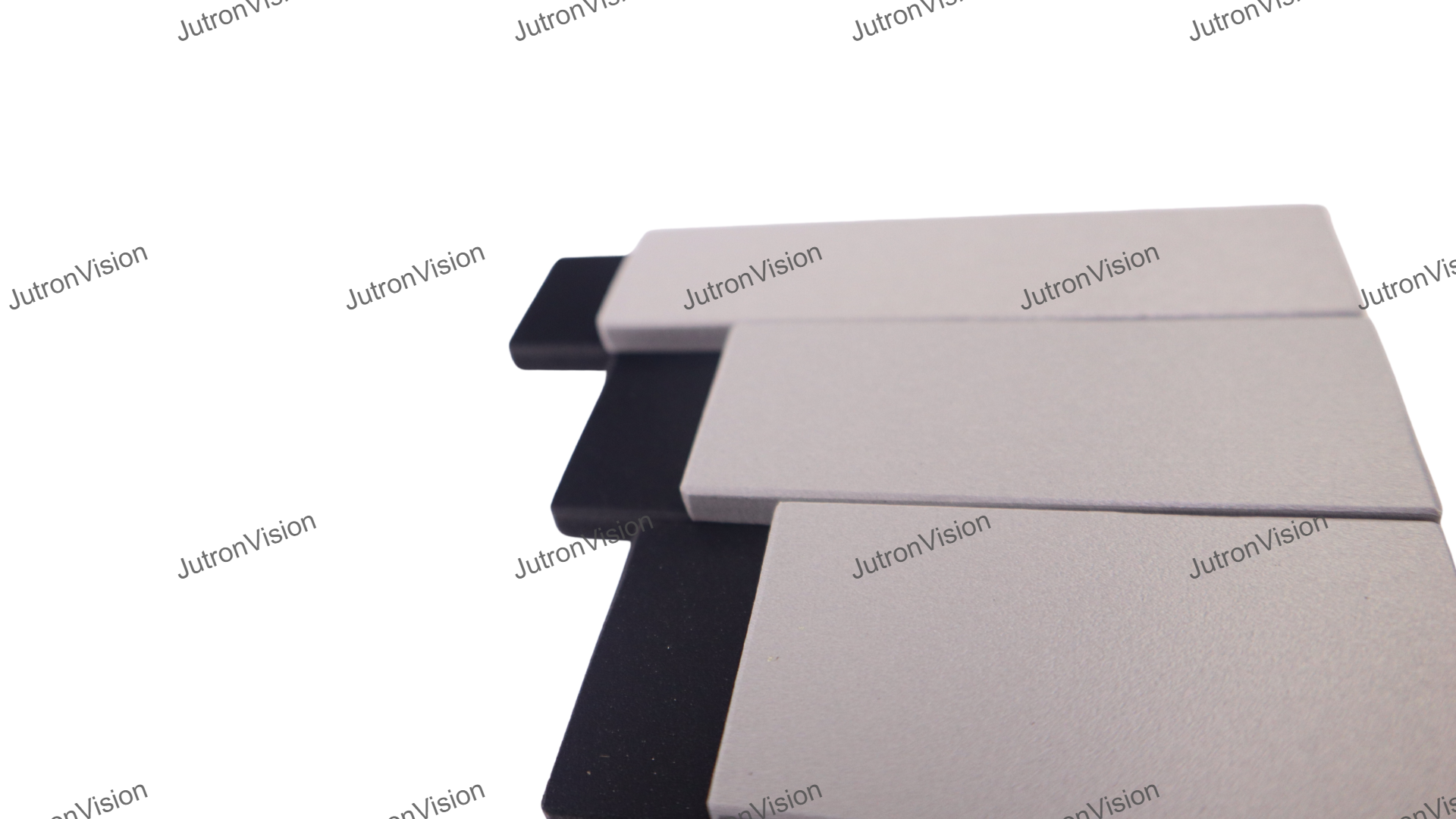
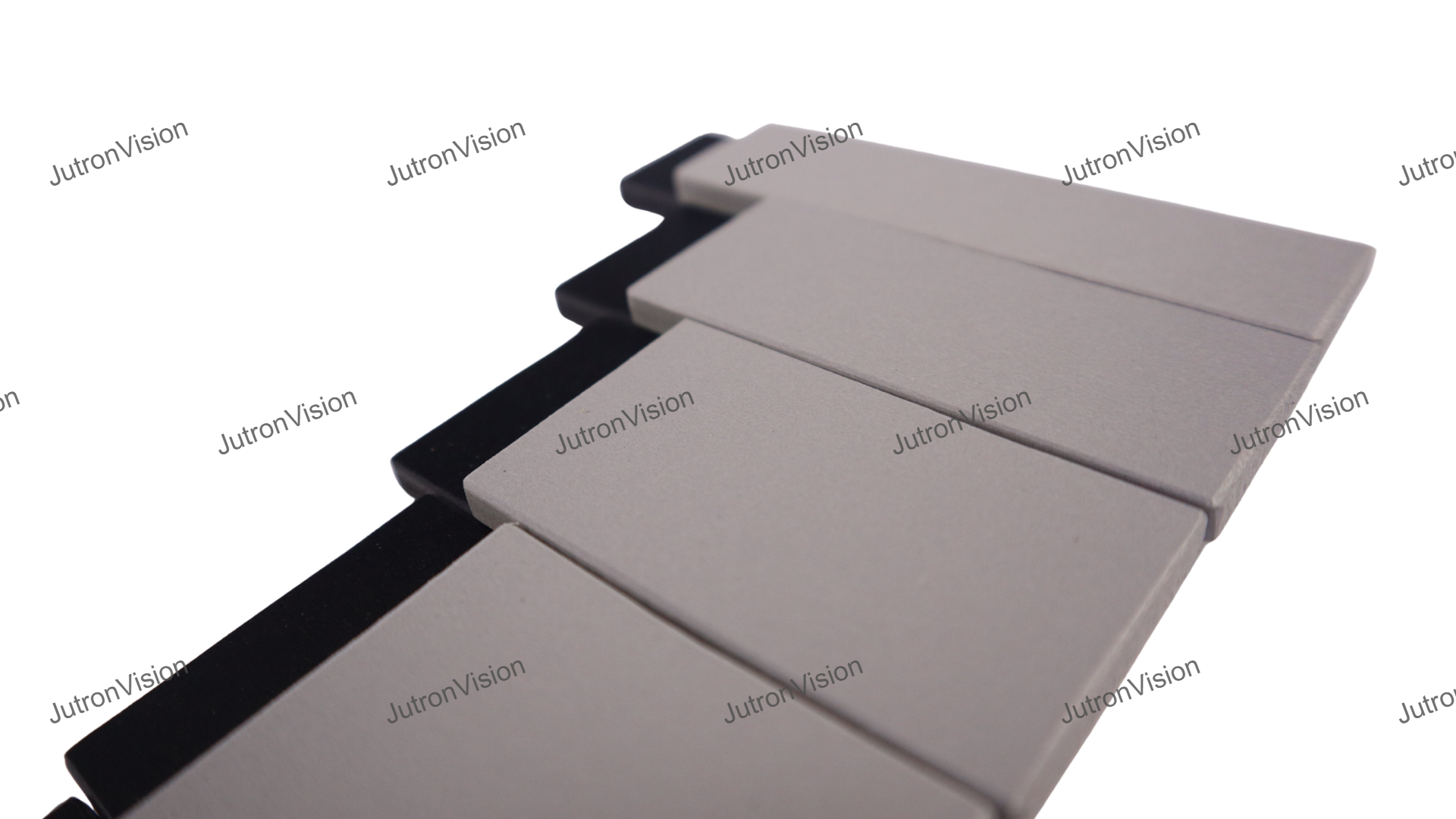
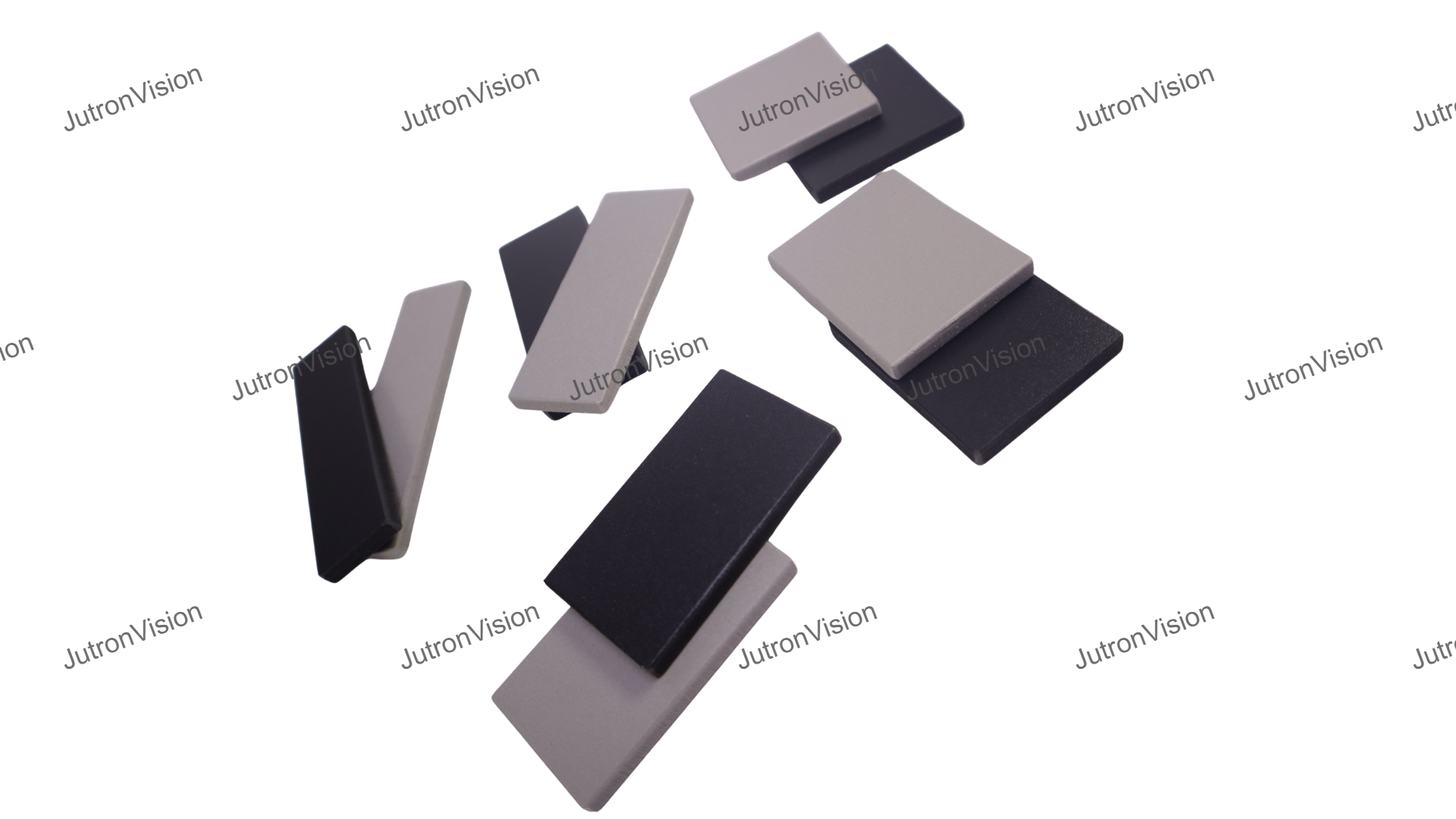
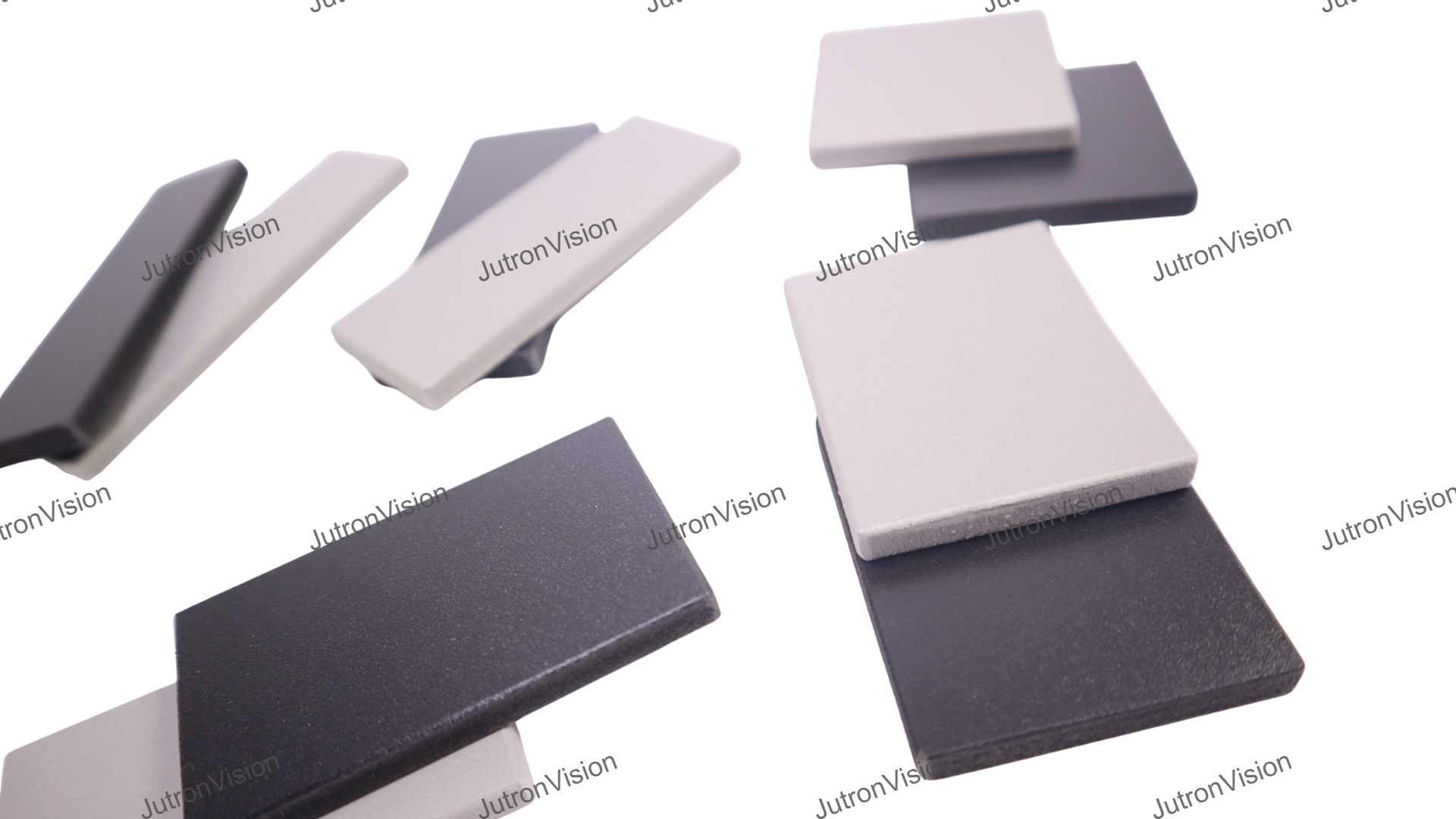
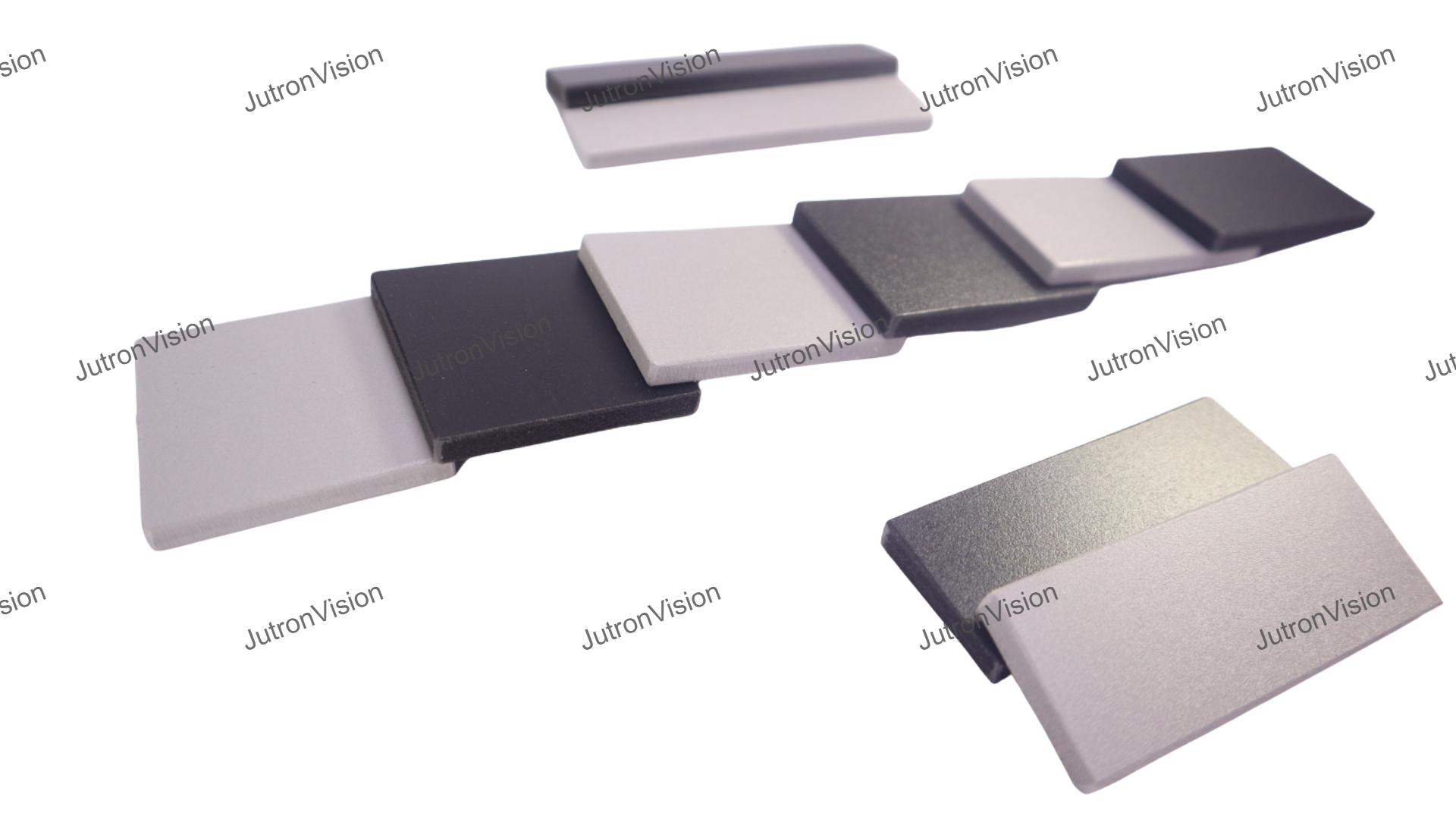
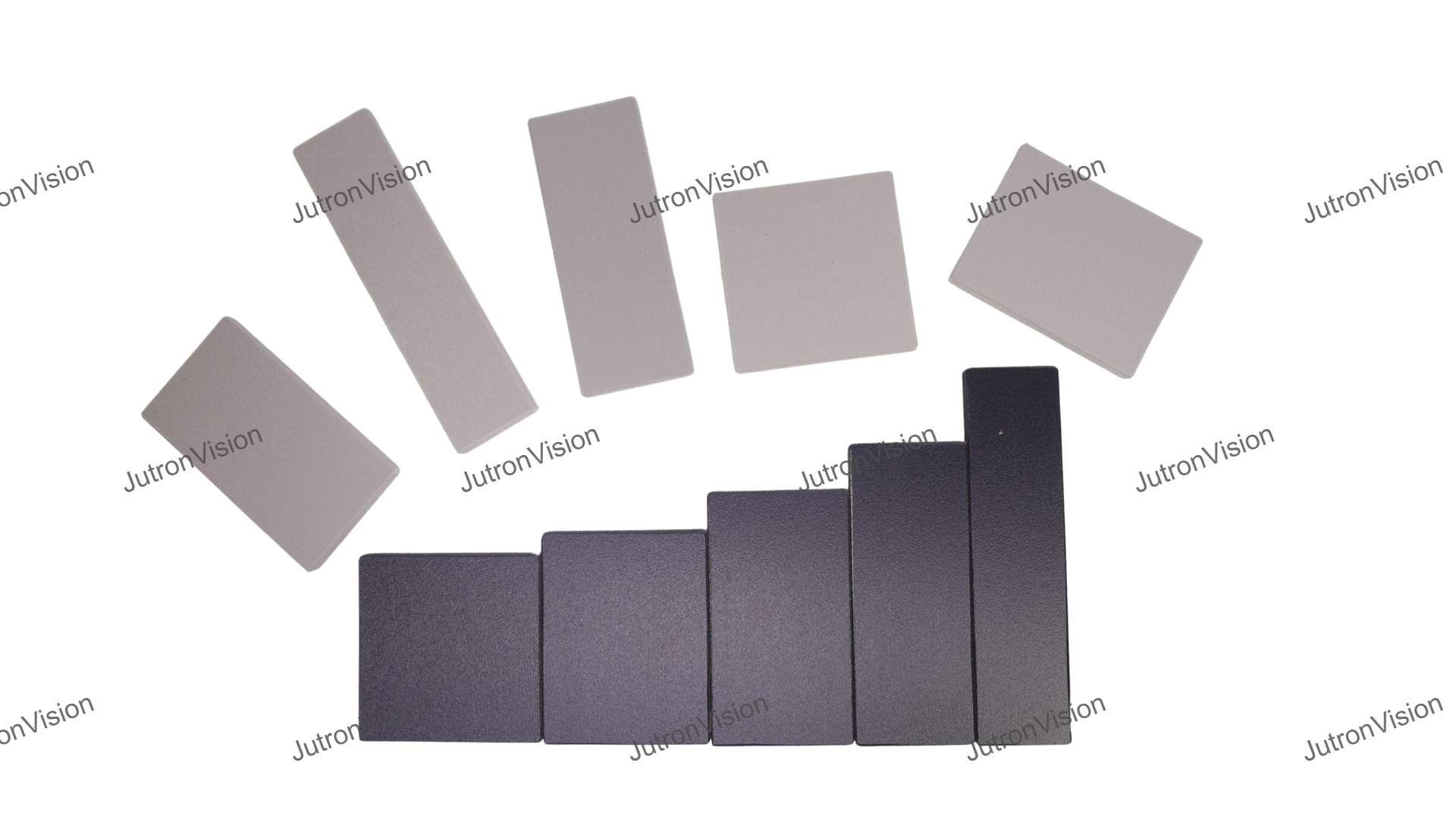
| Optotypes / Symbols | Instead of letters or pictorial symbols, the stimuli are rectangles — in two colours (black and grey) — in 5 different lengths (sizes). There are 5 black rectangles and 5 grey rectangles, each representing one of 5 sizes.An important design note: each rectangle pair (black, grey) has the same total surface area, so that only shape (length) differs, not area, minimizing area cues. |
| Scaling / Spacing | The rectangles are sized in 5 discrete lengths; exact dimensions (in cm or mm) are not given in the public spec I found. The arrangement for testing is described: the black rectangles are placed in a “stair” arrangement on a table; the grey rectangles are placed separately (not in the same order), and the child is asked to match each grey rectangle to the correct black one by placing it on top. The spacing during placement is such that the grey ones are presented around the black staircase — not necessarily adjacent; the child must search, pick up, and place. Because the test is “block-like,” spacing is moderate; crowding effects are minimal by design. |
| Range of Acuity / Line Sizes | The LEA Rectangles Game is not designed as an acuity chart in the classical sense. It doesn’t present “lines” of decreasing size as in Snellen or optotype charts. Instead, it tests size discrimination, i.e. whether the child can reliably tell which rectangle is longer. Hence, there is no documented “line size / equivalent acuity range” in the published spec. It is considered part of early visual processing / cognitive vision tests rather than a strict acuity measure |
| Testing Distance | The published documentation does not state a fixed or recommended testing distance (in meters or feet). Because the task is close-hand (table-based) and involves physical manipulation of rectangles, the test is likely performed at arm’s reach / on a table surface (i.e. near vision space), not from afar.No source gives a precise cm distance from the eyes to the rectangles. |
| Physical Size & Dimensions | The set includes 10 total rectangles: 5 black + 5 grey, in 5 sizes. Because they are “blocks” or rectangular slats, the width (short side) is probably uniform (so that only the length dimension varies). That is typical in such designs |
| Mounting / Display Features | The test is table-based: the black rectangles are placed in a staircase arrangement (i.e. mounted on the table) and the grey ones are laid around them. The child picks up and places them. There is no specialized stand, board, or wall mounting described in the published spec. Because it is a hands-on matching task, the rectangles are simply placed flat on the table. |
| Included Accessories / Extras | The product includes 5 black rectangles + 5 grey rectangles in 5 sizes. Also included: instructions / user guide (PDF available in manufacturer catalog). leatest. No other accessories (e.g. stands, trays, holders) are specified in the public documentation. |
| Durability / Material Qualities | The published specification does not explicitly state the materials used (e.g. plastic, acrylic, laminated board). Given its intended use in clinical / educational settings, one would expect relatively sturdy materials (plastic, laminated wood, or durable composite) to withstand repeated handling. No specific claims (e.g. scratch resistance, lamination) are made in the sources I found. |
| Usability / Marker of Quality | Usability Strengths: The task is intuitive: children often understand length discrimination (longer vs shorter) at an early age, even before they can read. The “play situation” approach reduces test anxiety and engages the child. Because the task involves hand movements and placement, the examiner can observe how the child picks up and places the grey rectangles, revealing motor planning or visuomotor difficulties. The design (equal area rectangles) helps ensure the child must rely on length discrimination rather than area cues. Markers of Quality / Validity: It is part of the LEA “cognitive vision” test battery — signaling that it is recognized in the LEA system as a standardized tool. It is documented in LEA’s official catalog (with product number 254600) and comes with published instructions. In research literature, the LEA Rectangles Game is cited in studies of visual processing and cortical dysfunction as a measure of size/length discrimination and parietal/temporal stream function. • Its design avoids confounding cues (matching area, etc.), increasing its validity as a pure size discrimination task (within the limits of a play game). |
Reviews
There are no reviews yet.